


Framed Steamship Artwork
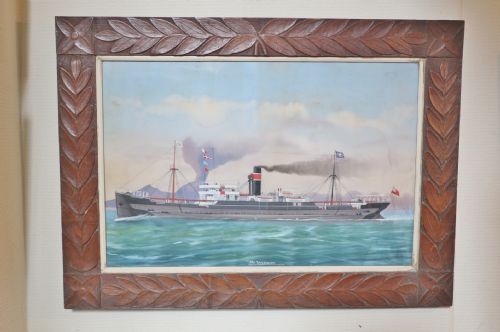
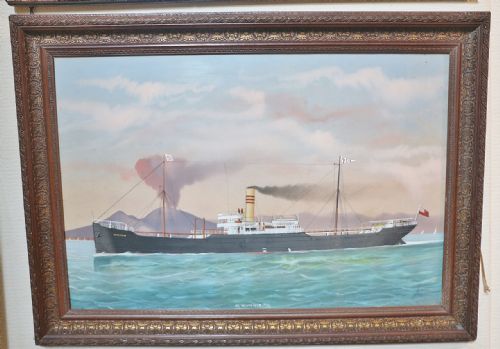
Framed steamship artwork captures maritime history through oil and watercolour, bringing vintage vessels and naval scenes directly to your walls.
Framed Steamship Artwork
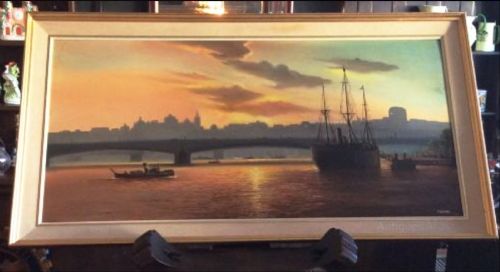
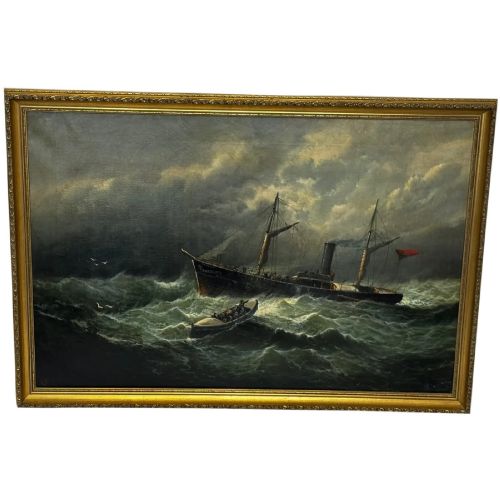
Buyers seeking framed steamship artwork explore historical marine depictions spanning the nineteenth and twentieth centuries. These pieces record commercial liners, wartime vessels, and harbour scenes through various artistic mediums. Works range from detailed portraits of named steamers to panoramic views of bustling rivers and ports.
Edwardian and nineteenth-century examples dominate the available selection, often presenting vessels in coastal waters or international harbours. These items typically arrive set within period wood and gilt frames, preserving the original presentation of the artwork. Collectors find both intimate watercolours and large oil paintings documenting maritime heritage.
Materials and construction
Artists painted these marine subjects using oil on canvas, watercolour, and gouache on paper, applying pigments to capture the motion of water and the detail of steam vessels. Canvases are stretched over wooden frames, whilst watercolours utilise paper supports protected beneath glass. Many works retain their original timber and gilt frames, which frame the maritime scene.
Makers constructed these protective housings from solid wood, frequently employing gilt finishes to highlight the artwork within. Paper works incorporate card mounts and glass to shield the delicate pigments from environmental damage. Each component reflects the standard framing techniques of the Victorian, Edwardian, and later periods.
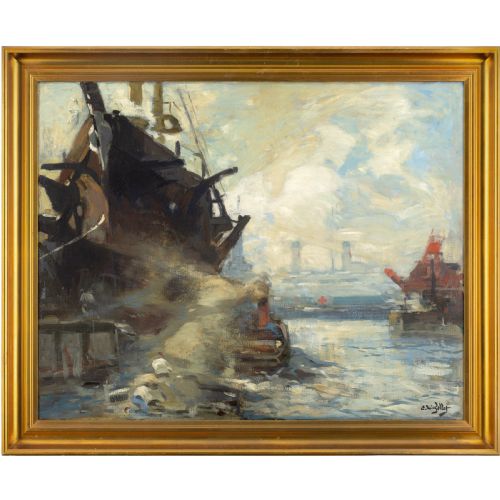
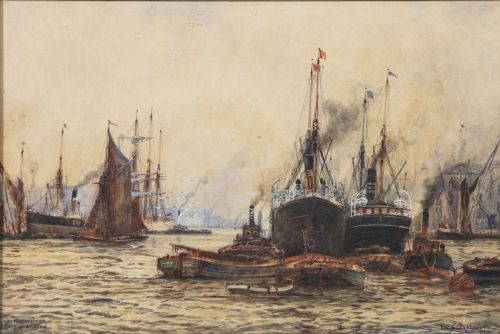
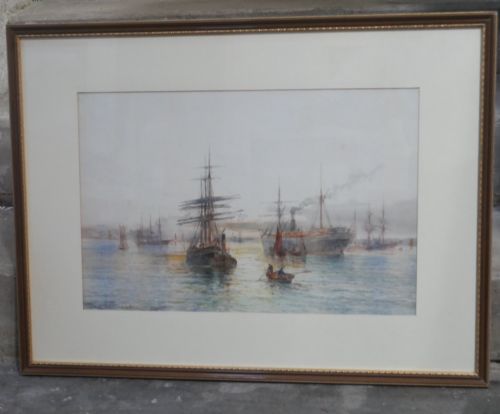
Several artists captured the gritty atmosphere of smokey London ports alongside grand ocean liners.
Evaluating the pieces
Quality in these maritime works depends upon the precision of the vessel's depiction and the artist's command of light upon water and steam. Superior examples render rigging, hulls, and atmospheric conditions with exact observation, whilst lesser pieces offer generic forms. The handling of the medium distinguishes accomplished marine realists from commercial jobbing painters.
The condition of the canvas, paper, and original frame influences the overall integrity of the piece. Works retaining their untouched period mounts and glass hold greater historical value than those subjected to modern restoration. The clarity of the ship's identification and the provenance recorded in the title add further distinction to the best examples.
Eugène-Louis Gillot·William Broome·Frank William Scarbrough·Alexander Harwood·Charles William Wyllie·Ernest Dade·Edward Fletcher·Frances E Nesbitt·James Scrimgeour Mann·J Syer
The Framed Steamship Artwork Glossary
- Pierhead painting
- A specific genre of ship portraiture, often commissioned by captains or shipowners, depicting a vessel clearly and accurately as it enters or leaves a port. These works focus on the technical details of the steamer.
- Gouache
- An opaque water-based paint used alongside watercolour to create areas of dense, flat colour and bright highlights on paper. It allows artists to render white steam and foaming sea spray with high opacity.
- Lithograph
- A print produced from a flat stone or metal plate treated to retain ink only in specific areas. This technique enabled the mass production of affordable maritime imagery in the nineteenth century.
- Upper Pool
- A section of the River Thames in London historically crowded with shipping and commercial traffic. Artists frequently painted this tidal reach to capture the dense concentration of steamers and sailing vessels.
- Provenance
- The documented history of ownership and origin associated with an artwork. In marine art, clear provenance links a depicted steamer to specific shipping lines or historical voyages.
Framed Steamship Artwork: Frequently Asked Questions
What periods do these steamship artworks represent?
The available pieces span from the nineteenth century through the Edwardian era into the mid-twentieth century. Most works date from the late Victorian period up to the interwar years and the 1960s.
This timeline covers the height of steam navigation, documenting both commercial liners and wartime vessels across various decades.
How do I identify the specific ship in the painting?
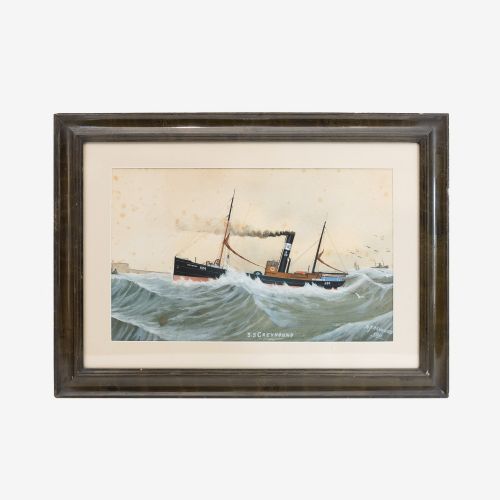
Many titles and works explicitly name the vessel, such as the S.S. Greyhound, S.S. Shelley, or RMS Lusitania. Artists often inscribed the ship's name or registration details directly onto the canvas or paper support.
Researching shipping lines like the Cunard Line or White Star Line helps verify the historical context of unlabelled steamers.
Where were these maritime scenes usually painted?
Artists frequently recorded views around major British ports and rivers, particularly the River Thames in London and the River Mersey in Liverpool. Other scenes depict international waters off Italy, Gibraltar, and various coastal shipping routes.
Harbour depictions capture the daily commercial traffic of tugboats, passenger liners, and cargo steamers.