


Edwardian Ship Portrait
Edwardian ship portrait paintings and photographs capture vessels at sea, offering collectors a direct record of early twentieth-century maritime history.
Edwardian Ship Portrait
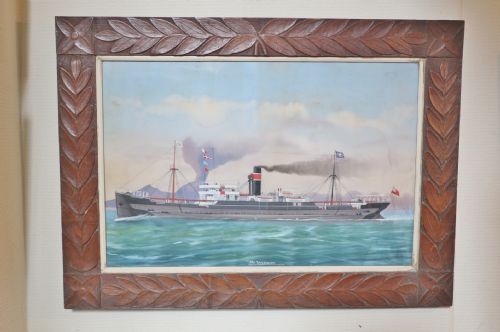
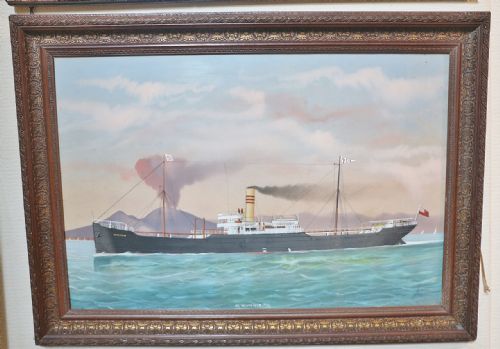
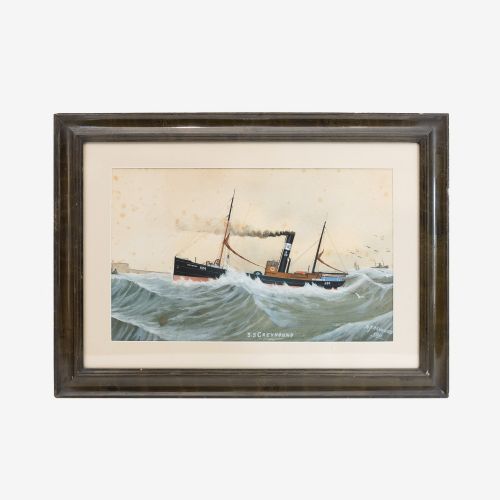
An edwardian ship portrait records specific vessels, from steamships and ironclad battleships to barques and tall ships, during the early twentieth century. These works capture naval vessels and merchant ships off coasts or navigating international waters.
The pieces on this page appear primarily as oil paintings, watercolours, gouache, and framed photographs. Collectors encounter subjects ranging from named steamships like the SS Bregonian to Royal Navy cruisers.
Many examples document commercial and military vessels from the Edwardian era, often framed in wood or gilt settings. These portrayals serve as historical tributes to individual ships and their crews.
Materials and methods
Artists and photographers utilised oil on canvas, watercolour, gouache, and photographic prints on card to record maritime subjects. Works on paper often combine watercolour and gouache to render coastal lighting and vessel details.
Framing materials include carved oak and gilt surrounds that protect the works while reflecting the period aesthetic. Photographic portraits and paintings from this era frequently retain their original frames.
A sailor's sentimental tribute to his shipmates includes a French navy ironclad and a hand-applied dedication.
Assessing quality
Quality depends on the precision of the vessel's rigging, hull construction, and maritime details rendered by the artist. Stronger works convey accurate proportions and atmospheric coastal conditions rather than generic marine backgrounds.
The condition of the medium, whether oil pigment, delicate gouache, or sepia photographic tone, influences the visual impact. Original framing in oak or gilt further contributes to the integrity of the piece.
Alexander Harwood
The Edwardian Ship Portrait Glossary
- Gouache
- An opaque watercolour paint that dries to a matte finish, frequently utilised in maritime portraits for crisp details.
- Barque
- A sailing vessel with three or more masts, commonly depicted in maritime art from the Edwardian period.
- Ironclad
- A steam-propelled warship protected by iron or steel armour plates, seen in naval portraiture from this era.
- Sepia
- A reddish-brown monochromatic photographic tone derived from cuttlefish ink, characteristic of early twentieth-century prints.
Edwardian Ship Portrait: Frequently Asked Questions
What ships appear in these portraits?
The subjects include steamships, ironclad battleships, barques, and naval cruisers. Artists recorded named vessels such as the SS Bregonian and HMS Blenheim.
Works also feature merchant vessels and junks operating in international waters.
What mediums were used for these pieces?
Makers employed oil paint on canvas, watercolour, and gouache on paper. Photographic prints on card also represent vessels and crew members.
These are frequently housed in original carved oak or gilt frames.
How do I date an edwardian ship portrait?
Dating relies on the vessel type, clothing of pictured captains or sailors, and stylistic markers of the Edwardian period. Many pieces carry specific dates or eras from nineteen hundred to nineteen fourteen.
Original framing materials and photographic techniques offer additional chronological clues.
Where should I display these works?
These framed paintings and photographs suit studies, hallways, or rooms with traditional decor. Direct sunlight should be avoided to protect watercolours, gouaches, and photographic prints.
Sturdy wall fixings are recommended for heavier oil paintings in oak or gilt frames.