




Early 20th Century Ship Art
Early 20th century ship art brings naval vessels and coastal scenes into the room through paintings, models, and framed folk pieces.
Early 20th Century Ship Art
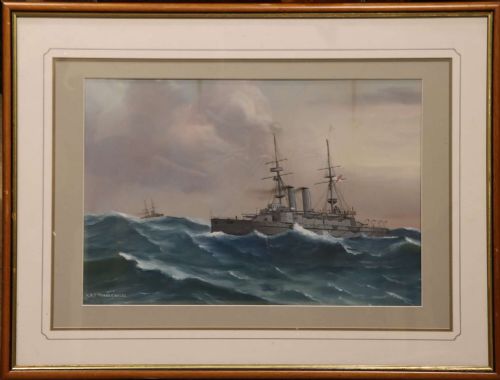
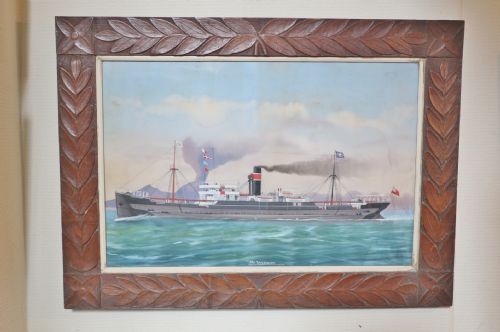
Early 20th century ship art captures maritime history through paintings, photographs, and decorative models created during the Edwardian period and the decades immediately following. When you search for early 20th century ship art, you will encounter diverse forms ranging from framed watercolours and gouache paintings to detailed scratch-built ship models and dioramas.
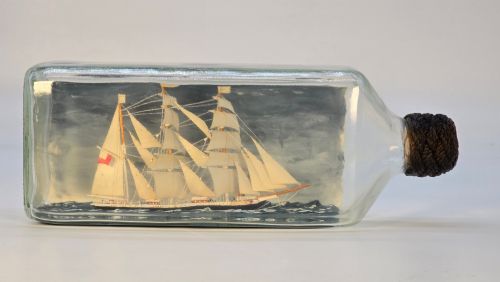
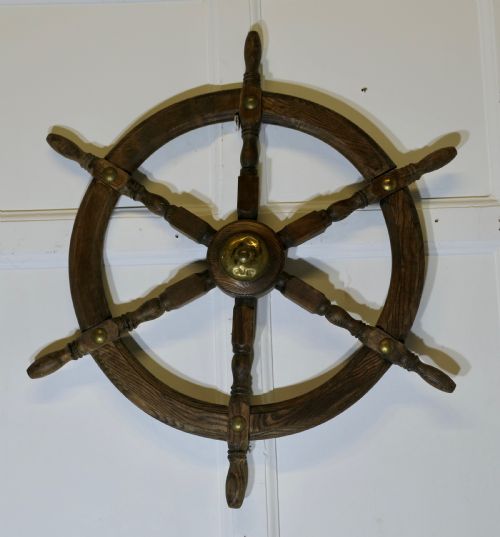
The pieces listed here span the 1900s to the 1920s, reflecting both professional maritime art and British folk art traditions. You are most likely to meet framed wall art depicting steamships and sailboats, alongside carved wooden items and intricate ship models placed inside bottles.
How they were made
Makers of early 20th century ship art utilised traditional media such as watercolour, gouache, and paint on paper or card to render coastal and naval scenes. Framed works frequently relied on solid oak frames to house paintings and photographs.
Three-dimensional pieces demonstrate considerable hand skill, notably scratch-built ship models constructed from wood and glass. Artisans also produced carved oak items like ships' wheels, combining practical maritime materials with decorative craft.
The listings show materials including glass, paper, wood, paint, watercolour, oak, gouache, and carved oak across various wall art and model forms.
What varies in quality
The distinction between standard and superior pieces rests upon the precision of the maker's hand and the preservation of the original materials. Painted works show variation in brushwork detail and compositional balance, particularly between anonymous folk art and named artist watercolours.
In three-dimensional works like scratch-built models and diorama bottles, quality is evident in the structural intricacy and the integrity of the housing. Original framing on photographs and paintings also contributes to the overall cohesion of the piece.
The Early 20th Century Ship Art Glossary
- Gouache
- An opaque watercolour paint that dries to a matte finish. It allows artists to build bright highlights and deep tones on paper.
- Diorama
- A three-dimensional scene enclosed in a case or bottle. In maritime art, these feature miniature ships set against painted backgrounds.
- Scratch-built
- A model constructed from raw materials rather than from a commercial kit. Makers shape every component by hand.
- Maritime folk art
- Decorative and practical objects made by self-taught makers connected to the sea. These pieces prioritise direct expression over academic convention.
Early 20th Century Ship Art: Frequently Asked Questions
What periods do these pieces cover?
The selections span the Edwardian era through to the 1920s. This includes items dated specifically around 1900, 1905, 1906, 1910, and 1914.
Most items sit firmly within the first two decades of the twentieth century. They reflect the prevalent maritime aesthetic of that time.
How were these ship models constructed?
Many of the models are scratch-built by hand using wood and other available materials. Makers often housed miniature vessels inside glass bottles to create detailed dioramas.
These constructions required steady hands and patience. They were frequently produced by sailors or self-taught folk artists.
What materials appear in these artworks?
Painters utilised watercolour, gouache, and standard paint on paper and card surfaces. Framing typically involves solid oak to house the artworks and photographs.
Three-dimensional items make extensive use of carved wood and glass. These durable materials ensured the survival of delicate models.
How do I display these items at home?
Framed watercolours and paintings suit wall mounting in studies, hallways, or living spaces. Solid oak frames provide a sturdy border that complements traditional interiors.
Ship models and bottled dioramas require secure shelf or cabinet placement. They work well as focal points on wooden surfaces where viewers can inspect the detail.