



Steamship Ocean Painting
A steamship ocean painting captures the grand era of mechanical marine travel, offering buyers a direct window into early ocean liners and maritime history.
Steamship Ocean Painting
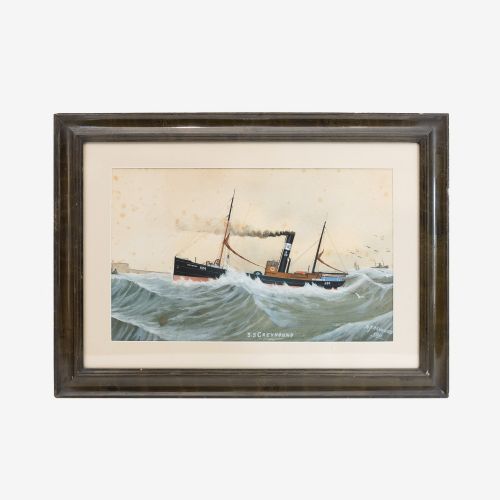
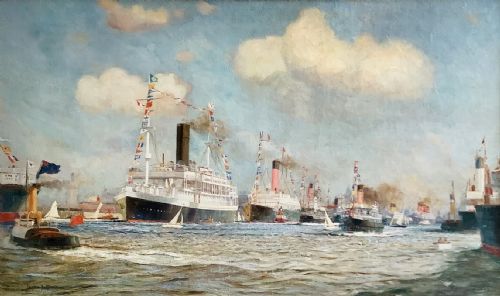
A steamship ocean painting depicts vessels powered by steam traversing open waters, ranging from detailed portraits of named liners to dramatic scenes in heavy seas. These works capture the transition from sail to steam across various decades, documenting famous vessels and shipping lines.
The versions most commonly met on this page include oil on canvas and watercolour works from the nineteenth century through to the mid-twentieth century. Buyers often encounter pieces portraying specific historical vessels such as Cunard liners or polar expedition ships.
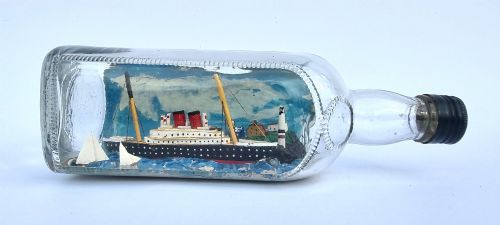
Beyond flat canvases, related maritime items occasionally surface, including diorama folk art of steamships in bottles and steel travelling trunks associated with ocean journeys. These varied objects collectively celebrate the material culture of early steam travel.
Materials and Techniques
Artists record these maritime subjects primarily using oil on canvas, watercolour, and gouache applied to paper or canvas supports. These traditional media allow for careful rendering of turbulent water, smoke from funnels, and the architectural details of iron and steel hulls.
Framing often incorporates wood and gilt elements to house and protect the painted surface. Folk art pieces introduce alternative construction methods, enclosing miniature steamships inside glass bottles.
The listings combine oil on canvas and watercolour paintings with glass-enclosed dioramas and wood-framed wall art from the nineteenth and twentieth centuries.
Assessing Quality and Execution
Quality rests upon the artist's ability to render the specific proportions of a steamship accurately while conveying the movement of water and atmospheric conditions. Works by documented marine artists display a superior grasp of maritime architecture and scale compared to anonymous folk art pieces.
The historical significance of the vessel portrayed also influences the standing of a painting. Depictions of named liners engaged in notable operations or historical moments carry greater documentary interest than generic steamer scenes.
F Corpuz·Alexander Harwood·J Syer·Johan Jens Neumann·James Scrimgeour Mann
The Steamship Ocean Painting Glossary
- Pierhead painting
- A specialised genre of marine art created to record port scenes and specific ships, often commissioned by captains or shipping companies. These works prioritize accurate details of the vessel's rigging, funnel markings, and superstructure.
- Marine art
- Artistic representation of maritime subjects, including ships, coastal views, and naval engagements. This broad category encompasses both detailed historical records and expressive interpretations of the sea.
- Gouache
- An opaque water-based medium that dries to a matte finish, frequently combined with watercolour in maritime works on paper. It allows artists to apply bright highlights to foaming waves and white ship superstructures.
- Diorama
- A three-dimensional scene depicting historical events or objects, such as a steamship enclosed within a glass bottle. This form represents a distinct branch of maritime folk art created by sailors and enthusiasts.
Steamship Ocean Painting: Frequently Asked Questions
How are steamship paintings dated?
Dating relies on stylistic evidence, signatures, and the operational history of the depicted vessel. Details such as funnel design and technological configurations help narrow down the period.
Written inscriptions on the reverse or contemporary documentation also assist in establishing a reliable timeline for the artwork.
Where were pierhead paintings displayed?
Pierhead paintings were traditionally created in port cities to be displayed in maritime offices, shipping line headquarters, and the homes of ship captains.
They served as proud records of specific vessels working particular routes and harbour approaches.
What subjects appear alongside steamships?
Paintings frequently feature supporting harbour traffic, tugboats, pilot vessels, and other contemporary shipping sharing the waterways. Coastal landmarks and stormy seas provide atmospheric context for the central steam vessel.
Some works document specific historical contexts like polar expeditions or named shipping lines.
How should works on paper be housed?
Watercolour and gouache paintings on paper require conservation-grade framing behind glass to protect the delicate pigments from ultraviolet light and humidity. Acid-free mounts prevent discoloration over time.
Placing them away from direct sunlight preserves the original tones of the sky and sea.