
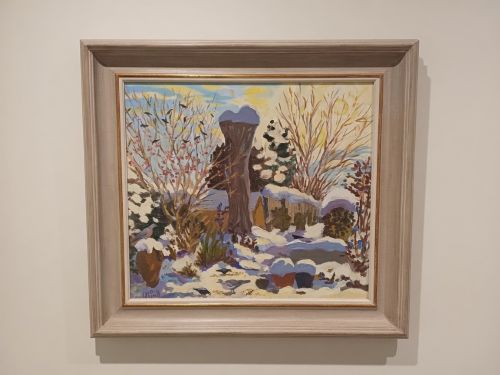
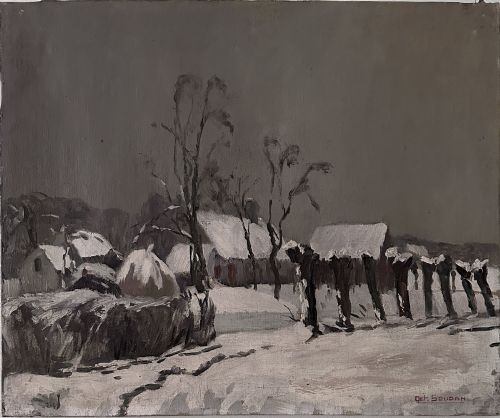


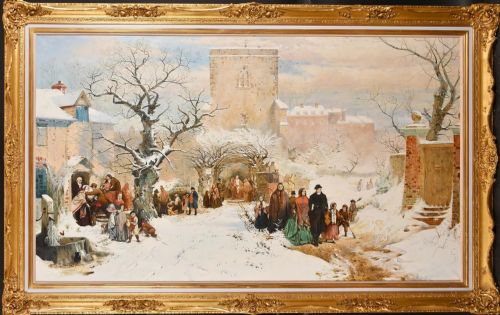
Framed Snow Scene Artwork
Framed snow scene artwork captures the quiet hush of winter through oil and watercolour, bringing atmospheric frost and historic landscapes directly into your home.
Framed Snow Scene Artwork
Framed snow scene artwork spans a broad chronology of winter depictions, appearing in oils and watercolours from the nineteenth century through to contemporary periods. You encounter village streets, alpine peaks, and coaching scenes rendered with distinct regional character.
The nineteenth-century examples often focus on narrative coaching subjects, while later works from the early twentieth century lean into British and French impressionistic brushwork. These pieces preserve historical winter conditions, from rural cottages to snow-clad mountains.
Watercolours on paper and oil paintings on canvas or board dominate the available selection. Each format offers a different texture of frost and light, housed within period wooden and gesso frames.
Materials and construction
Painters relied primarily on oil paint applied to canvas or wood panels, alongside watercolour and gouache on paper supports. Pigments build up the heavy white impasto required to render deep drifts and falling snow.
Works are typically completed with traditional wooden frames, sometimes enriched with gesso mouldings and gold leaf gilding. These surrounds protect the delicate paint surfaces and complement the tonal palette of the winter subject.
Stagecoaches frequently lose their way in historical snowstorms, leaving passengers stranded in deep drifts right inside the artwork.
Qualities of execution
The handling of light and atmospheric chill separates superior compositions from routine topographical records. Skilled painters capture the specific grey-blue shadow of winter daylight rather than relying on flat white paint.
The harmony between the artwork and its frame dictates the integrity of the piece. Period frames with original gold leaf and gesso enhance the historical context of the painting considerably.
Lucy Pratt·Gaston Cornil·Ernest Uden·John Smith Atherton·John Charles Maggs·Sydney Kendrick·George Graham·Ernest Higgins Rigg·John Ritchie·George Augustus Williams·Eveline Lance·Wilson·William Cave Day·Fred Lawson
The Framed Snow Scene Artwork Glossary
- Impressionism
- A nineteenth-century painting style focusing on accurate depiction of light in its changing qualities. It informs many of the softer landscape treatments found in winter scenes.
- Gesso
- A plaster-like mixture applied to wooden frames as a base before gilding or painting. It provides the crisp surface detail seen on period frames.
- Impasto
- Paint applied thickly to a canvas, standing out from the surface. Artists use this technique to give physical dimension to snowdrifts.
- Gouache
- An opaque watercolour paint containing a binding agent. It allows for solid, flat areas of colour in paper works.
Framed Snow Scene Artwork: Frequently Asked Questions
How do I date an old winter painting?
Dating relies on stylistic markers, framing techniques, and the materials used in the support. Nineteenth-century works often feature distinct canvas stamps and heavier coaching narratives.
Twentieth-century pieces shift towards impressionistic brushwork and lighter palettes. Comparing the signature with known working periods of the artist provides further confirmation.
What is the difference between oil and watercolour snow scenes?
Oil paintings utilise heavy pigments on canvas or board, allowing for textured impasto that mimics physical snowdrifts. They offer rich depth and durable surfaces.
Watercolours on paper employ translucent washes to capture pale winter light and delicate frost. They require protective glazing to prevent environmental damage.
Where should I hang a framed winter painting?
Position these pieces away from direct sunlight and damp conditions to protect the paper, canvas, and gold leaf frames. Stable indoor temperatures preserve the integrity of both oils and watercolours.
They pair well with neutral walls that allow the cool blues and whites of the snow to stand out. Proper lighting enhances the texture of the brushwork.
Are period frames original to the artwork?
Many works retain their period gesso and wooden frames, which match the age and style of the painting. Original frames contribute significantly to the historical presentation of the piece.
Minor repairs to gilding are common over decades of display. Examining the corners and rebate reveals how long the artwork has inhabited its surround.