
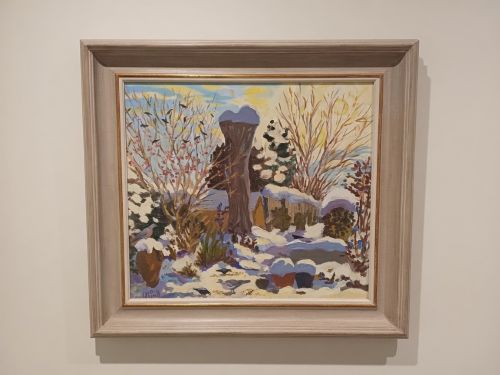
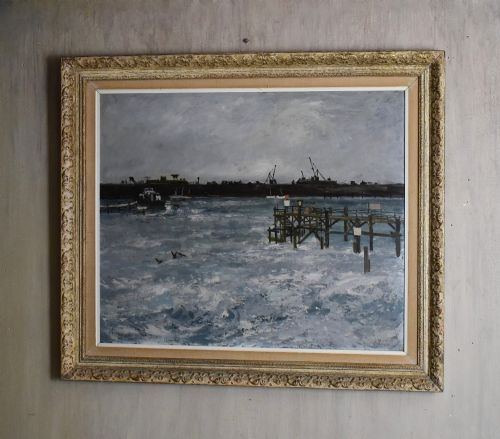
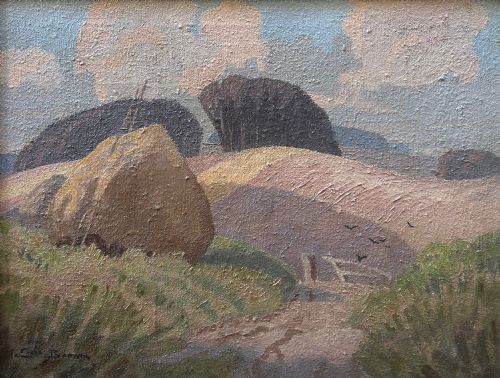
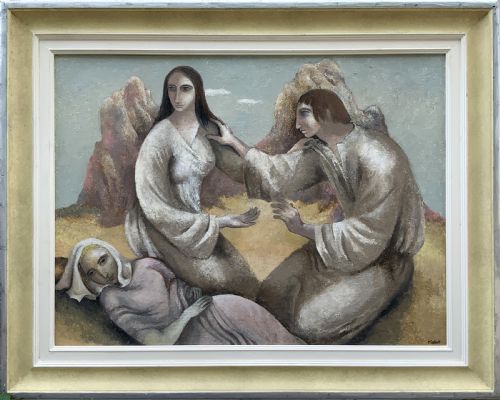


Modern Impasto Landscape Painting
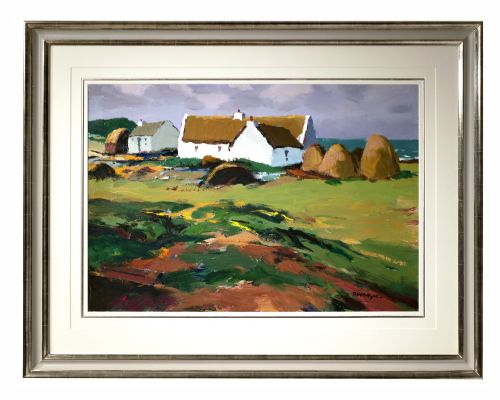
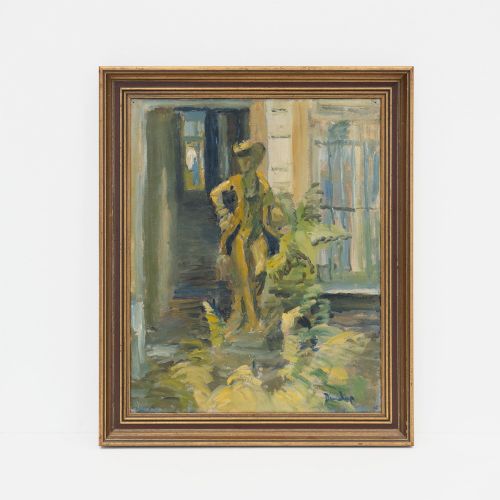
These modern impasto landscape painting works combine thick oil pigment with mid-century subjects to bring texture and light directly onto your wall.
Modern Impasto Landscape Painting
A modern impasto landscape painting relies on thick applications of pigment to build tangible surface relief, capturing coastal views, cityscapes and rural scenes.
The pieces available span from the 1920s through the 1960s and beyond, reflecting mid-century modern, post-impressionist and modern British artistic currents.
Most examples you encounter on this page date from the 1950s and 1960s, showing vibrant urban or rural subject matter built up in oil paint.
Materials and technique
Artists apply oil paint directly onto canvas, wood panels or boards using brushes or palette knives to create raised, sculptural textures.
Many works retain their original wood frames, sometimes finished with gilt details that complement the heavy pigment layers.
Listings feature oil paint applied to canvas, wood panels and boards, frequently housed within original wood or gilt frames.
Assessing quality and presence
Quality rests on the confidence of the brushwork and the dynamic interaction of thick pigment, where purposeful application creates genuine spatial depth.
The strength of the composition and the preservation of the textured surface separate distinguished examples from simpler decorative works.
Peter Brannan·Eric Brown·Christine Nesbit·Donald McIntyre·Ronald Ossory Dunlop·Helen Layfield Bradley·Jeffrey Pratt·E. Elliot
The Modern Impasto Landscape Painting Glossary
- Impasto
- A technique where paint is laid onto a surface in very thick layers, usually thick enough that the brush or palette-knife strokes are visible. This builds physical texture and relief into the artwork.
- Oil paint
- A slow-drying paint made by combining pigments with a drying oil, typically linseed oil. It allows for rich colour saturation and heavy layering.
- Mid-century modern
- A style and design movement spanning roughly from the 1930s to the mid-1960s, characterised by clean lines and abstracted forms. Works from this era often embrace experimental surface treatments.
- Post-impressionism
- An art movement that extended impressionism while rejecting its limitations, favouring more symbolic content and heavy painterly application. It heavily influenced twentieth-century landscape works.
Modern Impasto Landscape Painting: Frequently Asked Questions
How do I hang a heavy impasto painting?
Ensure your wall fixings match the substantial weight of the wood frame and thick oil layers. Use sturdy screws and wall plugs secured directly into solid masonry or wall studs.
Position the centre of the canvas at eye level to best appreciate the tactile surface texture and light play across the raised pigment.
How do I date a mid-century landscape?
Examine the materials, stretcher frames and any signatures or inscriptions on the reverse of the canvas or board. Mid-century works often utilise specific board types or framing styles characteristic of the 1950s and 1960s.
Stylistic cues such as abstract composition and subject matter also help narrow down the production period alongside artist biographical dates.
Where should I display these works?
Choose a wall with directional lighting, such as a spot lit by a picture light or natural side illumination, to accentuate the raised impasto ridges. Avoid direct, harsh sunlight that can affect oil paint over long periods.
Pair them with neutral interior spaces to let the rich colours and heavy textures become the focal point of the room.