
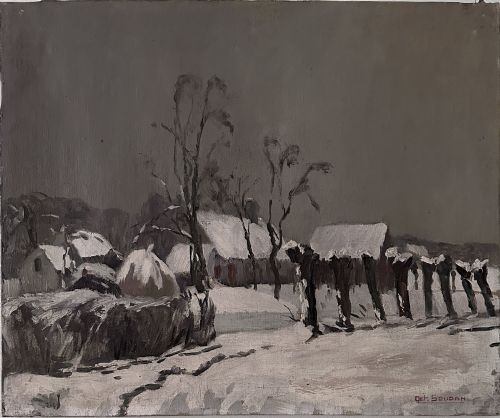


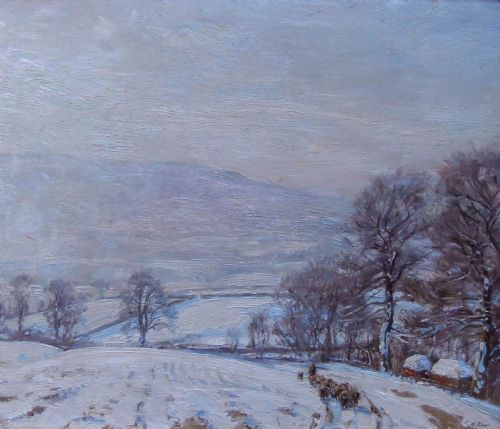
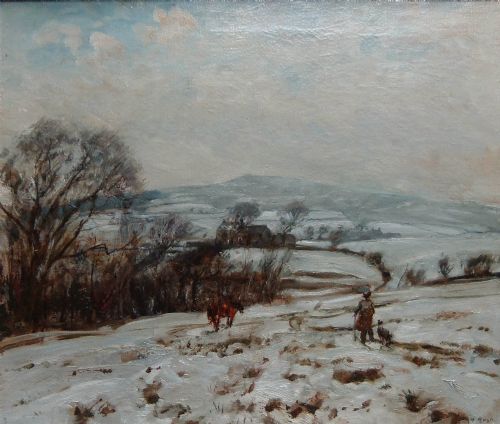


Snowy Winter Landscape Painting
A snowy winter landscape painting brings the stillness and cold light of the season indoors, capturing frosty fields and muted skies through brush and pigment.
Snowy Winter Landscape Painting
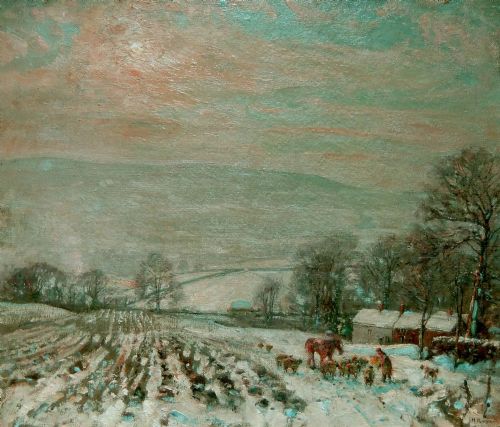
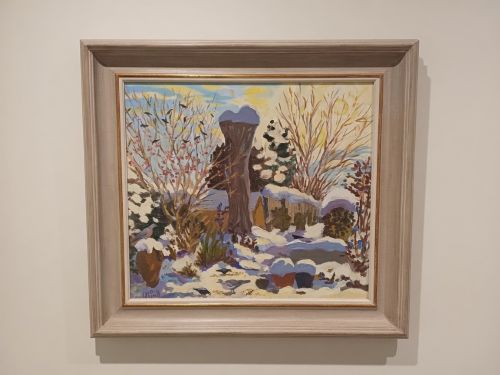
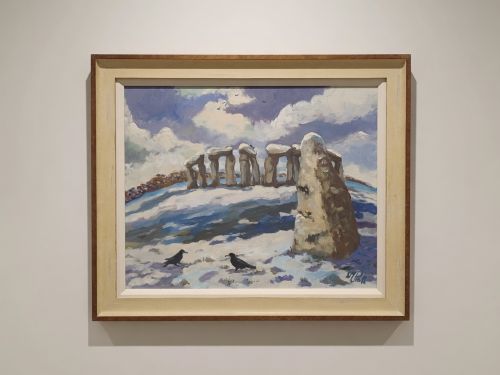
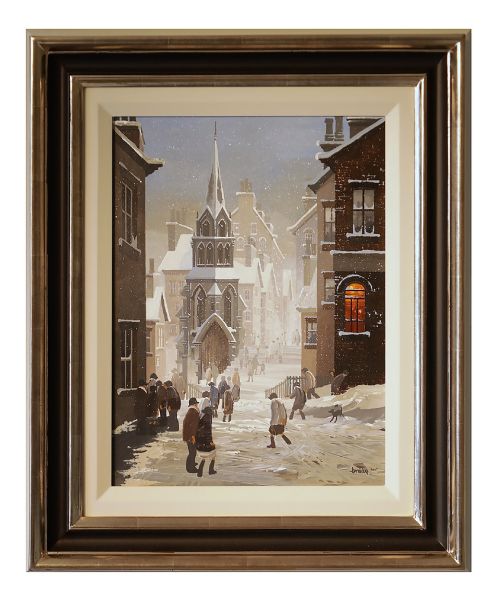
A snowy winter landscape painting captures scenes of frozen weather, frosted villages, and snow-covered pastures across various periods from the nineteenth century to later than nineteen sixty. These works record rural valleys, livestock in the snow, and quiet houses under cold winter skies.
The versions most commonly met here include early twentieth century British works in oil paint and watercolour, alongside Victorian canvases and mid-century interpretations. Painters such as Herbert Royle and Ernest Higgins Rigg frequently depict Yorkshire dales and northern settings blanketed in white.
Common formats range from compact watercolours on paper to substantial oil paintings on canvas, often housed within traditional wood frames. Subjects span from remote winter feeding grounds and highland cattle to stagecoaches navigating snowy lanes.
How they were made
Artists apply oil paint or watercolour using brushwork that builds texture and tone, laying pigment onto canvas, paper, or wooden panels to capture the bright glare and deep shadows of snow. Oil paint allows for thick impasto strokes that mimic drifted snow, while watercolour relies on fluid washes and reserved paper to denote pale winter light.
Support structures typically consist of stretched canvas or heavy paper mounted securely, paired with wood frames that protect the edges and complement the visual depth of the painted scene.
Listings feature works created using oil paint and watercolour on canvas, paper, and wood across periods from the nineteenth century to later than nineteen sixty.
What varies in quality
The strength of a composition depends on how convincingly the artist renders the particular quality of winter daylight and the weight of snow upon the land. Superior works manage tone and contrast delicately, preventing white expanses from appearing flat while maintaining atmosphere.
Handling of medium and brushwork distinguishes accomplished paintings from simpler decorative efforts, particularly in the confident depiction of seasonal elements such as frozen ground, livestock, and leafless trees.
Herbert Royle·Lucy Pratt·Brian Shields Braaq·Fred Lawson·Ernest Uden·John Smith Atherton·Charles Jones·Pieter Cornelis Steenhouwer·George Graham·John Richard Worsdale·Anthonij Anton Mauve·Ernest Higgins Rigg
The Snowy Winter Landscape Painting Glossary
- Oil paint
- A slow-drying medium consisting of pigments suspended in a drying oil, usually linseed, allowing for rich blending and textured impasto surfaces. It provides depth and durability across canvas supports.
- Watercolour
- A paint consisting of water-soluble pigments applied to paper, known for translucent washes and luminous effects. It requires precise control since light areas are often left unpainted.
- Impasto
- Paint applied thickly to a canvas or panel, standing in relief and retaining the marks of the brush or palette knife. This technique is frequently used to emphasise drifted snow or textured surfaces.
- British Impressionism
- A painting style influenced by French movements but developed by British artists focusing on natural light, outdoor settings, and spontaneous brushwork. It appears frequently in early twentieth-century landscapes.
- Canvas
- A closely woven fabric stretched across a wooden frame to serve as a durable painting surface for oil colours. It accommodates varied textures and heavy pigment application.
Snowy Winter Landscape Painting: Frequently Asked Questions
What periods do these paintings date from?
The listed works span from the nineteenth century through the early twentieth century, including nineteen twenties and nineteen thirties pieces, up to mid-century and later than nineteen sixty creations.
This broad timeline encompasses Victorian academic traditions, early British impressionism, and later mid-century modern expressions.
What materials were used by the artists?
Painters employed oil paint and watercolour as their primary mediums, working on surfaces such as canvas, paper, and wood.
Many of these artworks retain their original wood frames, completing the physical construction of the piece.
Where do the depicted scenes take place?
Many compositions focus on British settings, particularly Yorkshire dales like Wharfedale and Swaledale, alongside rural French and Canadian locations.
Subjects frequently feature local farms, stagecoaches, and highland cattle enduring snowy conditions.
How are watercolours distinguished from oil paintings here?
Watercolours utilise fluid pigments on paper supports, offering a transparent and luminous rendering of winter scenes.
Oil paintings use heavy pigments on canvas or wood panels, allowing for heavier textures and layered opacity.