

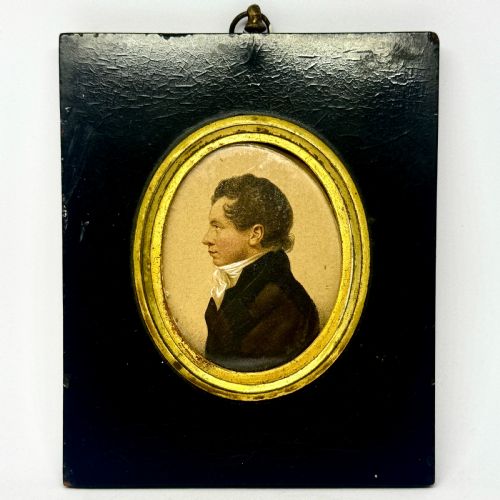
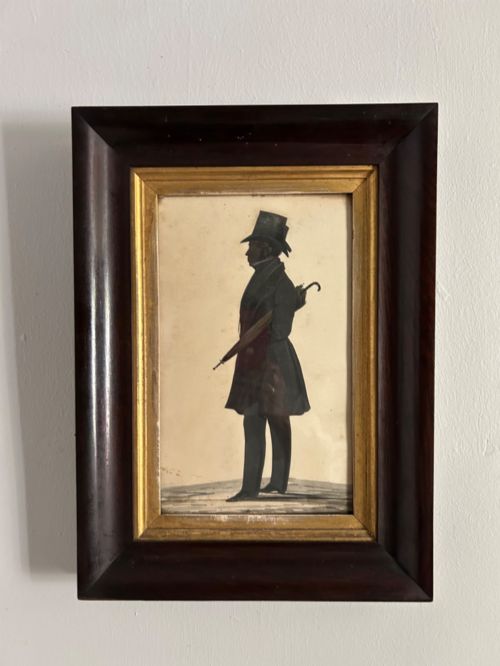

Framed Silhouette Portrait
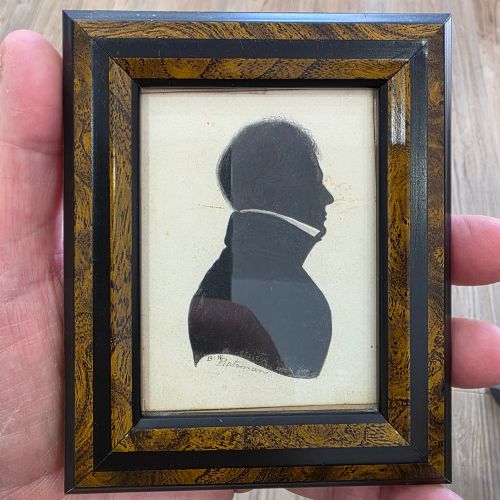
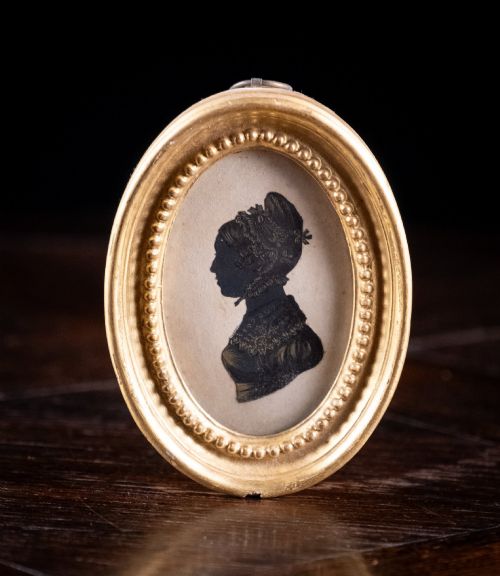
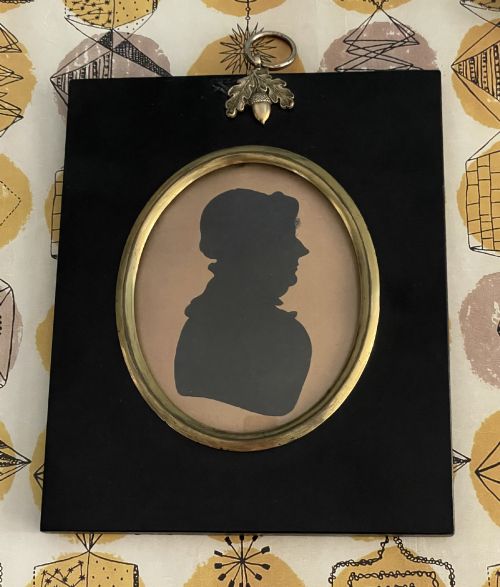
A framed silhouette portrait captures the clean profile of an ancestor through sharp paper-cutting or dark ink.
Framed Silhouette Portrait
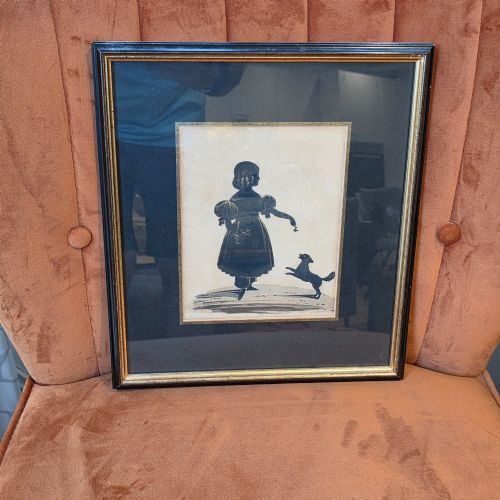
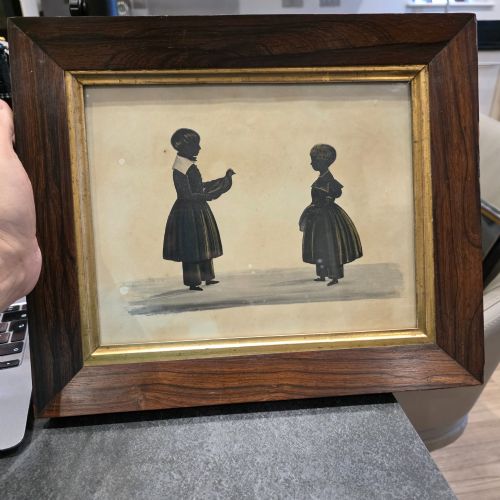
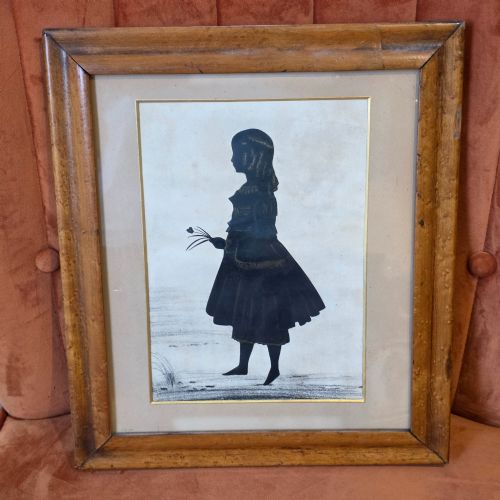
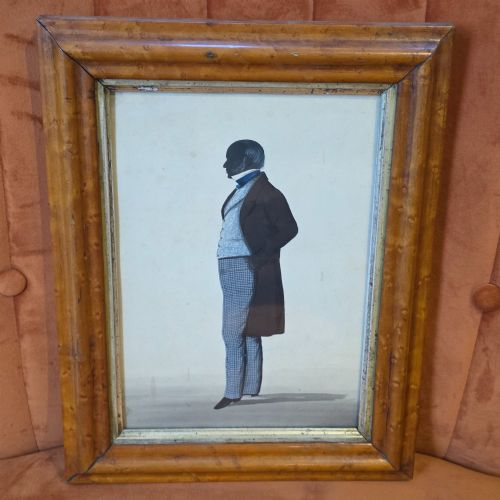
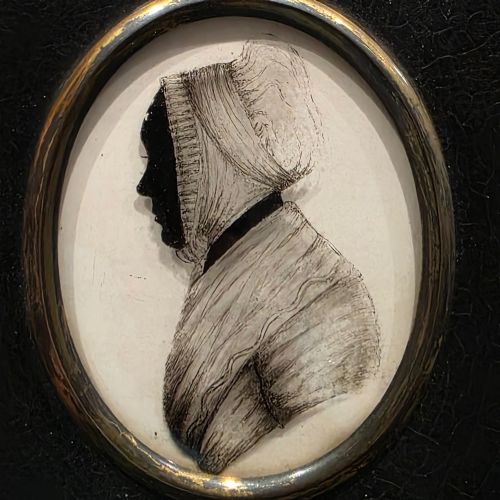
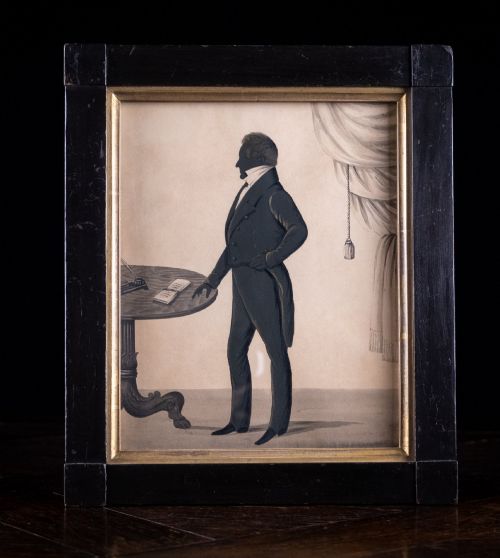
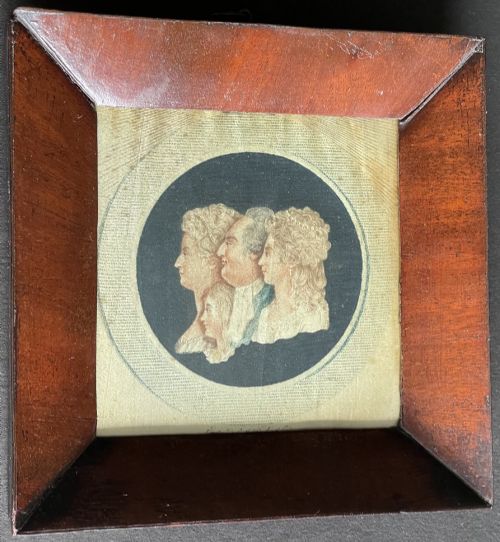
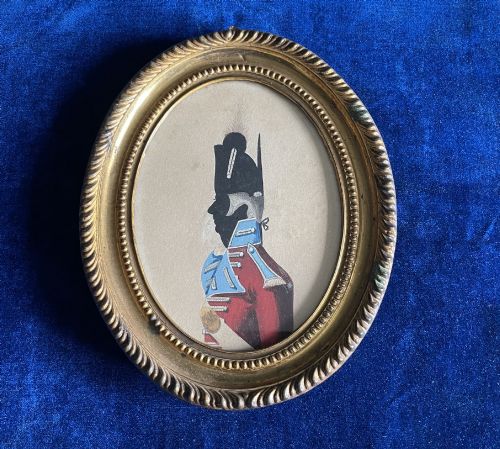
A framed silhouette portrait presents a strict black profile against a pale ground, capturing the likenesses of gentlemen, ladies, and children from past centuries. Most pieces on this page originate in the Georgian, Regency, and Victorian periods, taking the form of wall art or small portrait miniatures.
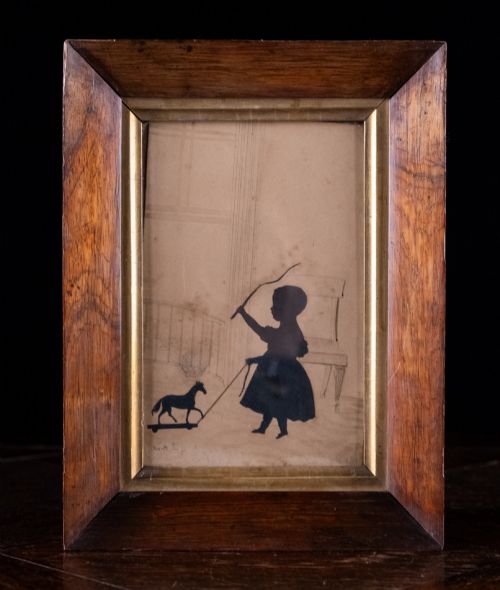
Makers recorded in the evidence range from renowned profile artists to commercial galleries, producing works that vary from solitary head-and-shoulder profiles to full-length conversation pieces involving children and animals. These works combine historical documentation with minimalist visual impact, making them enduring focal points for wall display.
How they were made
Artists created these likenesses using hand-cut black paper, dark ink, or pigment applied directly to glass, plaster, or silk. These materials were often enhanced with delicate gold leaf highlights for jewellery, buttons, and lace.
The finished profiles were secured within wooden housings such as ebonised wood, maple, and rosewood frames, frequently protected by curved glass and backed with brass fixtures.
Listings span the eighteenth, nineteenth, and Victorian centuries, featuring materials such as glass, paper, wood, ink, brass, gold leaf, ebonised wood, and watercolour.
What varies in quality
The precision of the cutting or brushwork dictates the success of a framed silhouette portrait, separating hasty mementos from accomplished works by known artists. Crisp edges, accurate proportions, and confident hand-applied gilding indicate superior execution.
The preservation of the original backing materials, glass, and period frame contributes significantly to the integrity of the piece. Works retaining contemporary signatures, inscriptions, or gallery labels carry stronger provenance.
William James Hubard·John Miers·Augustin Edouart·George Atkinson·Frederick Frith·J. Deacon
The Framed Silhouette Portrait Glossary
- Silhouette portrait
- A profile likeness filled in with a solid dark colour, typically cut from paper or painted. This form relies entirely on outline and contour rather than interior detail.
- Portrait miniature
- A small-scale painting or profile designed for intimate viewing. These works are frequently housed in deep wooden or brass frames.
- Reverse painted
- A technique where the artist applies pigment to the back of a glass sheet so the image is viewed through the front. This method creates a glossy, luminous finish.
- Gilded silhouette
- A profile enhanced with fine gold leaf to articulate costume details, hair ornaments, or jewellery. This decorative touch elevates the contrast against the dark background.
Framed Silhouette Portrait: Frequently Asked Questions
How do I date a silhouette?
Dating relies heavily on the style of clothing, hair, and headdresses depicted in the profile, such as Regency turban caps or Georgian high collars. Frame types and backing labels also provide reliable chronological clues.
Paper types and handwritten signatures or dates on the reverse help narrow the period further, distinguishing eighteenth-century works from later Victorian examples.
Where should I hang them?
These portraits suit narrow wall spaces, hallways, or study walls where their high-contrast profiles can be appreciated at close range. Grouping several pieces together creates a striking gallery wall.
Avoid placing them in direct sunlight to protect the fragile paper, ink, and watercolour elements from fading over time.
Are frames original?
Many pieces retain their contemporary ebonised wood, maple, or rosewood frames, which form an integral part of the object's history. The presence of original convex glass and backing papers helps confirm this.
Over the centuries, some pieces have been reframed to ensure their physical preservation, so inspecting the fit and materials remains helpful.
What is a conversation piece?
A conversation piece is an artwork showing multiple figures engaged in an activity, often including children, pets, or domestic interiors. In this medium, they capture narrative scenes rather than solitary heads.
These elaborate compositions are less common and record domestic life with greater detail than standard head-and-shoulder profiles.