

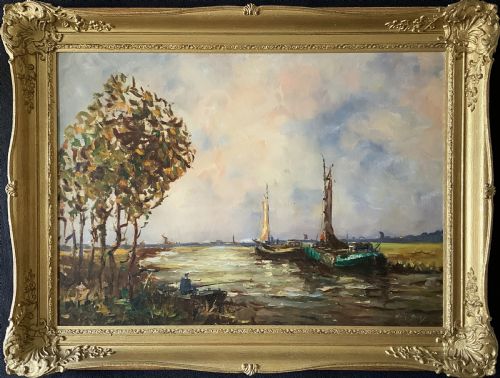

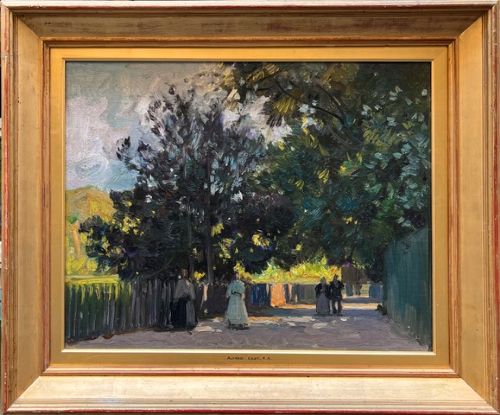
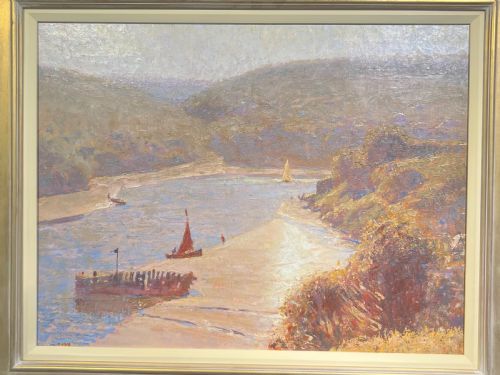
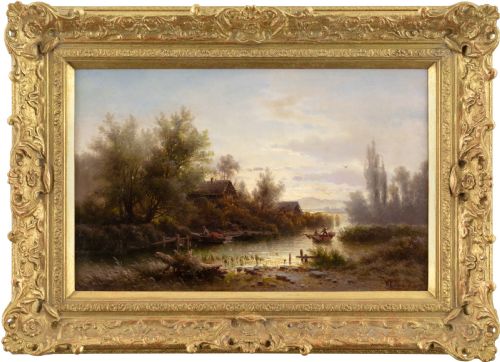
Framed River Oil Landscape
When you search for a framed river oil landscape, you seek a painted window onto water and shore preserved in period woodwork.
Framed River Oil Landscape
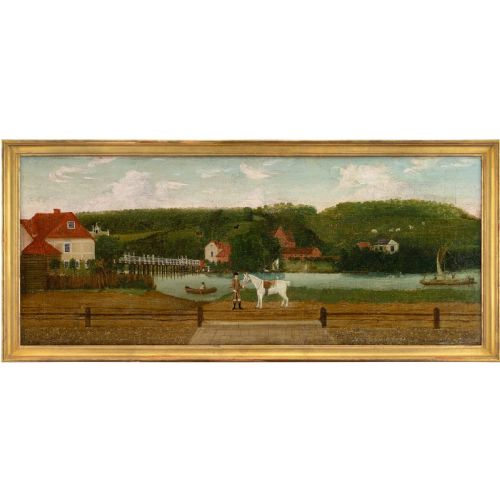
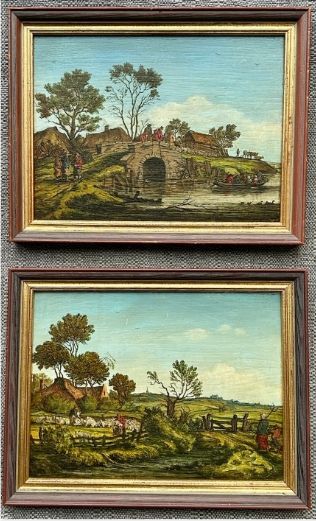
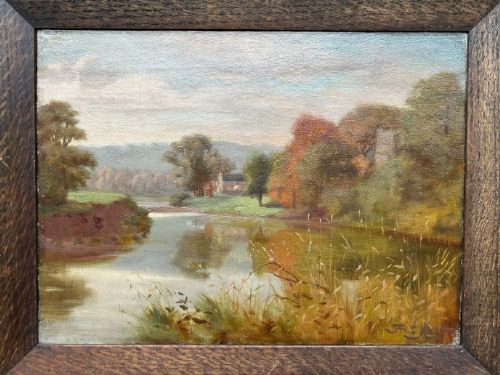
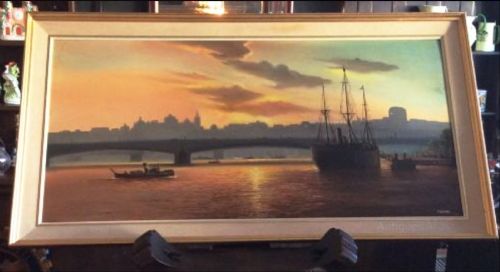
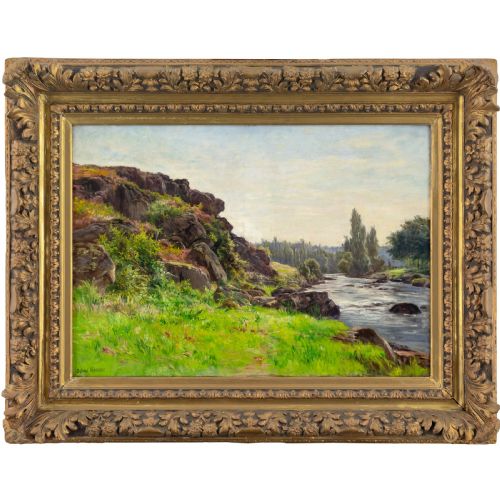
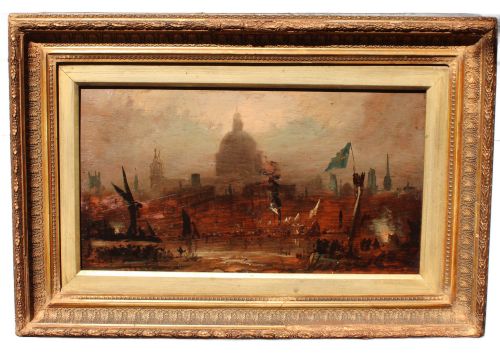
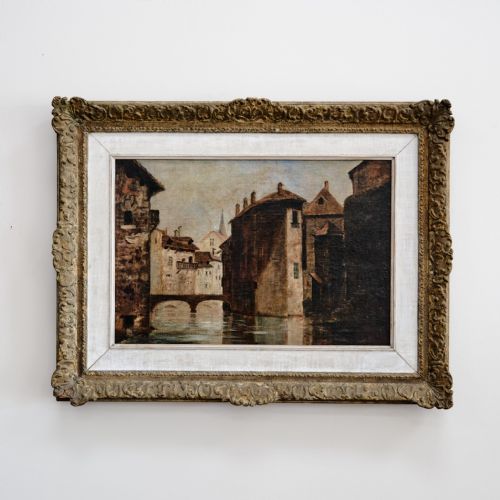
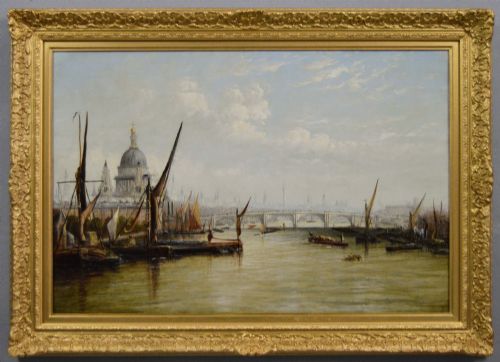
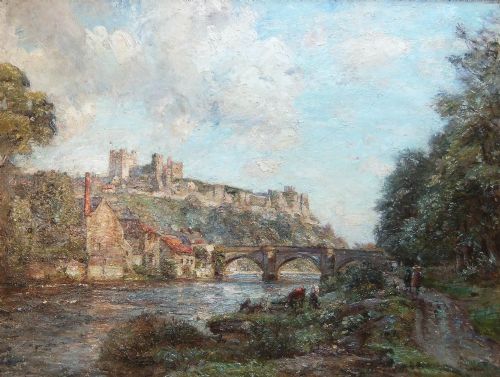
A framed river oil landscape captures waterways, bridges, and riparian banks through pigment applied to canvas, wood panels, or board.
Examples span the nineteenth century into the mid-twentieth century, encompassing Victorian, Edwardian, and mid-century modern aesthetic movements.
British, French, Dutch, and Flemish schools predominate, with subjects ranging from the River Thames to continental canals and rural streams.
Materials and Techniques
Artists built these works using oil paint applied to woven canvas supports or rigid wood panels, often enhanced by gesso preparation layers.
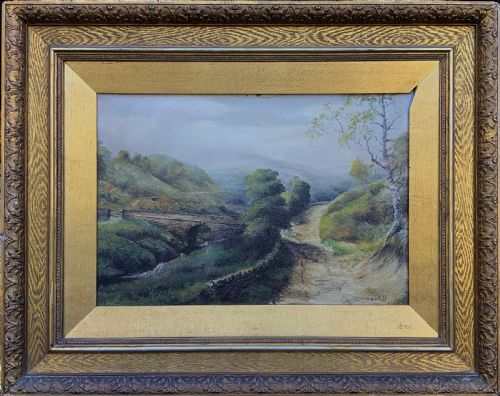
Makers housed the finished paintings within wooden frames, frequently finished in gilt to complement the tonal palette of the artwork.
Canal ducks and wandering cows frequently share the riverbank with nineteenth-century fishermen.
Quality Variations
Depth of pigment handling and subtlety of atmospheric light separate accomplished brushwork from more formulaic topographical recording.
The integrity of the original support, whether canvas tension or panel stability, influences the physical preservation of the surface.
Period frames matching the age and scale of the painting contribute significantly to the overall cohesion of the piece.
George Graham·Frederick Marriott·Gabriel Mathieu·Francis Moltino·Willem Bos·Henri Ottmann·Sir Alfred East·Albert Rieger·Herbert Royle·Paul Desire Trouillebert·Florence Adelina Hess·T C Hofland·Henry H Parker·T Bergman·Sydney Yates Johnson·John Ferneley Senior·William George Tennick·Hubert Wellington·Archibald Kay·Charles Clair·Charles William Wyllie·Alexandre Le Bihan·Thomas Baker
The Framed River Oil Landscape Glossary
- Canvas
- A heavy woven fabric stretched across a wooden frame to serve as a support for oil painting. It provides a textured ground for the application of pigment.
- Gesso
- A plaster mixture used as a surface preparation on wood panels or canvas before painting. It creates a smooth, stable base for oil colours.
- Gilt
- A thin layer of gold leaf applied to wood framing. It gives a reflective metallic finish to the outer border.
- Panel
- A flat piece of wood used as a rigid painting support. Artists often painted directly on these boards during the nineteenth and early twentieth centuries.
Framed River Oil Landscape: Frequently Asked Questions
How do I date a river oil painting?
Dating relies on stylistic clues, framing methods, and stretcher construction found on the reverse of the canvas.
Signatures, exhibition labels, and the biographical dates of the artist further narrow the period of creation.
Are these paintings cleaned?
Many antique oils retain their original varnishes, which can yellow or darken over decades of exposure to domestic environments.
Professional conservation may be undertaken to remove surface grime and restore the intended luminosity of the palette.
How should I hang a framed oil?
These works require secure wall fixings suited to the combined weight of the painting and its substantial wooden frame.
Placement should avoid direct sunlight and rapid fluctuations in ambient humidity to protect the canvas and paint layers.
What is the Barbizon School?
The Barbizon school represents a movement towards naturalism in art, focusing on landscape painting in the French countryside.
Artists associated with this group emphasised direct observation of light, weather, and river environments.