

Framed River Canvas
Framed river canvas works capture stretches of water, bridges, and willow-lined banks across centuries of British and continental oil painting.
Framed River Canvas
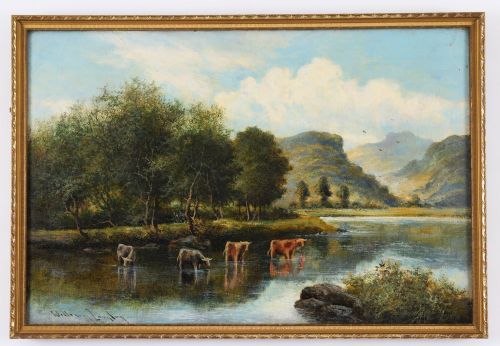
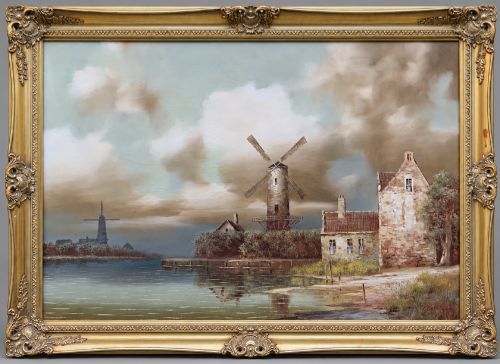
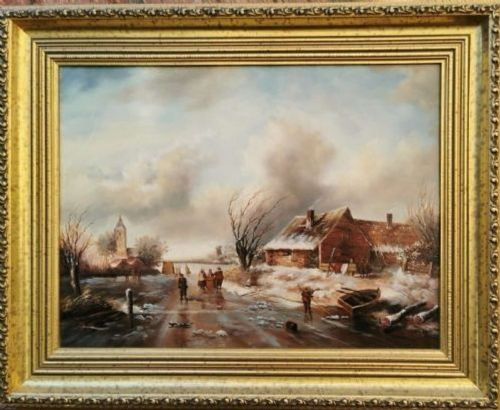
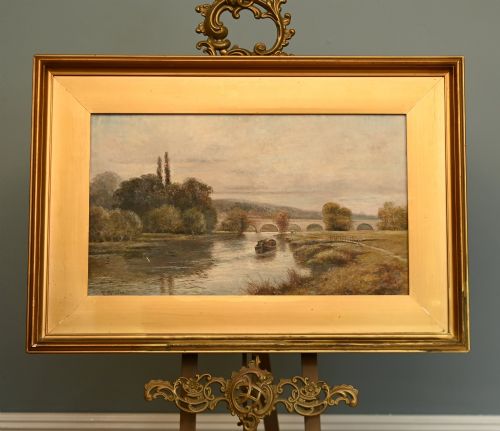
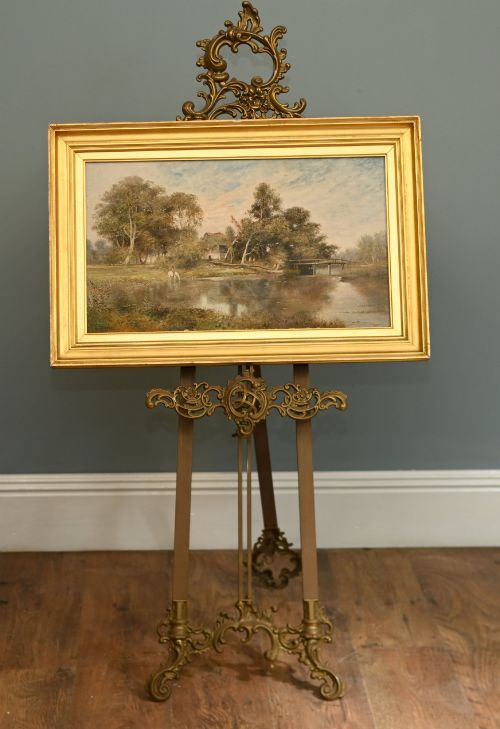
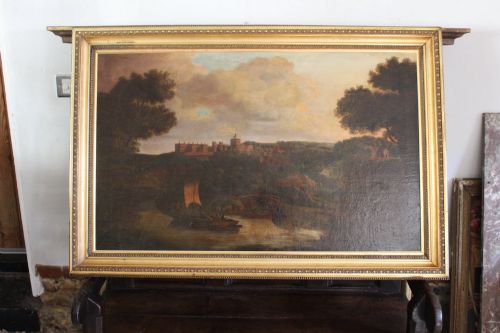
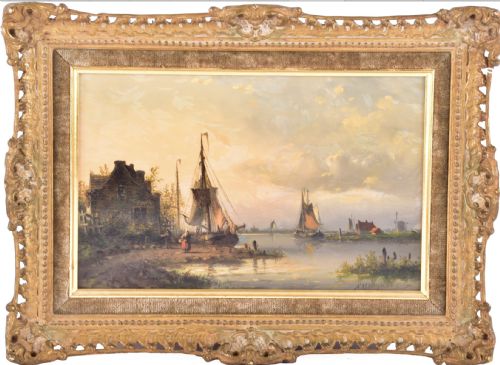
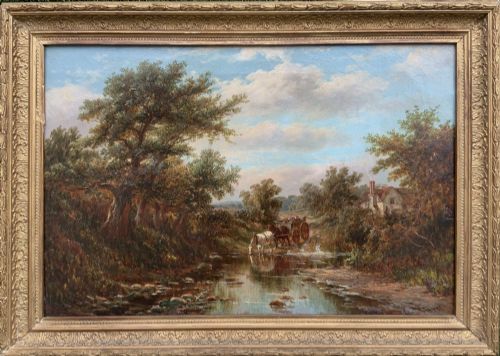
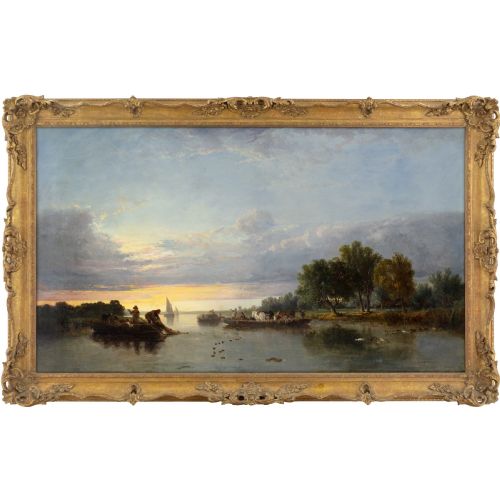
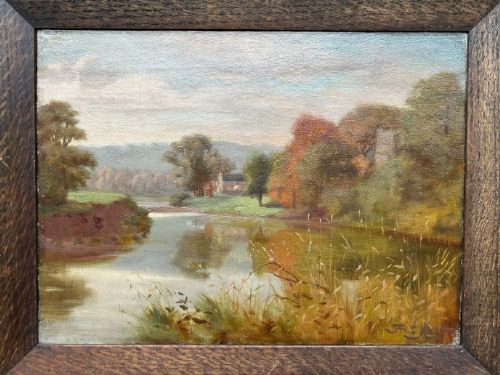
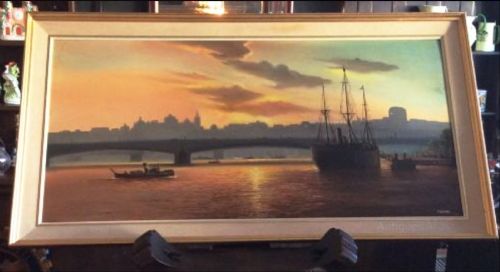
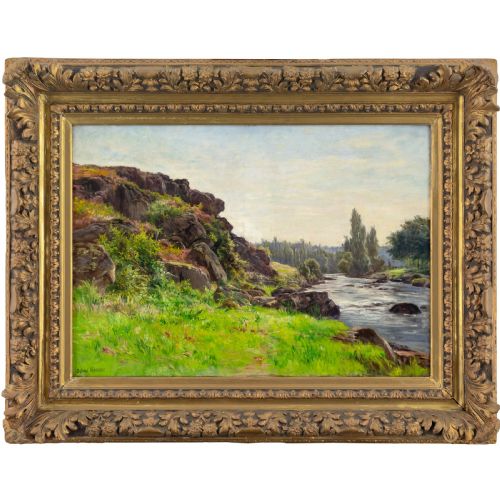
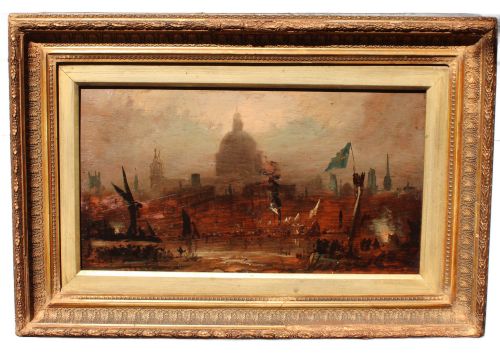
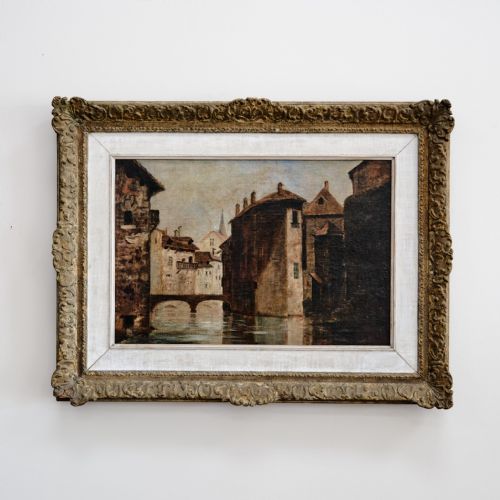
A framed river canvas brings together oil paint, stretched fabric, and timber surrounds to depict moving water, rural banks, and urban bridges. These works range from early nineteenth-century English water meadows to mid-twentieth-century continental canal scenes and maritime vistas.
The subjects span quiet pastoral streams with figures fishing, bustling tidal rivers with shipping, and frozen Dutch waterways. Many examples pair the canvas with period giltwood moulding that matches the era of the painting.
How they were made
Painters applied oil paint to woven canvas stretched over wooden frames, sometimes laying older canvases onto secondary boards for structural support. Pigments were built up from thin underpaintings to rich impasto highlights that give texture to water and foliage.
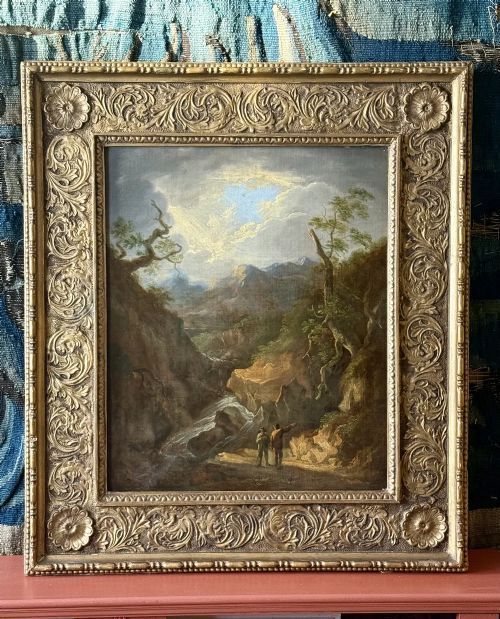
Frames utilised carved wood finished with gesso and gold leaf or gilt paint to complete the presentation. These surrounds protect the canvas edges and provide visual depth to the composition.
Listings feature canvases spanning the nineteenth and twentieth centuries, using oil paint on stretched fabric within wood and gesso frames.
What varies in quality
Quality rests in the handling of light on water and the surety of the brushwork across the canvas surface. Skilled artists capture atmospheric depth and reflections with controlled palettes, whereas weaker examples rely on repetitive formulas for foliage and skies.
The preservation of the original canvas and the integrity of the matching gilt frame influence the overall character of the piece. Works retaining their initial wooden stretchers and undisturbed paint layers show greater fidelity to the artist's intent.
George Graham·Frederick Marriott·Gabriel Mathieu·Francis Moltino·Willem Bos·Henri Ottmann·Sir Alfred East·Herbert Royle·Paul Désiré Trouillebert·Henry H Parker·John Ferneley Senior·Archibald Kay·Charles Clair·Charles William Wyllie·Alexandre Le Bihan·André Prévot-Valéri·Mario Pinetti·Gabriel Dauchot·John Constable·William R Dommersen·Don Vaughan·Ada Stone
The Framed River Canvas Glossary
- Canvas
- A heavy woven fabric used as a support for oil paintings. It is typically stretched tightly over a wooden frame before painting.
- Gesso
- A plaster mixture applied to wooden frames as a smooth base for gilding. It provides a crisp surface for decorative moulding.
- Giltwood
- Timber finished with gold leaf or metallic gilt powder. It is common in period frames designed to complement nineteenth-century oils.
- Impasto
- Paint applied thickly to a canvas so that it stands proud of the surface. This technique creates physical texture in highlights and water.
- Stretcher
- The internal wooden frame that keeps the canvas taut. Older pieces often feature wedged corners to adjust tension over time.
Framed River Canvas: Frequently Asked Questions
How do I hang a heavy framed canvas safely?
Heavy oil paintings require sturdy picture hooks fixed directly into wall studs or secured with appropriate cavity wall anchors. Weight should be distributed evenly across two points using strong brass wire attached to the original stretcher frame.
Ensure the hanging height places the centre of the canvas at average eye level for comfortable viewing. Avoid placing works in direct sunlight or above active heat sources to protect the canvas and gilt frame.
How can I tell the age of the frame?
Period frames show construction methods such as corner mitres joined with wooden pegs or hand-carved gesso ornamentation over pine mouldings. The presence of shrinkage cracks in the gesso often indicates nineteenth-century or earlier manufacture.
Replacement or later frames frequently use modern synthetic mouldings or uniform machine milling without the subtle irregularities found in antique timber surrounds.
What is the difference between an oil study and a finished painting?
Oil studies were often painted quickly on location to capture transient light effects, showing looser brushwork and visible canvas texture. Finished exhibition pieces received more meticulous detail and were intended for formal display.
Both forms appear on canvas, but studies offer insight into the artist's working method before producing a larger gallery work.