



Framed Regency Silhouette Portrait
A framed regency silhouette portrait captures likenesses in stark profile, offering intimate glimpses of Georgian and Victorian life.
Framed Regency Silhouette Portrait
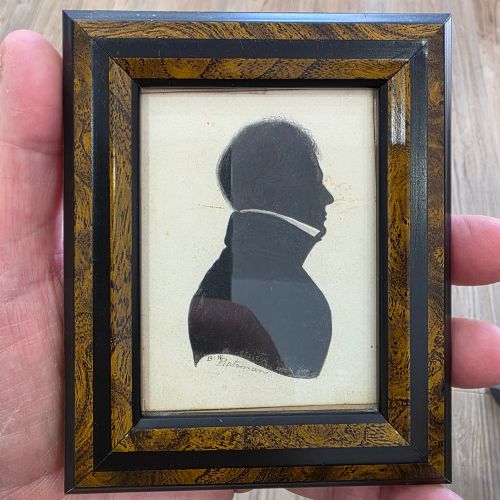
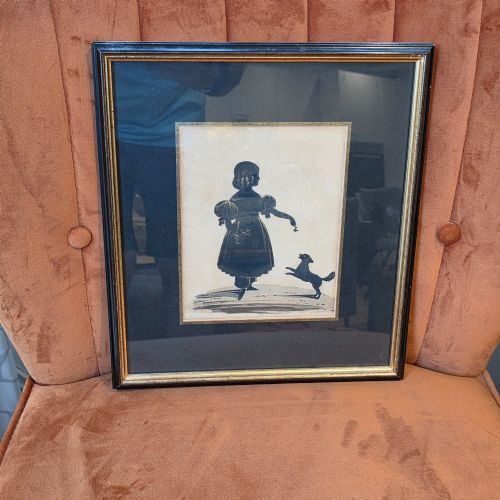
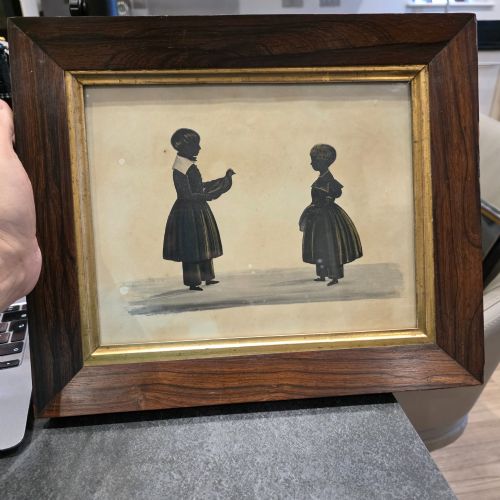
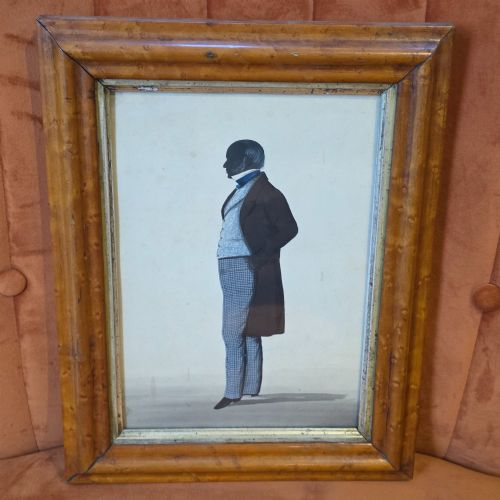
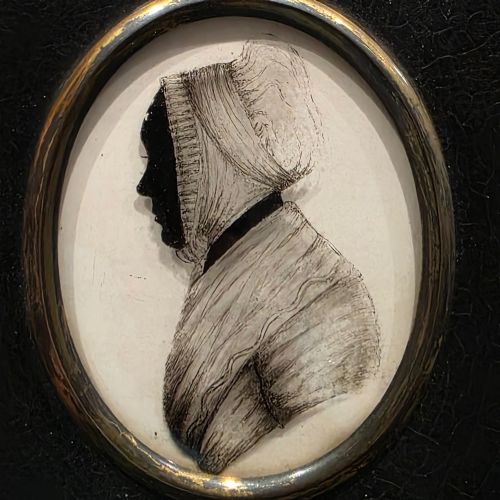
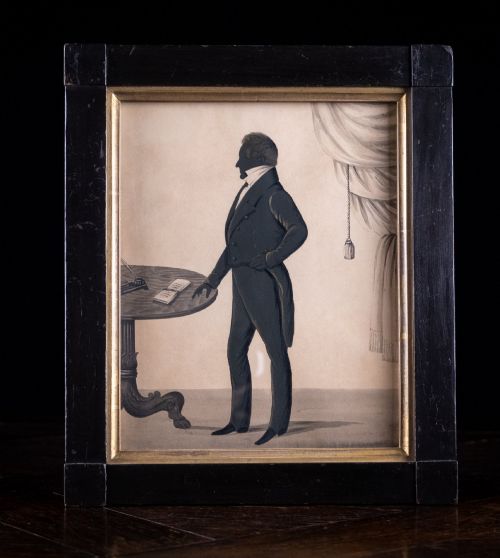
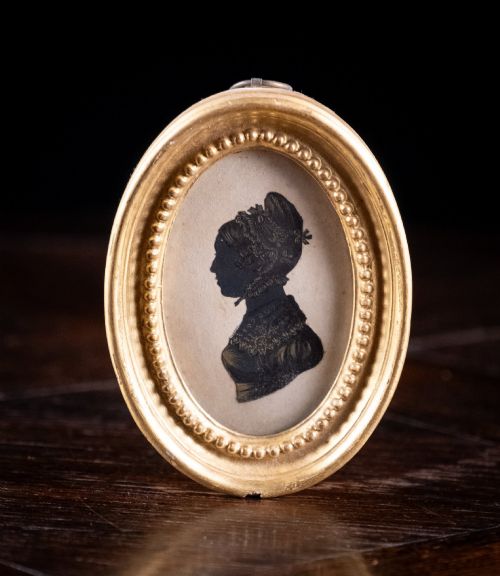
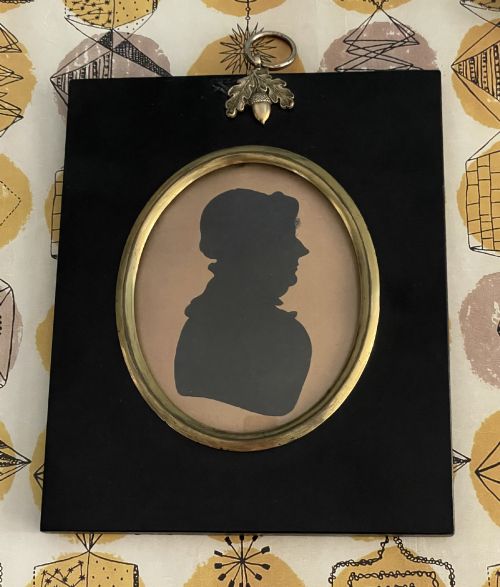
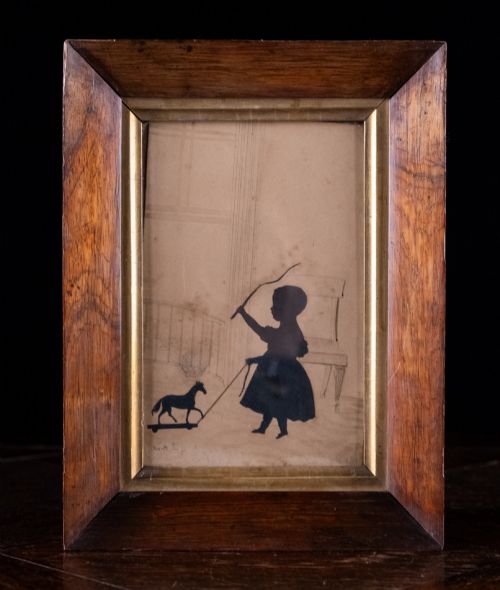
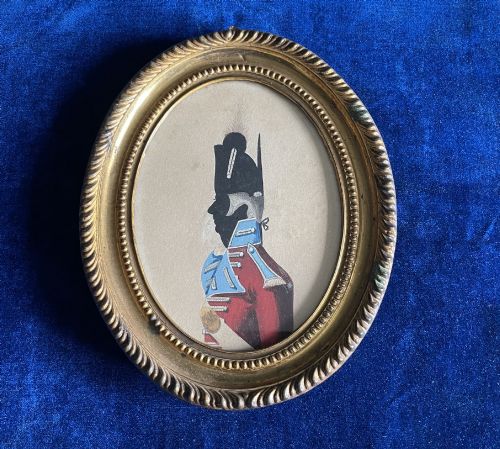
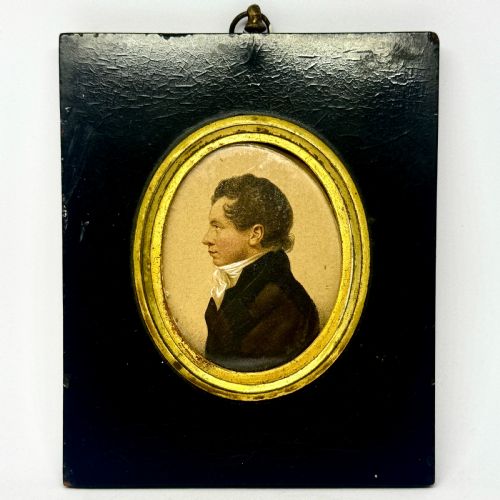
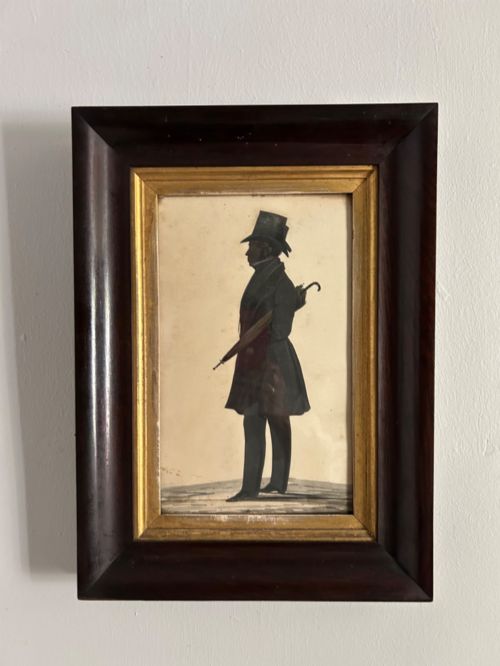
A framed regency silhouette portrait presents a profile likeness of an individual, executed during the Georgian, Regency, and early Victorian eras. These works capture subjects ranging from gentlemen and ladies to children and pets, often showing full-length or bust formats.
Most examples found here date from the nineteenth century, aligning with periods such as George III, William IV, and early Victoria. Wall art forms dominate the selection, presented as miniature portraits intended for intimate domestic display.
Makers and studios of the period recorded sitters using various techniques, resulting in diverse compositions within timber or papier-mache frames. The selection spans straightforward cut paper profiles to elaborate painted glass depictions.
How they were made
Makers utilised paper and ink, often cutting profiles by hand with scissors before mounting the black paper against a pale background. Other artists painted directly on glass, applying dark pigments and delicate gold leaf highlights from the reverse side.
Frames constructed from wood, brass, rosewood, maple, or papier-mache house these portraits, frequently protected by curved glass. Gold leaf accents added ornamentation to the clothing, bonnets, or jewellery of the sitters.
Listings feature works spanning the eighteenth, nineteenth, and Victorian periods, utilising paper, glass, brass, and rosewood.
What varies in quality
The choice of housing influences overall presentation, with original frames made from burr maple, rosewood, or polished papier-mache enhancing the visual impact. Signatures from established profileists or gallery stamps on the reverse elevate the historical interest of a piece.
William James Hubard·Augustin Edouart·John Miers·George Atkinson·Frederick Frith
The Framed Regency Silhouette Portrait Glossary
- Silhouette
- A portrait represented as a solid shape of a single colour, usually black, showing a profile view. The name derives from Etienne de Silhouette, a French minister of finance.
- Reverse painted on glass
- A technique where the artist paints the image on the back of a glass panel so it is viewed through the front. This method often incorporates metallic gold leaf for ornamentation.
- Hollow cut
- A method where the profile is cut out from a sheet of paper, which is then laid over a dark background fabric or paper to reveal the portrait through the negative space.
- Bronzing
- The application of gold powder or paint to highlight details such as hair, lace, and buttons on a black paper or painted silhouette.
Framed Regency Silhouette Portrait: Frequently Asked Questions
How do I identify a genuine period silhouette?
Examine the materials, backing papers, and framing techniques for signs of nineteenth-century manufacture. Hand-cut paper and old glass often display characteristic ageing.
Check for handwritten inscriptions on the reverse, which frequently name the sitter and date the piece.
Were silhouettes painted or cut from paper?
Both methods were common during the Regency period. Some artists specialised in freehand paper cutting using scissors, while others painted directly on card or glass.
Painted examples frequently incorporate fine ink work and gold leaf highlights.
How should I display these portraits at home?
Hang them away from direct sunlight to protect fragile paper pigments and watercolour details from fading. Grouping several framed pieces together creates a traditional gallery effect.
Ensure wall fixings are secure, as many retain their original wooden or papier-mache frames.