


Cut Paper Portrait Art
Cut paper portrait art captures the likeness of past sitters through delicate silhouettes, offering direct visual contact with Georgian and Victorian lives.
Cut Paper Portrait Art
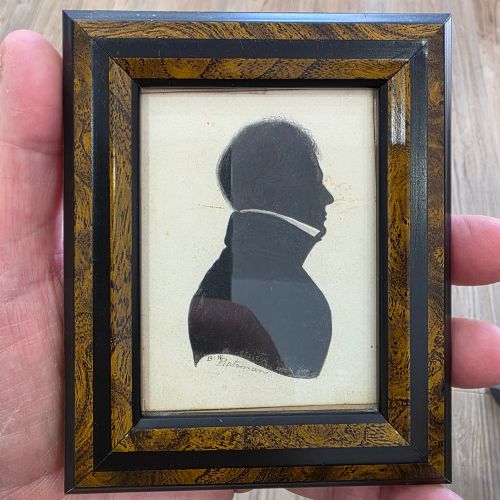
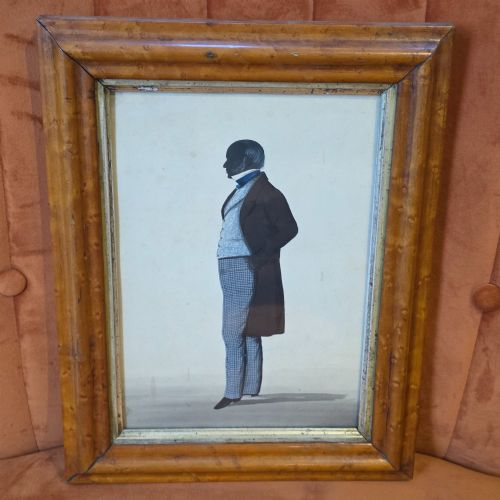
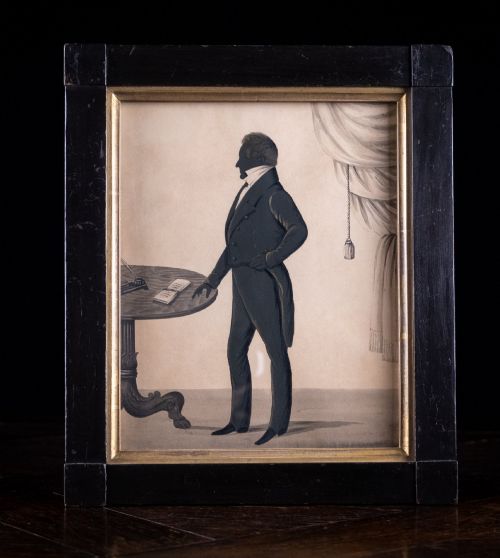
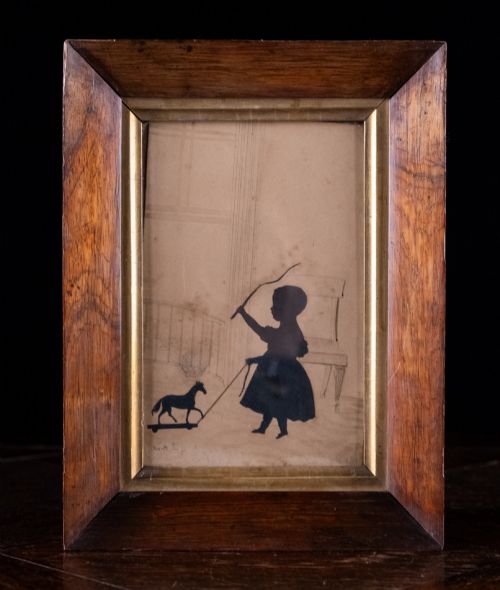
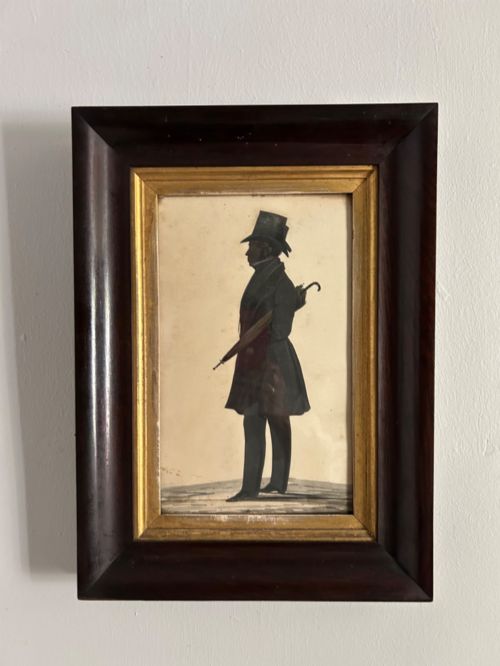
Cut paper portrait art comprises framed silhouette profiles and conversation pieces created during the Georgian, Regency and Victorian periods. These works capture individual likenesses through precise hand-cut paper mounted against contrasting backgrounds.
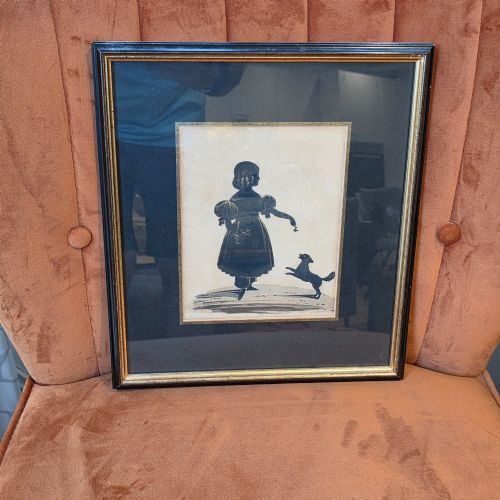
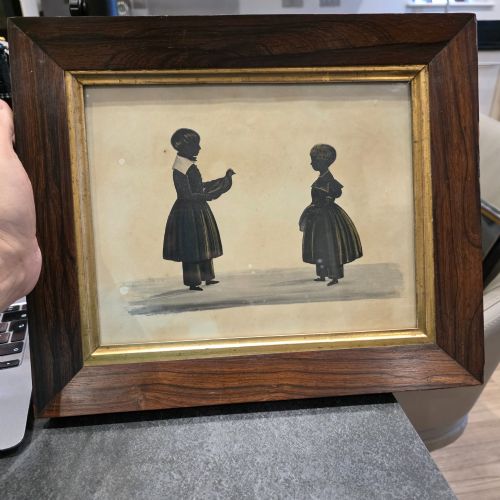
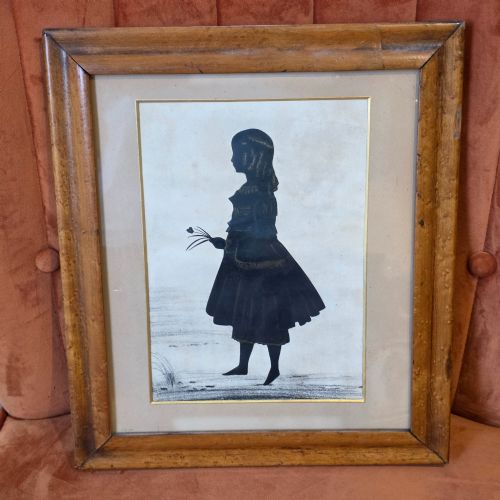
You are most likely to encounter nineteenth-century examples on this page, particularly single portraits of gentlemen and ladies alongside family groups with children or animals. The forms range from simple bust profiles to full-length figures enhanced with watercolour or gold leaf.
Makers and galleries such as the Hubard Gallery produced works that survive in various formats, often housed in maple, ebony or gilt frames behind glass. The subjects include named sitters as well as anonymous figures recorded by British school artists.
Materials and construction
Framing materials typically include wood such as maple and ebony, complemented by brass fittings and protective glass. The cut paper is mounted onto light grounds or combined with painted backgrounds to create depth in conversation pieces.
Several Victorian pieces record family dogs joining the household portrait alongside children and parents.
Judging quality and execution
Quality rests upon the dexterity of the cutting and the crispness of the profile lines. Superior examples show confident handling of complex details like lace, hair strands and clothing without ragged edges.
The integration of secondary media such as watercolour wash or gold leaf embellishment distinguishes finer works from basic silhouettes. Original framing in period wood adds to the integrity of the piece.
William James Hubard·Augustin Edouart·Frederick Frith·Nathaniel Bermingham
The Cut Paper Portrait Art Glossary
- Silhouette
- A profile portrait filled in with a solid dark colour, typically cut from paper or painted. This form became popular in the eighteenth and nineteenth centuries.
- Conversation piece
- An artwork depicting a group of figures engaged in a social setting or daily activity. In cut paper art, these pieces often show family groups with children or animals.
- Gilded silhouette
- A paper portrait enhanced with gold leaf highlights applied to the surface. This technique adds definition to clothing, buttons and accessories.
- Full-length silhouette
- A portrait showing the entire figure of the sitter rather than just the bust or head. These pieces often record posture and costume in detail.
Cut Paper Portrait Art: Frequently Asked Questions
What is cut paper portrait art?
Cut paper portrait art consists of hand-cut silhouettes created during the eighteenth and nineteenth centuries. These works record the profiles of individuals and family groups using dark paper mounted on contrasting backgrounds.
Artists used scissors or knives to capture likenesses before photography existed. Many examples include watercolour details or gold leaf embellishments within period frames.
How were these silhouettes displayed?
These portraits were traditionally framed behind glass to protect the delicate paper from dust and moisture. Makers utilised woods such as maple and ebony for the frames.
Today, they require similar care away from direct sunlight to prevent the paper and any watercolour pigments from fading over time.
How do I date a silhouette?
Dating relies on the costume, hairstyle and framing style of the piece, alongside signatures or gallery labels on the reverse. Regency and Victorian attire provides clear chronological markers for these works.
Archival records and known working dates of silhouette artists also help establish the approximate period of creation.
What is a conversation piece silhouette?
A conversation piece silhouette shows multiple figures interacting in a domestic or outdoor scene rather than a single static bust. These complex compositions often feature children, pets and household objects.
They represent a more ambitious form of cut paper art that required significant skill to arrange and execute multiple figures harmoniously.