



19th Century Silhouette Art
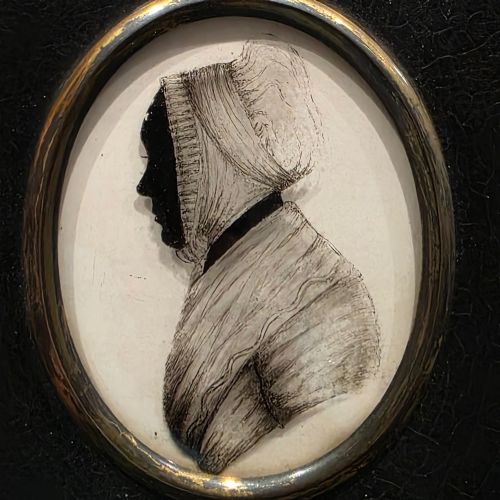
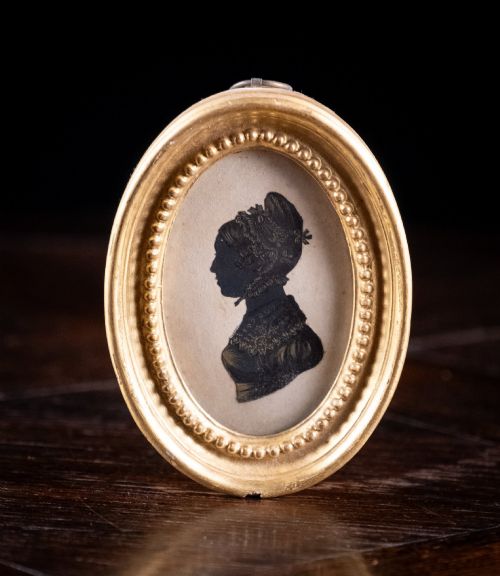
These 19th century silhouette art pieces capture personal likenesses through precise cut paper, ink, and reverse glass painting.
19th Century Silhouette Art
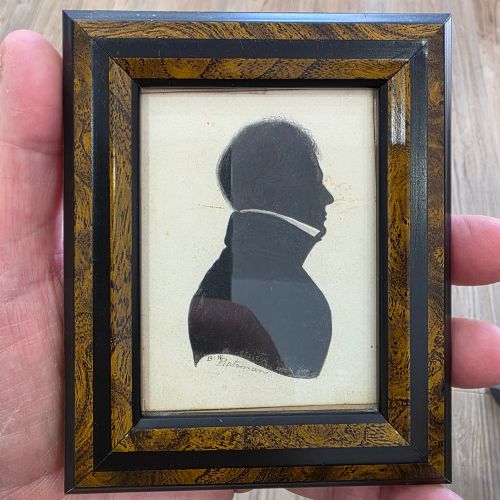
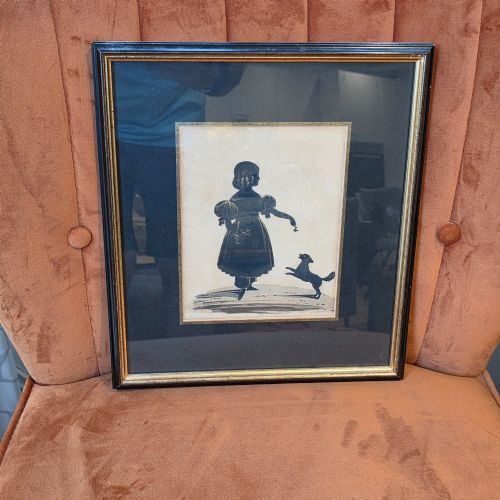
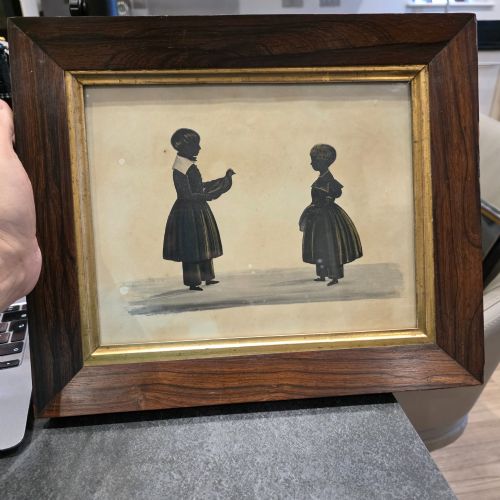
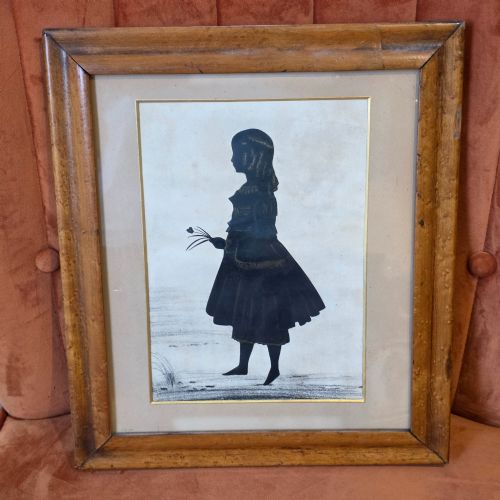
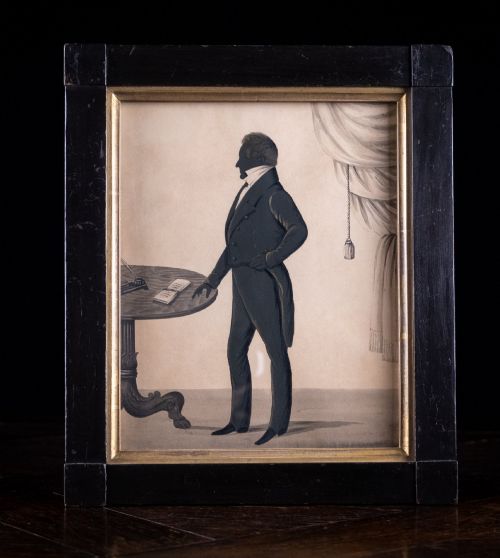
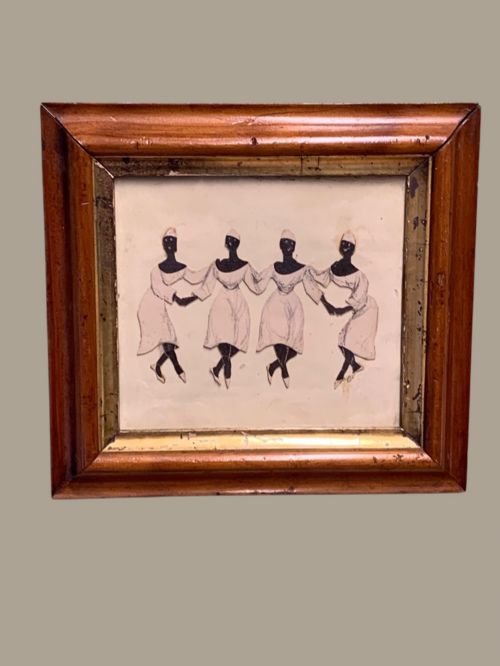
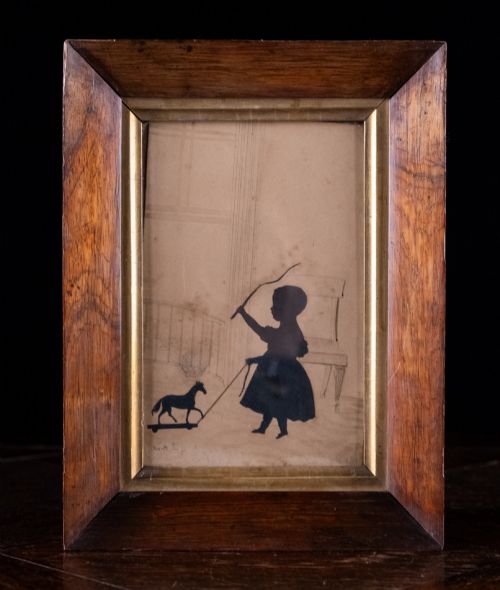
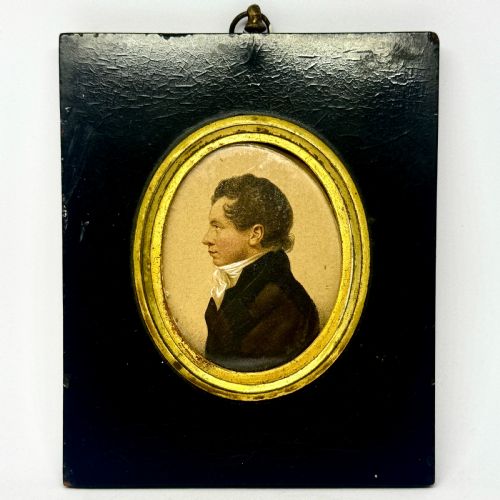
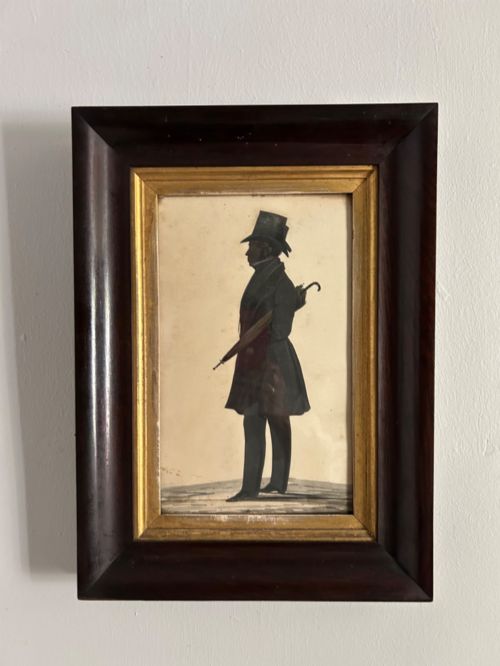
When you search for 19th century silhouette art, you encounter framed portraits, wall art, and miniature likenesses that record individuals from the Georgian, Regency, and Victorian eras. These works range from simple profile cuttings mounted on card to elaborate full-length conversation pieces incorporating watercolour and collage details.
The versions you meet most frequently on this page are framed silhouette portraits executed in cut paper or ink, often preserved behind glass within ebonised wood or rosewood frames. Subjects include gentlemen, ladies in turban caps, children with pets, and family groups rendered with striking economy of line.
Originating as an affordable alternative to painted miniatures before the widespread adoption of photography, these profiles preserve domestic history from periods spanning the early 1800s through to the late Victorian decades. Makers employed scissors, brushes, and specialised studios to produce likenesses that remain remarkably direct.
Materials and construction methods
Many examples utilise reverse glass painting techniques, applying pigment to the rear of the glass pane so that the glossy front surface protects the delicate artwork underneath. Frames fashioned from ebonised wood, mahogany, and rosewood house these compositions, often fitted with brass bezels and hangers.
Materials recorded across these listings include glass, paper, wood, ink, brass, gold leaf, ebonised wood, and gilt wood.
Distinctions in craftsmanship and survival
The upper tier of these works displays exceptional dexterity in paper cutting or brushwork, where minute details like lace collars, eyelashes, and hair tendrils are rendered with absolute precision. Weaker examples show blunt cutting, stiff postures, or crude proportions that lack the lively character observed in superior portraiture.
Condition and originality dictate much of the standing of an individual piece, particularly the survival of the original glass, backing papers, and period frames without modern intervention. Signed works or those bearing studio stamps provide secure attributions that elevate the historical context of the silhouette.
William James Hubard·Augustin Edouart·George Atkinson·John Smith of Edinburgh·J. Deacon·Skeolan
The 19th Century Silhouette Art Glossary
- Silhouette
- A portrait profile filled in with a solid dark colour, typically black, contrasted against a lighter background. The term derives from Etienne de Silhouette, an 18th-century French finance minister.
- Reverse glass painting
- An artistic technique where the image is painted directly onto the back of a glass sheet and viewed from the front. This method creates a luminous finish and protects the pigment from atmospheric damage.
- Hollow cut
- A silhouette method where the profile is cut out from a white paper sheet, leaving the surrounding paper to serve as the mount, often backed with dark fabric or paper to reveal the cutout shape.
- Ebonised wood
- Timber treated with a chemical stain or finish to imitate the dense, dark appearance of ebony. Makers utilised this finish extensively for 19th-century picture frames to contrast with light-coloured mount cards.
19th Century Silhouette Art: Frequently Asked Questions
How do I identify a period silhouette frame?
Period frames on these works typically utilise ebonised wood, rosewood, or mahogany, often assembled with pegged corners and fitted with convex or flat glass held by thin brass bezels.
Looking at the reverse reveals aged backing boards secured with old handmade nails or early paper tapes rather than modern fixings.
What is a silhouette conversation piece?
A conversation piece represents multiple figures engaged in an activity or interaction within a single framed domestic scene, rather than a solitary profile.
These elaborate compositions often include pets, furniture, and detailed interior or exterior settings executed through collage, cut paper, and watercolour.
How should I display antique silhouettes at home?
Display these works away from direct sunlight to prevent the fading of delicate watercolours, gold leaf highlights, and the dark paper grounds.
Maintain stable indoor humidity levels to protect the antique wooden frames and prevent condensation from damaging the fragile paper or glass interiors.