



Framed Pastoral Genre Scene
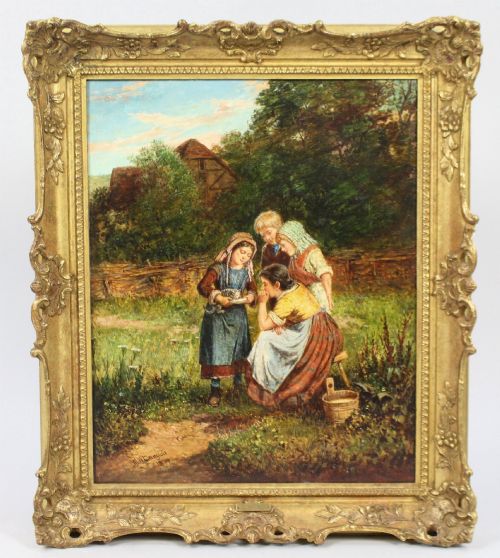
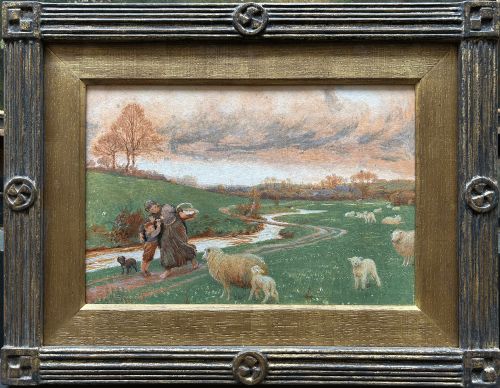
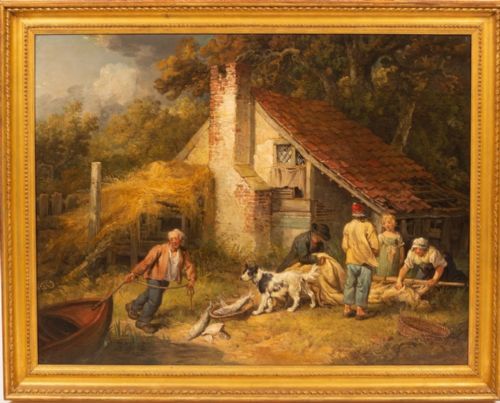
A framed pastoral genre scene brings the quiet charm of the countryside and rustic domestic life straight onto the wall.
Framed Pastoral Genre Scene
A framed pastoral genre scene captures rural life, farmyard animals and everyday country moments across the nineteenth century. These works depict scenes such as children fishing, women feeding ducks, and farmworkers with horses by ponds or rivers.
The selection on this page consists primarily of oil paintings on canvas or board, alongside watercolours and antique prints. Most examples belong to the Victorian period, spanning the decades from eighteen hundred up to nineteen ten.
Buyers encounter British and French artistic interpretations of idyllic country existence, often featuring children, pets and agricultural labourers. The framing generally involves wood, gesso and gilt wood to complement the imagery.
How they were made
Artists painted these works using oil paint on canvas or board, and watercolour on paper, capturing rural subjects with fine brushwork. Oil paintings provide rich depth and texture, while watercolours rely on washes of translucent pigment.
Makers housed these artworks in wooden frames, frequently finished with gesso and gilt details to enhance the visual presentation. The construction combines traditional painting supports with decorative framing typical of the nineteenth century.
The object types span oil paintings, watercolour paintings, framed fine art and antique prints depicting rural and farmyard subjects.
What varies in quality
Quality rests upon the skill of the brushwork and the expressive handling of the rural subject matter, distinguishing ambitious compositions from simpler decorative outputs. The rendering of light, atmosphere and human or animal form shows the capability of the artist.
The condition of the pigment and the originality of the frame influence the standing of an individual piece. Works attributed to named artists with documented exhibition histories carry greater art historical weight than anonymous school pieces.
Mark William Langlois·Frederick Walker·Miles Birkett Foster·Charles Zacharie Landelle·James Hardy Junior·Helena Maguire·John Henry Dell·Daniel Pasmore·Ernest Walbourn·Alfred Banner·Henry Sykes·George Cole·James Ward·George Morland·Thomas Mackay
The Framed Pastoral Genre Scene Glossary
- Genre painting
- Depiction of aspects of everyday life by depicting ordinary people engaged in common activities. These works focus on domestic scenes, farmyard tasks and rural leisure rather than historical or mythological subjects.
- Pastoral
- Relating to the countryside and rural life, often presented in a romanticised or idealized manner. The imagery typically includes shepherds, farmworkers, cottages and agricultural landscapes.
- Gesso
- A plaster-like mixture applied to wood frames as a base for moulding and gilding. This material allows artisans to carve intricate decorative patterns around the perimeter of the painting.
- Gilt wood
- Wood coated with a thin layer of gold leaf or metallic paint. It frames the artwork with a reflective border that catches natural light in a room.
Framed Pastoral Genre Scene: Frequently Asked Questions
What is a pastoral genre scene?
A pastoral genre scene portrays everyday rural life, farm animals and agricultural workers in a countryside setting. These artworks celebrate simple domestic moments and outdoor labour.
Such pieces reflect nineteenth century artistic interests in idyllic rural communities and natural landscapes.
Where should I hang one?
These framed works suit living rooms, dining spaces and studies where traditional furnishings create a harmonious backdrop. Their warm rural subjects bring a sense of calm and history to interior walls.
Keep them away from direct sunlight and excessive moisture to protect the canvas, paper and gilt wood frames.
How do I date these paintings?
Dating relies on stylistic evidence, artist signatures, framing techniques and materials such as canvas or board preparation. Nineteenth century works often display specific Victorian aesthetic conventions in dress and landscape depiction.
Examine the back of the panel or stretcher bars for old inscriptions, gallery labels or stamps that provide clues to the origin.
Are watercolours as durable as oils?
Watercolours on paper require careful protection behind glass to prevent fading from light exposure and damage from humidity. Oil paintings on canvas or board are generally more robust but still benefit from stable indoor environments.
Both mediums have survived from the eighteen hundreds through attentive preservation by past owners.