





English Country Genre Art
English country genre art captures nineteenth-century rural life through oil paintings, watercolours, and framed prints of cottages, farms, and village characters.
English Country Genre Art
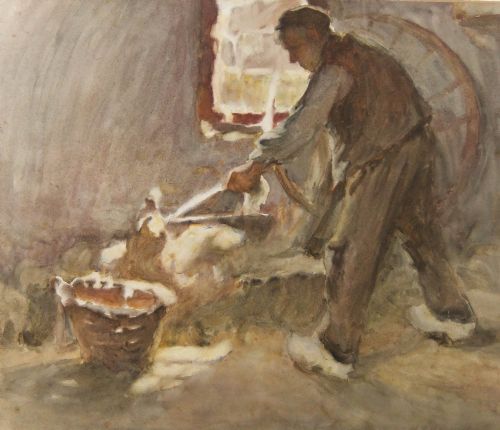
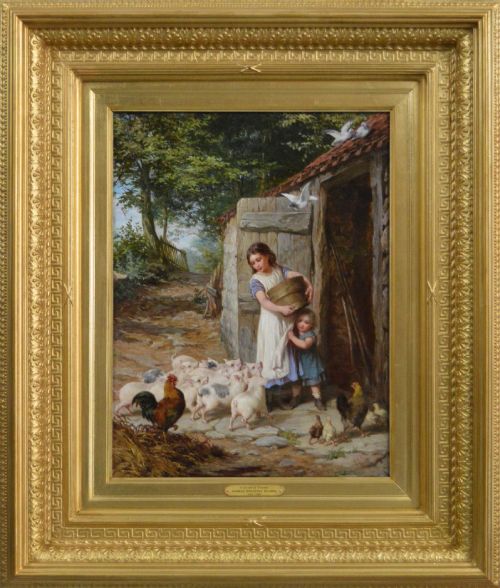
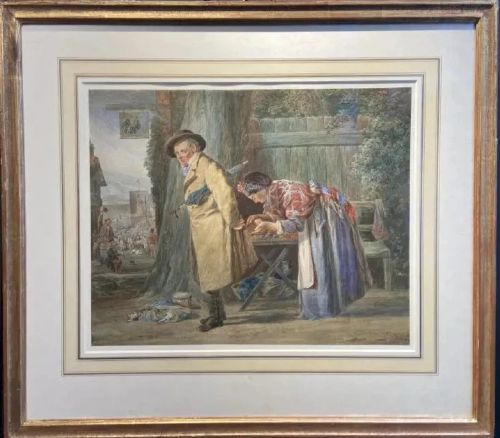
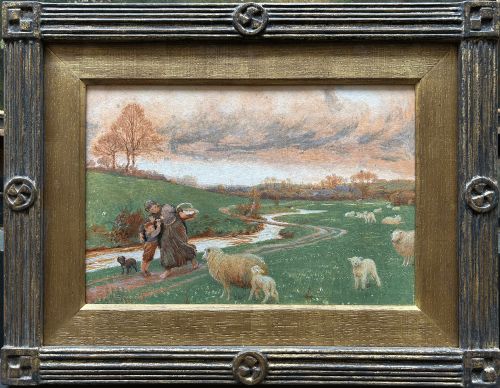
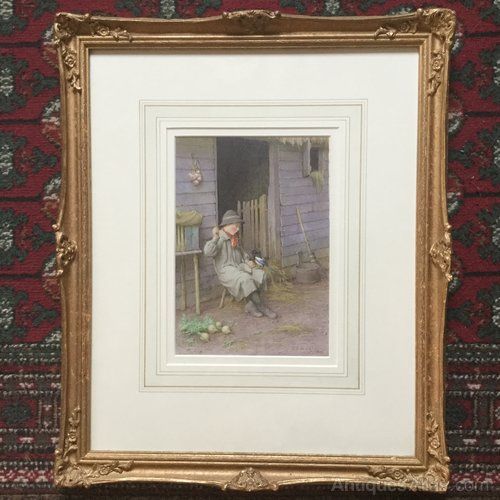
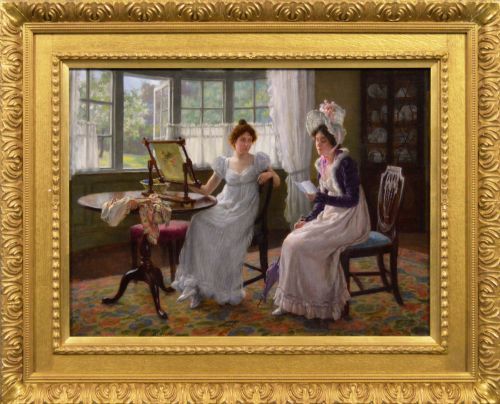
English country genre art depicts everyday rural narratives, farmyard scenes, and cottage interiors from the nineteenth and early twentieth centuries. These works record domestic moments, village trades, and children or animals in traditional landscapes.
Watercolours and oil paintings on canvas or board dominate the period, framed often in giltwood with gesso details. Lithographs and mezzotints offer printed interpretations of popular rustic subjects.
Victorian genre realism shapes the core of these listings, running from the Georgian era through the Edwardian period. Works span simple cottage doors and blacksmiths to farmworkers and children at play.
How They Were Made
Artists built oil paintings by applying layered pigments onto stretched canvas or wooden board, creating depth in rural landscapes and interiors. Watercolours relied on washes of pigment on heavy paper to capture light in cottage gardens and village streets.
Giltwood frames with moulded gesso ornamentation were standard for mounting finished canvases and watercolours, often preserved behind protective glass. Lithographs and mezzotints utilised printed plates to reproduce original rustic compositions for wider domestic display.
Several watercolours on this page record children feeding ducks and playing with tethered ponies in quiet cottage gardens.
What Varies in Quality
Mastery of human expression and animal anatomy separates accomplished genre pieces from formulaic studio work. Stronger compositions handle natural light and shadow with confidence, bringing narrative warmth to cottage doors and farmyards.
The sensitivity of the brushwork and the depth of the palette determine the distinction between ordinary illustrations and finely observed social history. Original framing in period giltwood adds historical integrity to the finished piece.
George Augustus Holmes·Frederick Walker·Charles Haigh Wood·Henry John Yeend King·James Hardy Junior·Arthur Longley Vernon·Frank Moss Bennett·John Henry Dell·George Goodwin Kilburne·Arthur Claude Strachan·George Cole·William Shayer·Ralph Hedley
The English Country Genre Art Glossary
- Genre art
- Painting depicting scenes of everyday life, ordinary people, and domestic narratives rather than grand historical or mythological subjects.
- Gesso
- A plaster-like mixture applied to wooden frames and moulded into decorative reliefs before gilding with gold leaf.
- Mezzotint
- A printmaking process of the intaglio family where the plate is roughened to achieve rich tonal gradations.
- Lithography
- A planographic printing method using a flat stone or metal plate on which image areas accept ink and blank areas reject it.
- Giltwood
- Timber carved and coated with a thin layer of gold leaf or gold paint.
English Country Genre Art: Frequently Asked Questions
What is English country genre art?
These works are nineteenth-century paintings and prints depicting rural life, village trades, and domestic scenes in cottages and farmyards.
They capture the social history and rustic character of the Victorian countryside through oil on canvas or watercolour on paper.
How were these pictures displayed?
Victorian households mounted these artworks in heavy giltwood frames, frequently embellished with moulded gesso work and protected beneath glass.
Such frames were designed to complement the warm tones of oil paintings and the delicate washes of watercolours in domestic interiors.
How do I date an oil painting?
Dating relies on stylistic clues, framing techniques, canvas stamps, and artist signatures recorded from the Victorian and Edwardian periods.
Costume details and rural architecture depicted in the scene also provide reliable markers for the era of execution.
What subjects are most common?
Common subjects include children playing in cottage gardens, farmworkers with horses, blacksmiths at work, and families gathered outside rural dwellings.
These narratives celebrate traditional village routines and domestic harmony.