
19th Century Narrative Painting
19th century narrative painting brings literary tales, domestic interactions and historical episodes to life on canvas, offering buyers a window into Victorian storytelling and social observation.
19th Century Narrative Painting
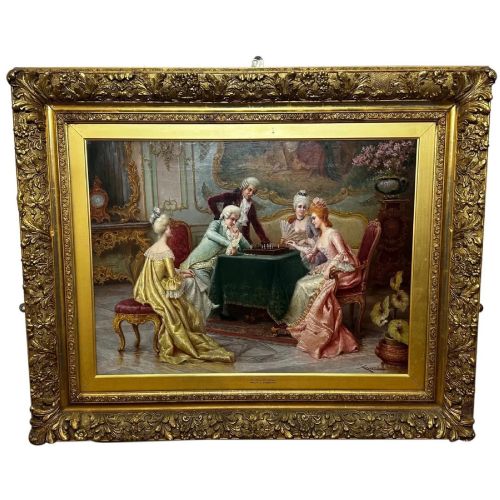
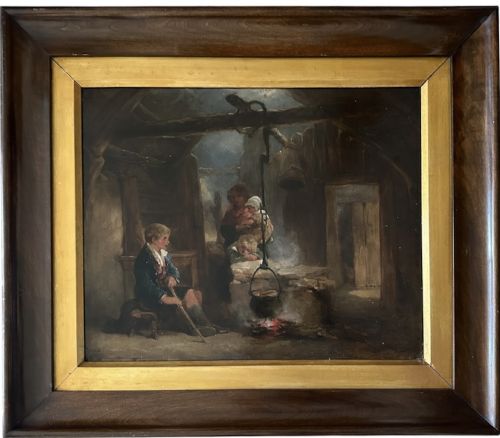
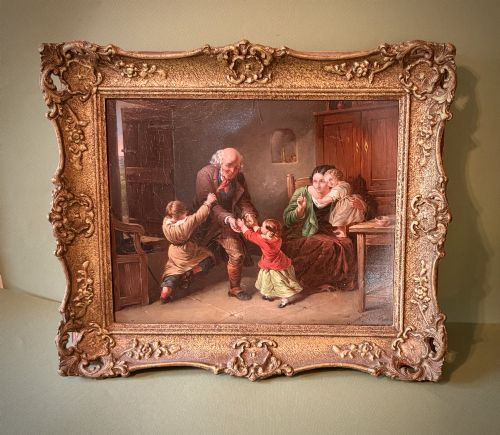
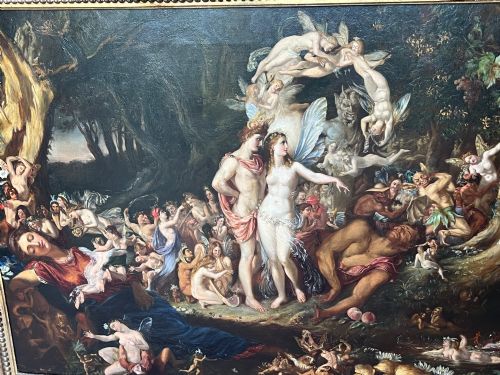
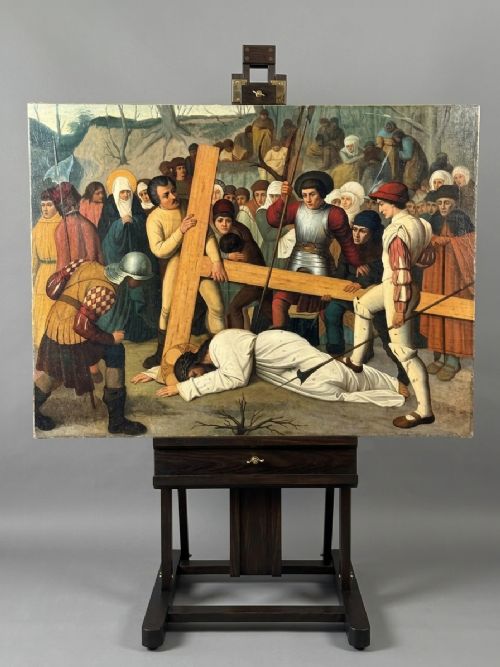
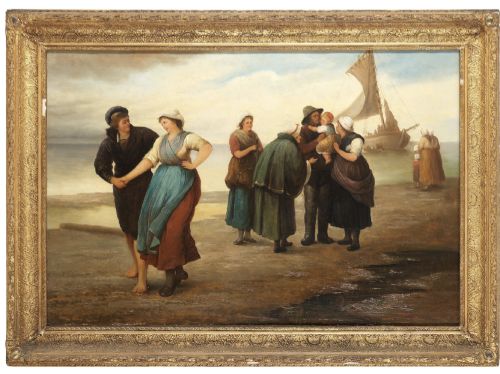
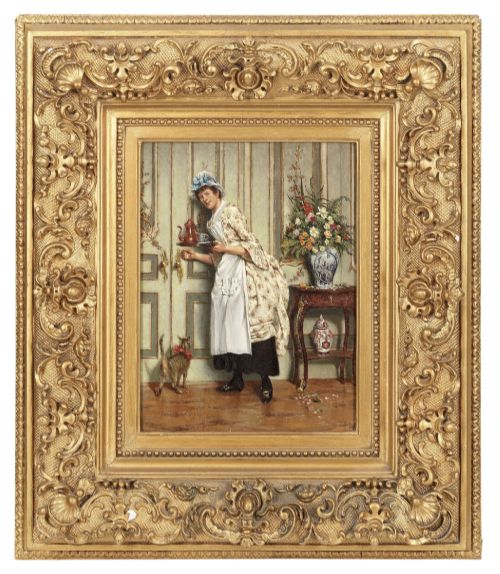
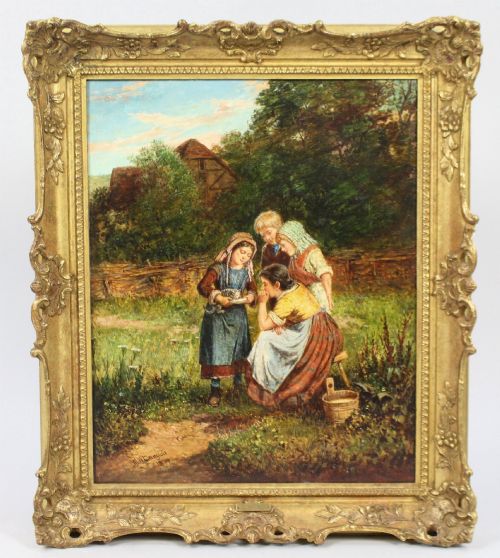
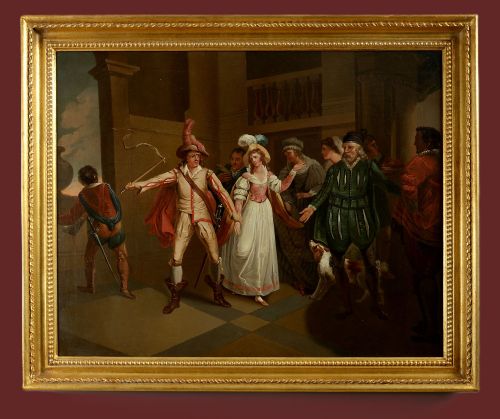
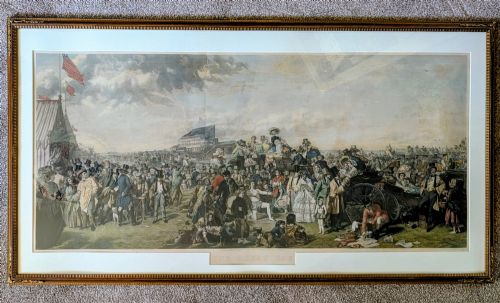
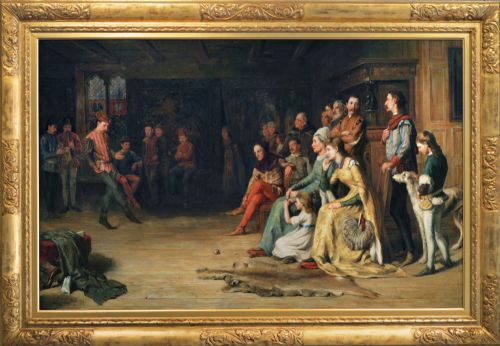
When you search for 19th century narrative painting, you encounter works that tell a distinct story, ranging from literary scenes based on Shakespeare to domestic interiors and social realism. The selection on this page centres primarily on Victorian genre paintings, historical scenes and domestic depictions executed in oil on canvas or panel.
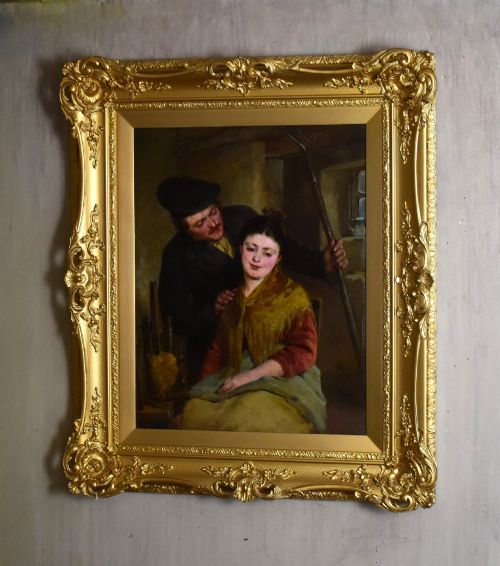
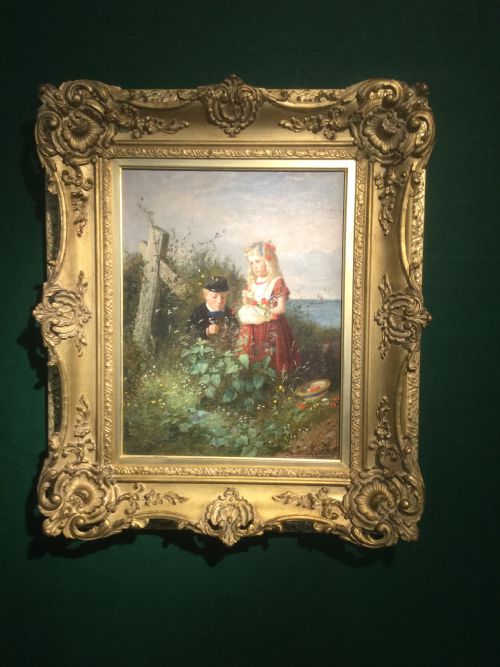
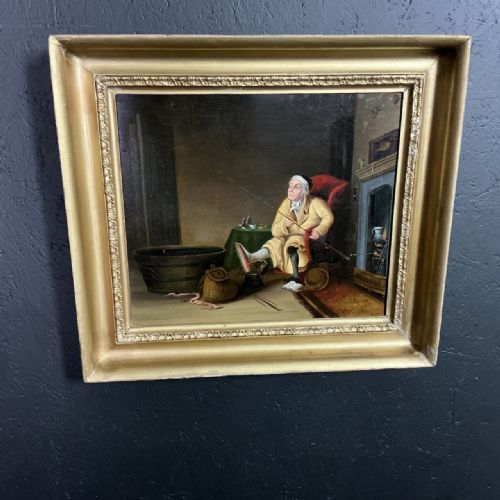
Subjects often include everyday interactions in country houses, humorous domestic vignettes involving children and animals, and dramatic moments drawn from history or mythology. Artists capture human emotion and character through staged interactions, placing figures in meticulously detailed domestic or landscape settings.
The pieces span the Victorian era alongside select Georgian and late nineteenth-century examples, reflecting shifting artistic tastes from classical narrative to social realism and British genre traditions. These artworks serve as historical documents of contemporary manners, class structure and domestic life.
Materials and Technique
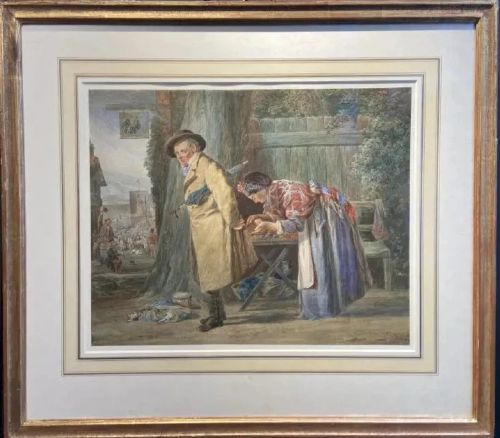
Painters of this period predominantly utilised oil on canvas or wood panels, applying rich layers of pigment to build depth, texture and subtle tonal variations in interior lighting. Watercolour also appears among the works, offering a lighter medium for detailed illustrative compositions.
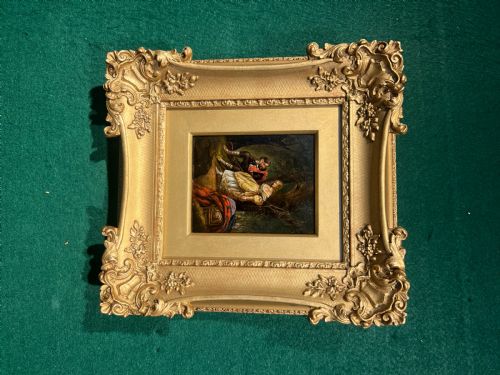
Canvases are frequently housed in period giltwood or gesso frames that complement the ornate visual language of the pictures. The application of oil paint allows for meticulous rendering of fabric textures, facial expressions and interior furnishings.
Listings feature works executed in oil on canvas, wood panel and watercolour, framed in period giltwood.
Assessing Quality and Execution
Quality rests in the precision of the figure drawing, the expressiveness of the faces and the dexterity with which the artist handles complex interior lighting and narrative composition. Superior examples convey psychological nuance and atmosphere, whereas lesser works rely on stiff poses and repetitive motifs.
The integration of the frame matters; original giltwood or gesso frames that match the period of the painting elevate the overall integrity of the piece. Brushwork control and the preservation of the original pigment surface determine the visual impact of the canvas.
Sir Joseph Noel Paton·Felix Stone Moscheles·Stephen Samuel Lewin·Mark William Langlois·Howard Helmick·James Hamilton·Charles Hunt·James Kyd·Edwin Thomas Roberts·Frank Hyde
The 19th Century Narrative Painting Glossary
- Genre painting
- A style of art depicting scenes from everyday life, ordinary people, and domestic interiors rather than grand historical or mythological subjects. These works provide insight into the social habits and domestic arrangements of the period.
- Giltwood
- Wood that has been coated with a thin layer of gold leaf or gold paint, commonly utilised on decorative picture frames during the nineteenth century. It adds a reflective border that enhances the colours within the painting.
- Gesso
- A plaster-like mixture applied to wooden panels or frame mouldings to create a smooth surface for painting or gilding. It provides the foundation for ornate relief decoration on period frames.
- Social realism
- An artistic movement that highlights the everyday conditions of the working classes and the poor, critiquing social structures through visual storytelling. Works in this category often address labour, poverty and societal divisions.
19th Century Narrative Painting: Frequently Asked Questions
What defines a narrative painting?
A narrative painting tells a specific story, capturing a particular moment in a literary, historical or domestic sequence of events. The composition directs the viewer's attention to the interactions between characters.
These works often feature figures in theatrical poses, encouraging the observer to decode the plot unfolding within the scene.
How do I care for an oil painting?
Keep oil paintings away from direct sunlight and fluctuating temperatures to prevent the canvas from warping and the paint from cracking. Dust the surface gently with a soft, dry brush without applying pressure.
Ensure the artwork hangs in a stable environment away from moisture sources to protect both the canvas and the original frame.
Are these paintings signed by the artists?
Many works bear the signature or monogram of the artist, sometimes accompanied by exhibition dates or titles inscribed on the reverse. Signatures help attribute the piece to specific academic or regional schools.
Unsigned pieces are frequently attributed to particular schools or circles based on stylistic comparisons and technical execution.
What is the difference between genre and historical painting?
Genre painting focuses on everyday scenes of ordinary people engaged in domestic or social activities. Historical painting depicts significant moments from history, literature or mythology.
While both tell a story, genre art reflects contemporary life and manners, whereas historical art draws upon established texts and past events.