

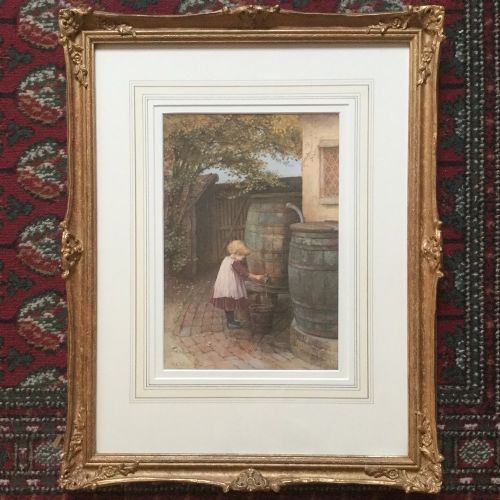


Framed Pastoral Genre Art
Framed pastoral genre art captures rural life and idyllic scenes through oil paintings, watercolours, and engravings.
Framed Pastoral Genre Art
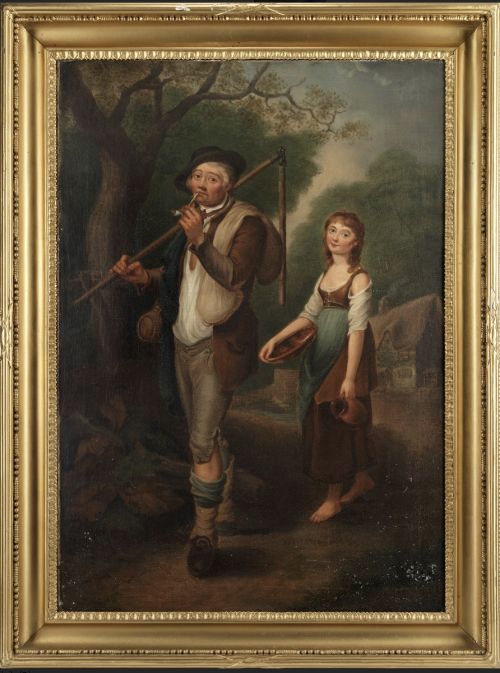
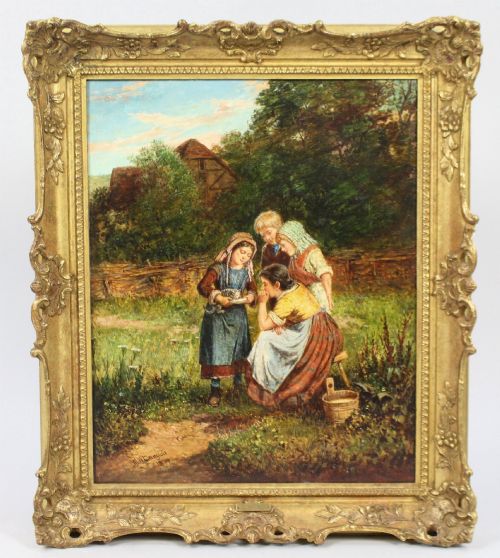
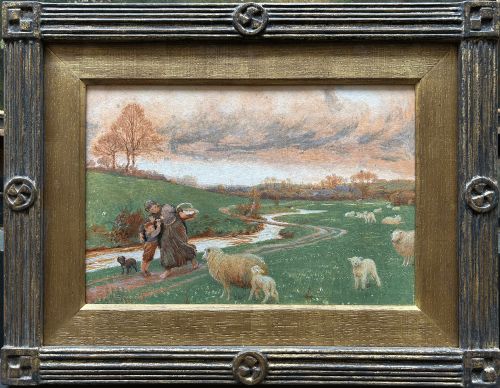
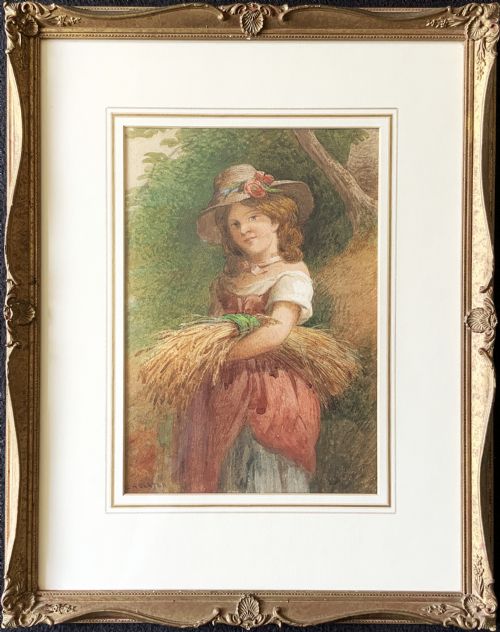
Framed pastoral genre art depicts scenes of rural life, farmyard animals, and rustic activities set against countryside backdrops. These works span from the Georgian period through the Victorian era and into the Edwardian years.
The most common formats met on this page include oil paintings on canvas and panel, alongside detailed watercolours and hand-coloured engravings. Subjects frequently feature children fishing, milkmaids, and farmworkers tending to animals.
Materials and Techniques
Artists worked primarily in oil on canvas or board, and in watercolour on paper, capturing everyday rural narratives with precision. Canvases and panels received layers of pigment to build depth in landscape and figure details.
Framing utilised wood, gesso, and gilt wood, occasionally incorporating Hogarth moulding to complement the period aesthetic. Paper works frequently incorporated glass protection alongside hand-coloured elements.
A young foal occasionally steals fruit from a basket, capturing a cheeky farmyard moment frozen in watercolour.
Assessing Quality
Quality rests upon the artist's ability to render human expressions and animal forms with naturalism within the pastoral landscape. Finer examples display confident brushwork and balanced compositions that integrate figures seamlessly into their rural surroundings.
The integrity of the original framing, whether gilt wood or Hogarth style, influences the overall presentation and historical cohesion of the piece.
Thomas Barker of Bath·Mark William Langlois·Frederick Walker·Miles Birkett Foster·Charles Henry Slater·Charles Edward Wilson·Henry William Banbury·Charles Zacharie Landelle·Friedrich von Kaulbach·James Hardy Junior·Helena Maguire·John Henry Dell·Daniel Pasmore·Ernest Walbourn·Alfred Banner·Henry Sykes·William Lucas·Thomas Hollingsworth·George Cole·George Morland·Fred Morgan·John Pedder·Thomas Mackay·Georgina Lara·Edward John Cobbett
The Framed Pastoral Genre Art Glossary
- Genre art
- Painting depicting scenes from everyday life, typically involving ordinary people engaged in common activities. These works often carry narrative charm.
- Pastoral
- Relating to the countryside, rural life, and agricultural settings, often idealised for artistic effect. Such scenes emphasise tranquility and harmony with nature.
- Gesso
- A plaster-like mixture applied to wood frames to create a smooth surface for gilding or painting. It provides the foundation for ornate decorative mouldings.
- Hogarth frame
- A narrow, dark wooden frame with a distinct profile, popular for prints and paintings during the Georgian and Regency periods. They offer a subtle border that does not overpower the artwork.
Framed Pastoral Genre Art: Frequently Asked Questions
What subjects appear in pastoral genre art?
These works display farmyard scenes, children fishing, milkmaids returning, and agricultural workers with horses. The focus remains on domestic animals and rural labour in village settings.
Compositions often highlight tranquil lakes, cottages, and meadows reflecting 19th-century and Edwardian rural ideals.
How do I date a framed painting?
Dating relies on the artist's recorded lifespan, costume details, and stylistic markers associated with Victorian, Regency, or Edwardian periods. Frame construction also offers chronological clues.
Inscriptions on the reverse or paper labels frequently record specific exhibition dates or artist signatures.
Where were these paintings displayed originally?
Middle-class and aristocratic homes in the 19th century hung these works in parlours and drawing rooms to evoke rustic calm. They served as decorative focal points above mantelpieces or along hallways.
Smaller watercolours and engravings were often grouped together in domestic spaces for varied visual interest.
Are these works original or prints?
The selection includes unique hand-painted oil canvases, oil panels, and watercolours alongside period lithographs and engraved prints. Mediums are specified to distinguish between direct artist works and mass-produced impressions.
Hand-coloured engravings and lithographs from the Georgian and Edwardian eras represent distinct printmaking traditions.