



Framed Pair Illustrations
Framed pair illustrations bring matching visual narratives into a room, offering balanced symmetry through prints, watercolours and engravings.
Framed Pair Illustrations
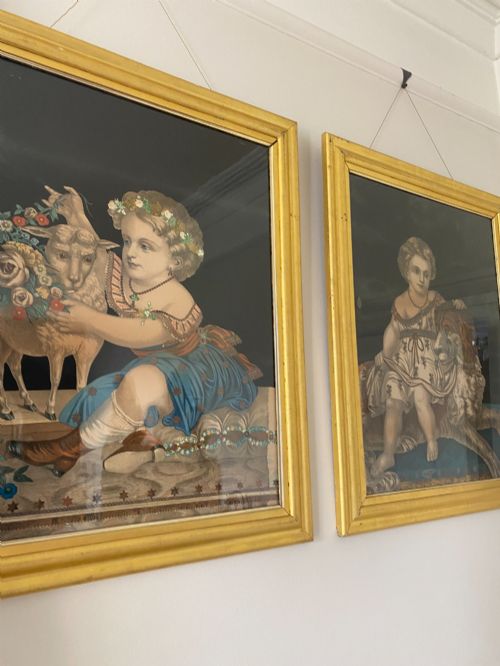
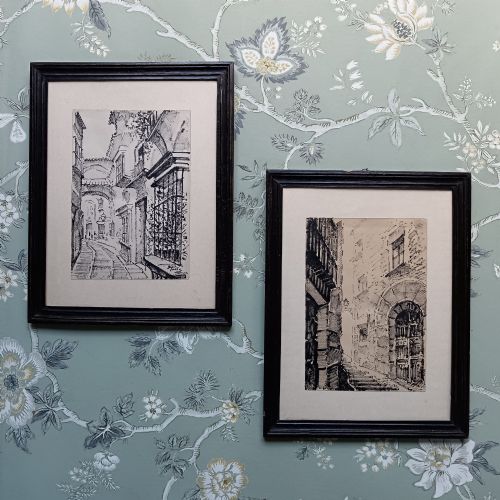
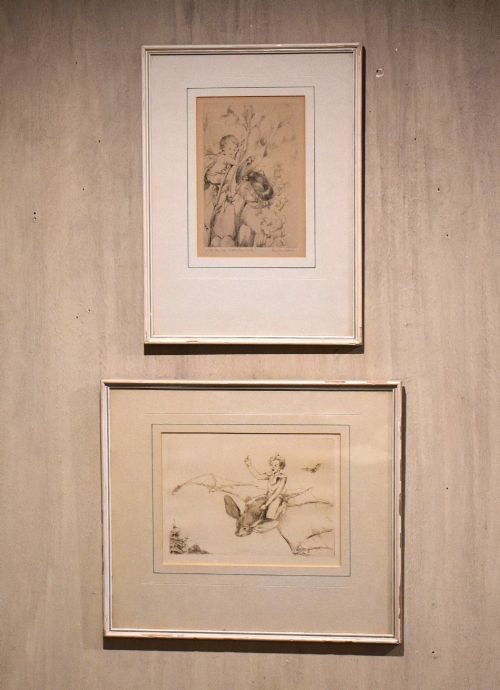
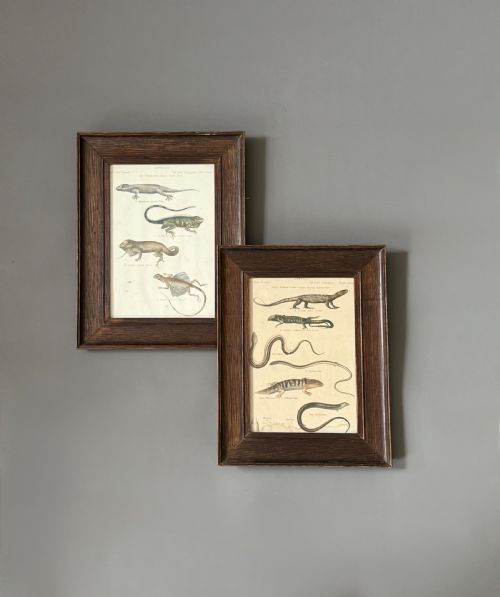
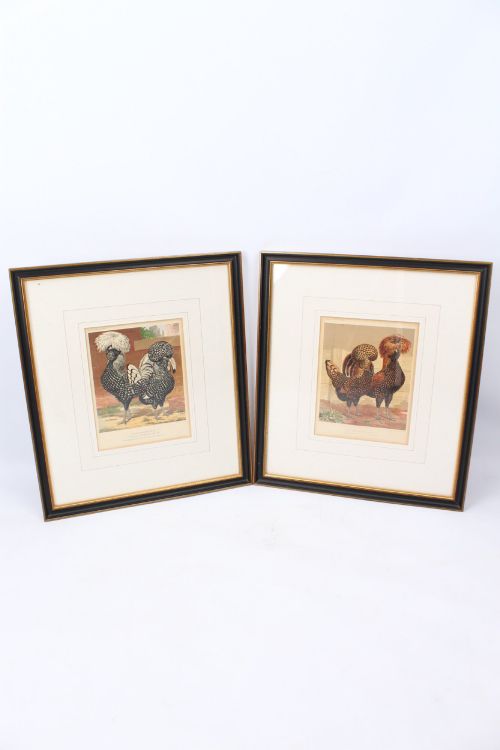
Framed pair illustrations consist of two complementary works displayed together, uniting subjects such as natural history, architecture and portraits. These dual compositions span the eighteenth, nineteenth and early twentieth centuries, capturing subjects ranging from birds and reptiles to architectural studies and human figures.
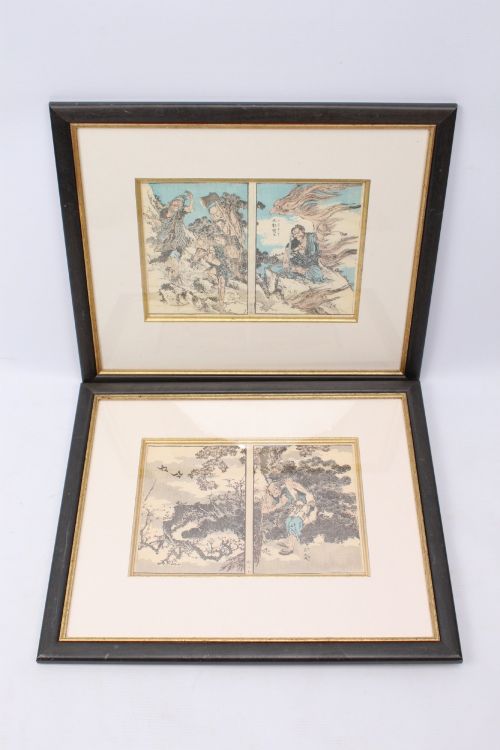
Buyers encountering this selection will frequently find natural history subjects, including ornithological studies, botanical engravings and animal portraits. Alongside these scientific and botanical subjects, the selection contains watercolours, lithographs, woodblock prints and architectural sketches.
The origins of these works cross several periods, encompassing Georgian, Victorian, Edwardian and early twentieth-century examples. Many pieces arrive housed in wood, giltwood and gold leaf frames that complement the paper works within.
Materials and Technique
The physical foundation of these pieces relies primarily on paper, ink and watercolour, often enhanced by hand-colouring or gouache. Artists and printers utilised engraving, lithography and woodblock techniques to produce the underlying imagery.
Protective framing utilises wood, giltwood and gold leaf alongside glass to safeguard the delicate paper works. These mounting and framing choices reflect the period standards of the eighteenth, nineteenth and twentieth centuries.
Framed Pair Illustrations Retail Price Guide 2026
Typical asking prices for framed pair illustrations among the pieces listed under this phrase on Sellingantiques today, from the lower quarter to the upper quarter. They describe what is for sale here now, not the wider market.
Listings feature paper works executed in watercolour, ink, gouache, engraving, lithography and woodblock across Georgian, Victorian and Edwardian periods.
Quality and Distinction
Distinction in these works rests upon the crispness of the original impression, the precision of hand-colouring and the preservation of the paper. Hand-painted watercolours and gouache sketches derive their strength from brushwork control and pigment vibrancy.
The integrity of the framing materials, such as period wood and gold leaf mouldings, contributes to the overall cohesion of the pair. Uniformity between the two framed items dictates how successfully they function as a matching set.
William Bird MD FLS·Hokusai·Louis Wain·Buffon·Bernhard Siegfried·Georg Wolfgang Knorr·Karl Feiertag·M.K Rhodes·Jean Cuny
The Framed Pair Illustrations Glossary
- Engraving
- A printmaking technique where an image is incised into a metal plate, holding ink to transfer fine lines onto paper. This method allowed for precise botanical and anatomical illustration.
- Lithography
- A planographic printing process based on the repulsion of oil and water, enabling detailed reproduction of illustrations. Many nineteenth-century prints utilise this technique for colour work.
- Giltwood
- Wood carved and coated with a thin layer of gold leaf or metallic paint, frequently utilised for period picture frames. This finish provides a reflective border around paper illustrations.
- Watercolour
- A painting method where fine pigment is suspended in a water-based solution on paper. These works rely on translucent washes to build form and colour.
- Gouache
- An opaque water-based paint medium that yields solid areas of colour and sharp detail. It appears frequently in aviation and illustrative sketches.
Framed Pair Illustrations: Frequently Asked Questions
What subjects appear in framed pair illustrations?
The subjects encompass natural history, including birds, reptiles, skeletons, botanical foliage and animals. Other works depict architectural interiors, fashion, caricatures and military figures.
Additional examples showcase aeronautical subjects, Japanese woodblocks and children at play, reflecting diverse artistic interests across multiple centuries.
How are these pairs usually framed?
Many examples are housed in wood, giltwood and gold leaf frames designed to protect the underlying paper. These frames often reflect the period aesthetic of the artwork.
Some pieces retain early presentation formats, while others feature later reframing that preserves the paper and glass components together.
What periods do these illustrations represent?
The selections span the eighteenth century, the Georgian era, the Regency period and the Victorian age. Edwardian and early twentieth-century examples also feature prominently.
Later items extend into the mid-twentieth century, encompassing nineteen-fifties and sixties aviation sketches alongside earlier artistic traditions.
How do I display a pair of illustrations?
Matching pairs function best when hung side by side or vertically aligned to maintain visual balance. Their shared subject matter creates a focal point on a wall.
Keeping them away from direct sunlight protects the delicate paper, watercolours and inks from fading over time.