
Karen Tarleton has dated this 18th Century Anatomical Engraving to the 18th Century.
Albinus and Wandelaar, who had already been working on their anatomical atlas for many years, proclaimed Clara as its symbol, capitalizing on her popularity with the European public to help promote their upcoming project.

Bernhard Siegfried Albinus is perhaps best known for his monumental Tabulae sceleti et musculorum corporis humani, which was published in Leyden in 1747, largely at his own expense. The artist and engraver with whom Albinus did nearly all of his work was Jan Wandelaar (1690–1759). In an attempt to increase the scientific accuracy of anatomical illustration, Albinus and Wandelaar devised a new technique of placing nets with square webbing at specified intervals between the artist and the anatomical specimen and copying the images using the grid patterns. Tabulae was highly criticized by such engravers as Petrus Camper, especially for the whimsical backgrounds added to many of the pieces by Wandelaar, but Albinus staunchly defended Wandelaar and his work.
ncorporating the first accurately drawn depictions of a living rhinoceros. Wandelaar drew the exotic animal from life at the Amsterdam zoo, where the first living specimen to arrive in Europe, nicknamed Clara, was brought in 1741. Albinus and Wandelaar, who had already been working on their anatomical atlas for many years, proclaimed Clara as its symbol, capitalizing on her popularity with the European public to help promote their upcoming project.
Please call or email me for further information.
Many thanks
Karen
07866 475069
Karen Tarleton has dated this 18th Century Anatomical Engraving to the 18th Century.
You can view the stock and full dealer information on the Karen Tarleton Profile Page
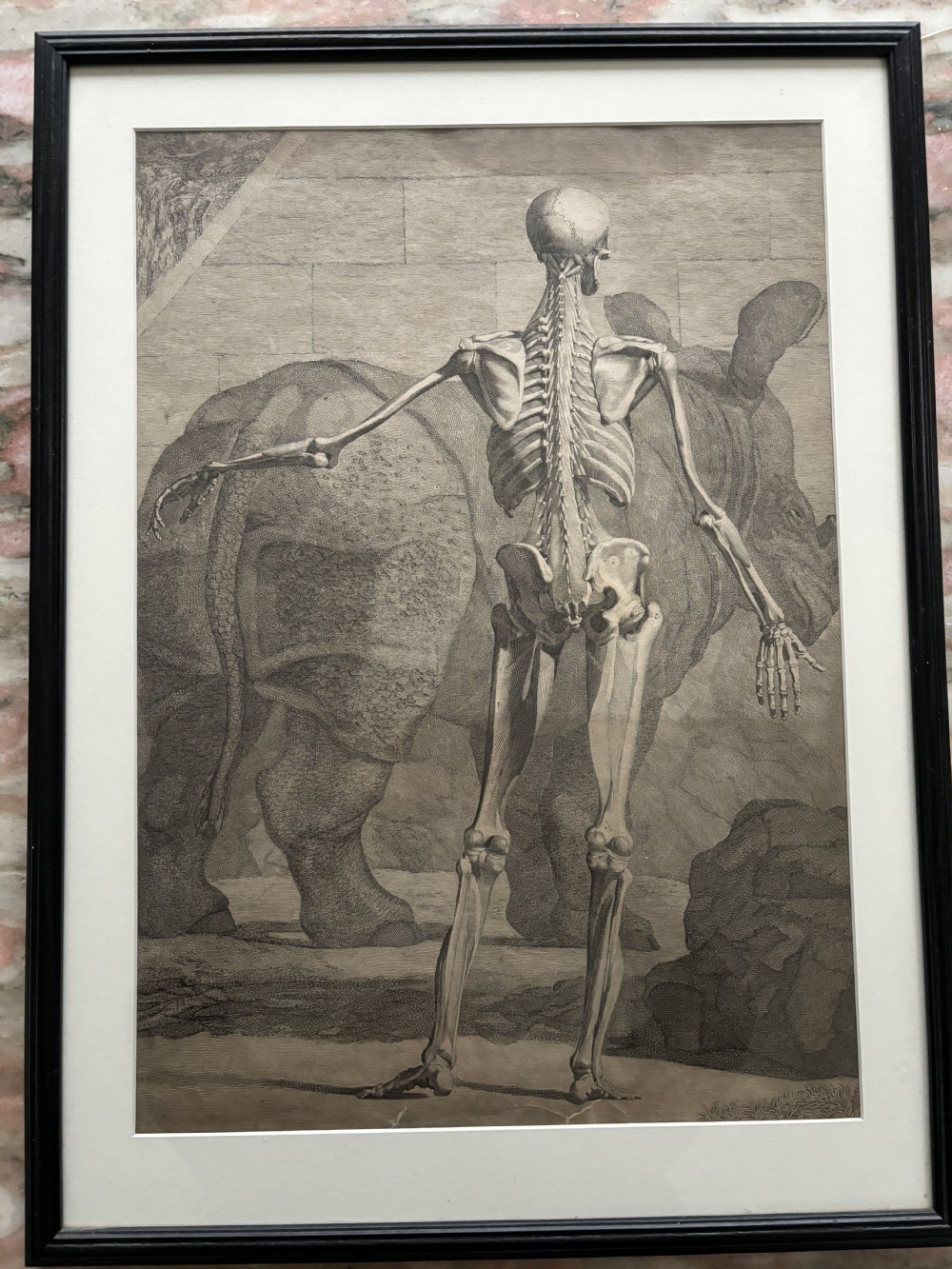

Pair of 18th Century Engravings Bernhard Siegfried Clara Rhinocerus Skeleton Anatomy
