


Framed Overmantel Mirror
When sourcing a framed overmantel mirror, you seek a commanding architectural anchor that reflects light and fills the span above a fireplace.
Framed Overmantel Mirror
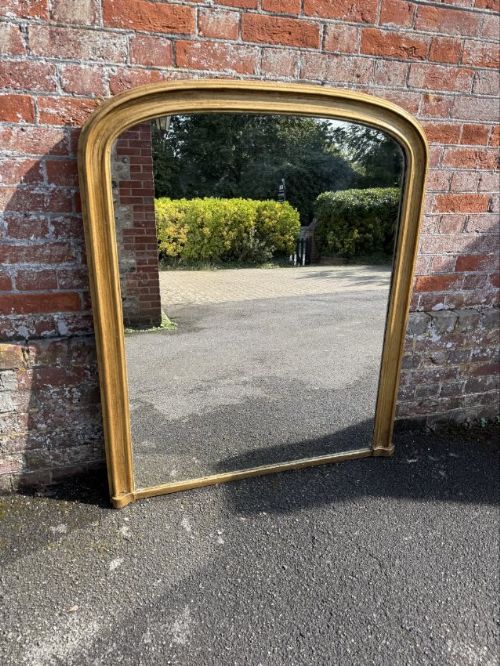
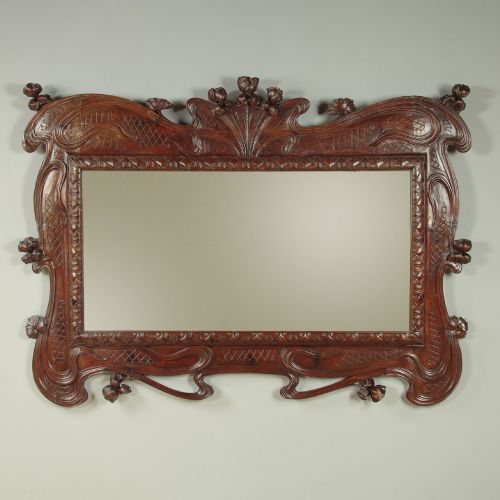
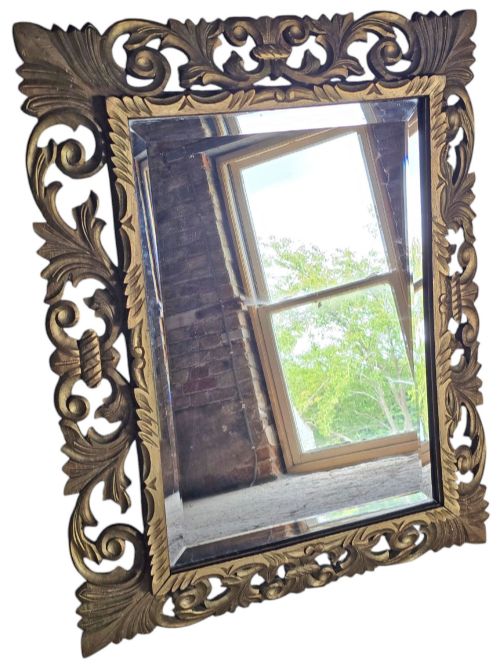
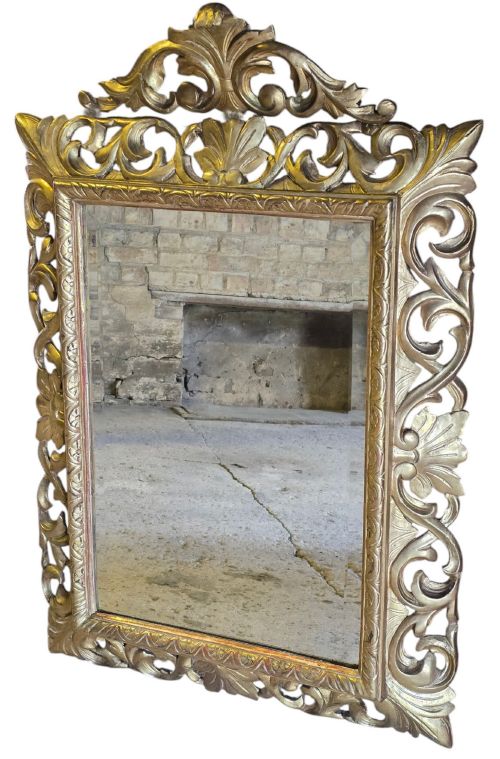
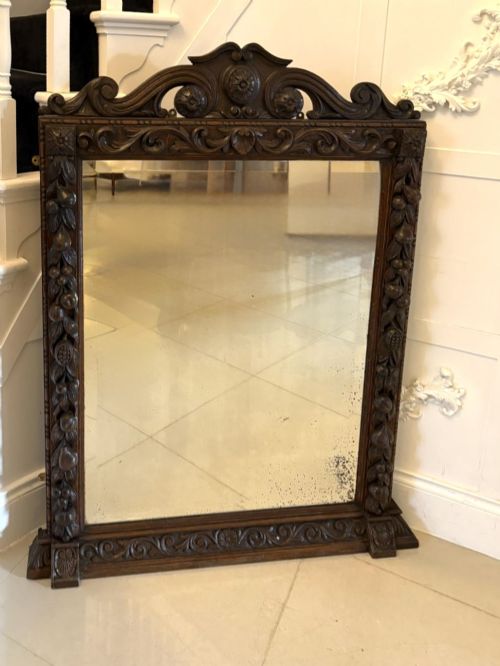
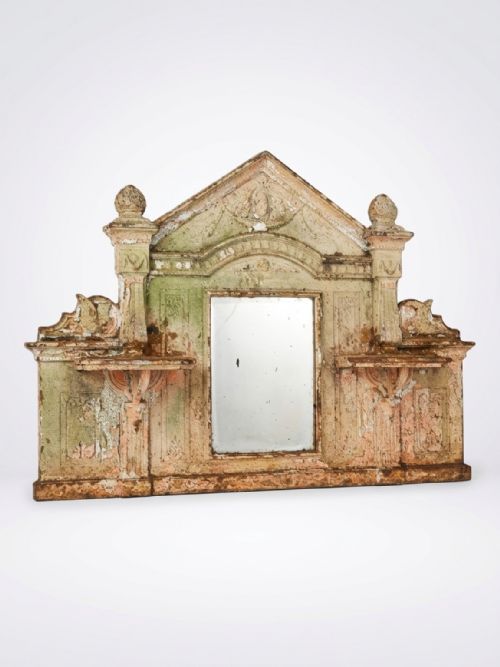
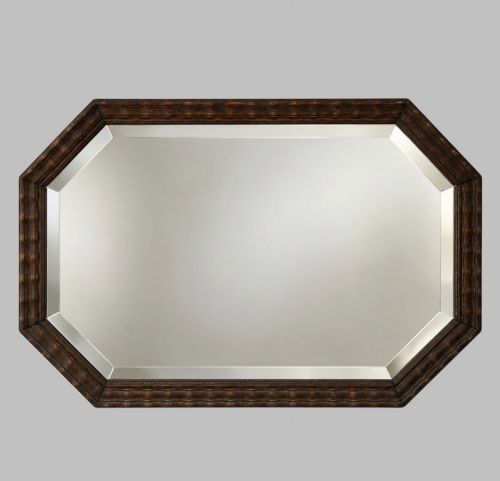
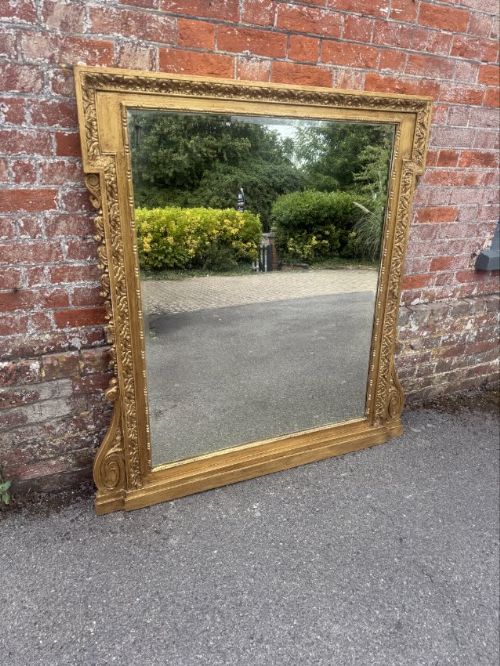
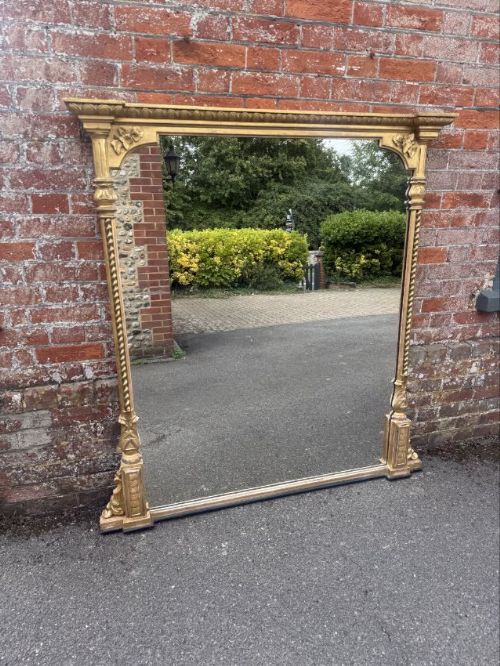
A framed overmantel mirror is designed specifically to sit above a mantelpiece, presenting a broad landscape or tall arched format suited to period chimney breasts. The selection spans robust English Victorian oak and mahogany interpretations alongside ornate French giltwood and composition designs.
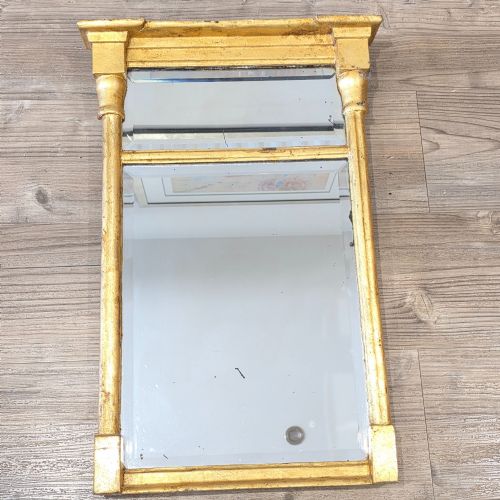
Most examples you encounter date from the nineteenth century, ranging from Regency tripartite landscape plates to late Victorian and Edwardian iterations. Makers constructed these architectural glasses to dominate domestic interiors, pairing substantial wooden or gesso frames with heavy mirror plates.
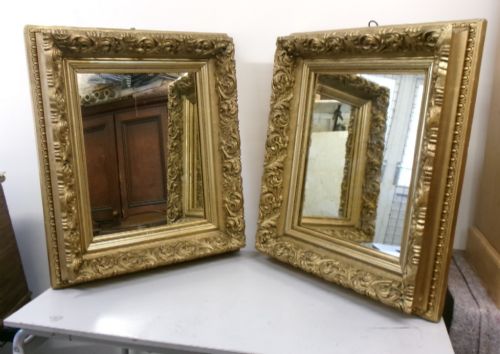
You will also find distinct regional subtypes such as Florentine giltwood statement pieces and French Louis Philippe styles featuring rounded upper corners. Whether finished in bright gold leaf or left as dark carved oak, each piece serves as a primary decorative focal point.
Materials and Construction
Traditional craftsmen built the foundational carcasses of these mirrors using timber such as oak, mahogany, and walnut, providing structural rigidity for heavy glass. Carvers then applied layers of gesso directly to the wood substrate to build up crisp relief ornament before applying gold leaf or paint finishes.
Many ornate mouldings and sculptural decorations utilise composition, a moulded putty mixture pressed into shape and applied to the wooden frame. Earlier French examples frequently house antique mercury glass plates displaying characteristic foxing, while later Victorian pieces often incorporate bevelled mirror glass.
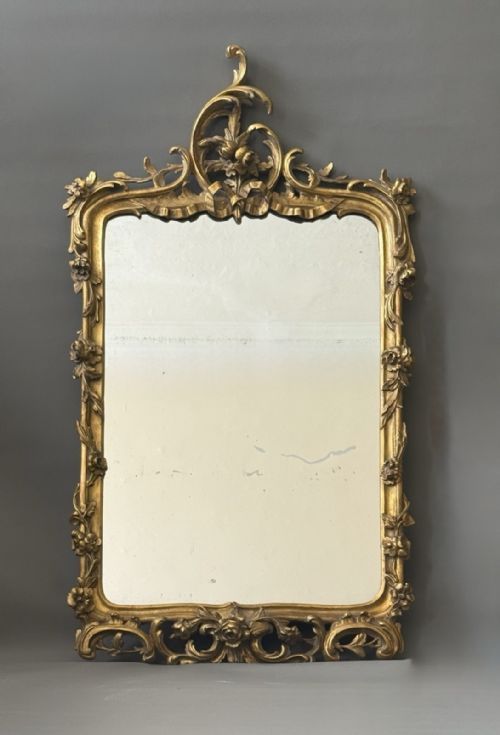
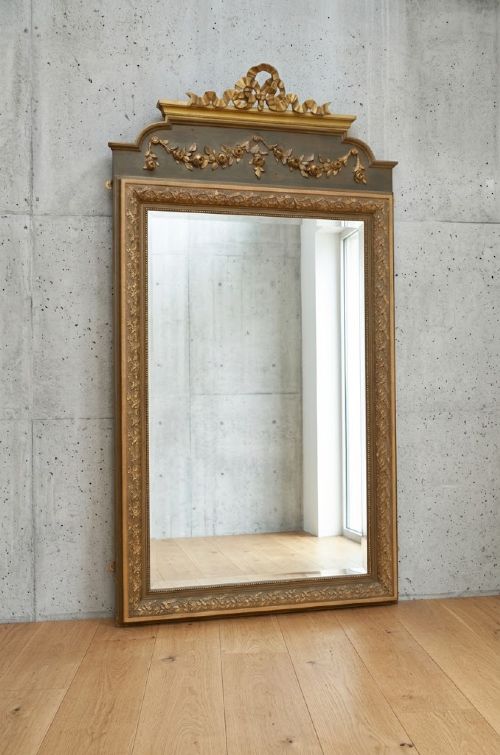
A ribbon crest hangs quietly at the top of a Belle Époque French wall mirror, frozen in gilded fabric.
Assessing Quality
Quality in these mirrors rests upon the crispness of the hand-carved detail within the wood or the depth of the gesso relief. Superior examples maintain their original gilding and structural integrity without excessive replacement of the underlying composition ornaments.
The choice of mirror plate further distinguishes the tier of the piece, with heavy bevelled glass or original mercury plates holding greater distinction than later replacements. Balanced proportions between the frame width and the central glass area determine the overall visual harmony of the mirror.
Waring and Gillow
The Framed Overmantel Mirror Glossary
- Gesso
- A plaster-like mixture applied to wooden frames to create a smooth surface for gilding or carving. Artisans build up this compound to model intricate decorative motifs.
- Giltwood
- Timber that has been coated with thin sheets of gold leaf. This finish creates a luminous metallic sheen characteristic of formal nineteenth-century interiors.
- Composition
- A pliable mixture of whiting, resin, glue, and oil pressed into moulds. Makers used this material as a cost-effective alternative to deep hand-carving.
- Mercury glass
- A double-walled glass blown with a silvering mixture inserted between the layers. This early technique produces a mottled reflective surface known as foxing.
- Pier glass
- A tall mirror designed to hang on the narrow wall section between windows. These pieces often match the decorative scheme of adjacent overmantel mirrors.
Framed Overmantel Mirror: Frequently Asked Questions
Where should an overmantel mirror hang?
These mirrors traditionally mount directly onto the chimney breast above a fireplace mantel. Their horizontal or arched proportions match the architectural weight of the hearth below.
Positioning the glass at this height successfully bounces natural light across the room while anchoring the surrounding wall decor.
How do I identify a Regency mirror?
Regency pieces often feature classical motifs, tripartite landscape plates, and restrained gilded frames. They emphasise architectural balance rather than heavy Victorian ornamentation.
Examining the construction joints and the backboards helps confirm the early nineteenth-century origin.
What is foxing on a mirror?
Foxing refers to the small dark spots and mottled patches that develop on older mirror plates over time. This chemical reaction occurs within the silvering layer as it ages.
Collectors often value this characteristic as proof of genuine age, particularly on eighteenth and nineteenth-century French plates.
Can these mirrors stand on the floor?
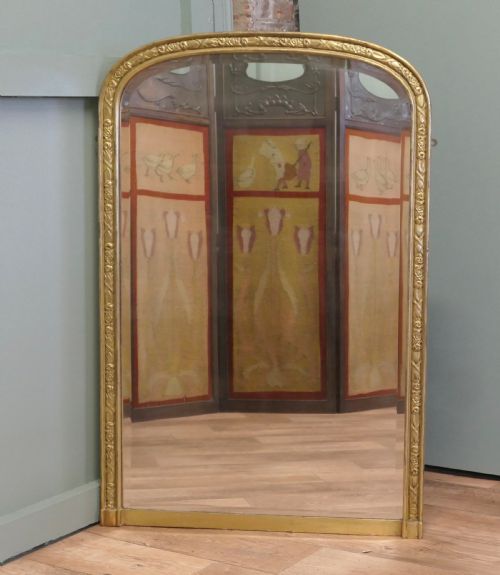
Certain large formats function as leaner mirrors, resting securely against the wall without requiring wall-mounting brackets. Their substantial weight keeps them stable in position.
Ensure the floor surface is level and use appropriate safety fixings to prevent tipping.