

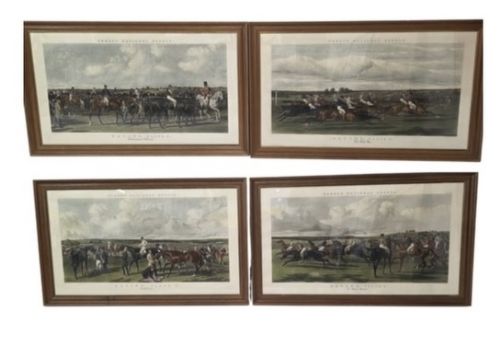


Framed Oak Engraving
These framed oak engraving pieces bring historical subjects and natural history into interiors, offering durable timber framing alongside detailed print work.
Framed Oak Engraving
When you search for framed oak engraving, you encounter wall art spanning the seventeenth, eighteenth, and nineteenth centuries, alongside early twentieth century examples. The selection contains subjects ranging from natural history and cartography to classical scenes, animal studies, and military formations.
Most items on this page combine paper prints or etchings with timber frames, often utilising oak alongside glass and gold leaf. The formats vary from single plates to pairs and larger sets, including botanical studies, county maps, and animal engravings.
How they were made
The physical objects rely on inked impressions on paper, housed behind glass within timber frames constructed from wood and specifically oak. Some examples incorporate gold leaf details within their framing or presentation.
Printmakers utilised engraving and etching techniques on paper plates, capturing fine lines for subjects such as natural history, portraiture, and topographical maps.
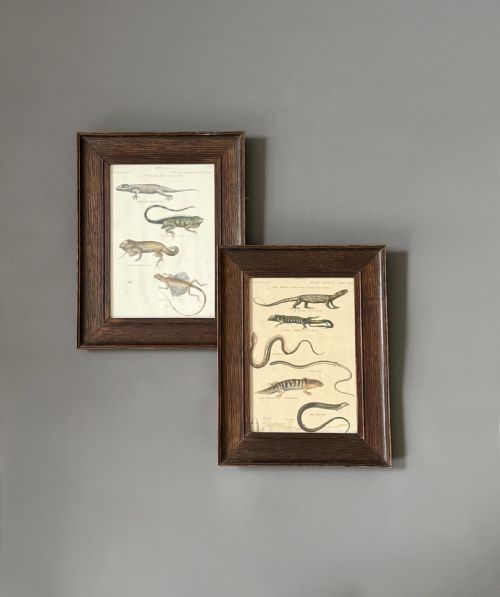
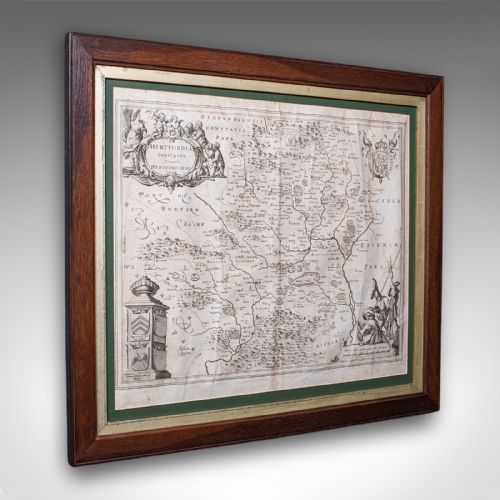
Reptile engravings and British bulldogs share wall space with seventeenth century maps of Hertfordshire.
What varies in quality
Quality separates through the clarity of the ink impression on the paper and the depth of detail preserved within the engraving lines. Stronger examples maintain crisp subject definition across botanical, animal, or architectural motifs.
The construction and grain of the oak frame contribute to the character of the piece, alongside the preservation of the paper and the presence of supplementary materials like glass and gold leaf.
William Bird MD FLS·Blaeu·J. C. Dollman·Jonathan Couch·Tom M. Hemy·H. Strafford·Eleazor Albin·Herbert Dicksee
The Framed Oak Engraving Glossary
- Engraving
- A printmaking technique where an artist cuts lines into a plate to hold ink. This process creates fine, precise details on paper.
- Etching
- A method where acid bites lines into a metal plate before printing. It produces softer, more fluid lines than direct cutting.
- Drypoint
- A printmaking process where an artist scratches directly into a metal plate with a sharp needle. This creates a distinctive velvety line in the printed impression.
- Cartography
- The study and practice of making maps. Antique examples often depict historical counties and regions.
- Natural history
- The scientific study of animals, plants, and geology. Prints in this category frequently illustrate birds, fish, reptiles, and botanical subjects.
Framed Oak Engraving: Frequently Asked Questions
What periods do these pieces span?
The selection covers items from the seventeenth century through to the early twentieth century, encompassing Victorian and Carolean styles.
Different centuries bring distinct subject matters, ranging from early county maps to nineteenth century natural history plates.
How are the prints framed?
The artworks utilise wood frames, predominantly oak, paired with glass to protect the paper prints and engravings.
Some framings also incorporate gold leaf details to accent the timber structures.
What subjects appear in these works?
Subjects include natural history illustrations of fish, reptiles, cattle, and botanical foliage. Other pieces depict military formations, historic figures, and classical art.
Cartography and horse racing scenes also feature across the selection.
How should I hang framed oak pieces?
Ensure your wall fixings match the weight of the timber frame and glass. Consider stable indoor environments away from direct sunlight to protect the paper.
Allow adequate space around sets and pairs to balance wall displays.