




Black White Architectural Print
A black white architectural print brings classical antiquity and historic cityscapes onto the wall through monochrome ink on paper.
Black White Architectural Print
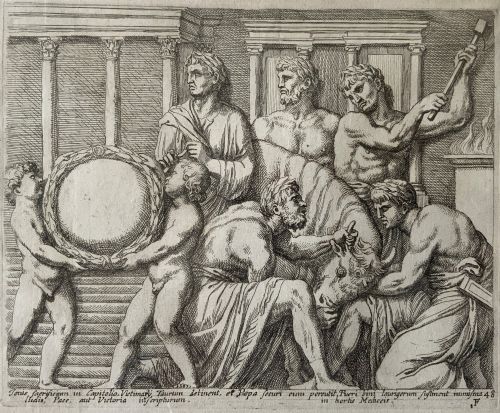
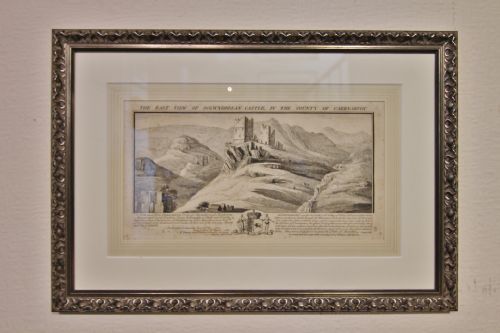
A black white architectural print captures classical buildings, Roman statues, and historic London bridges through historic graphic techniques. When searching for a black white architectural print, a buyer encounters works spanning from the seventeenth century to the early twentieth century.
The selection centres heavily on eighteenth-century engravings depicting ancient Greek and Roman antiquities, such as the monuments of Athens and the Vatican loggie. These plates often arrive framed in wood, gilt wood, or under glass.
How they were made
Makers utilised paper as the primary ground, applying black ink through copperplate engraving, etching, lithography, and drypoint methods. Many plates received additional framing in wood, gilt wood, and gold leaf alongside protective glass.
Printmakers such as James Basire and Francesco Piranesi worked detailed lines onto metal plates to transfer complex architectural elevations and classical sculptures onto sheet paper with exact precision.
Architectural prints span neoclassical, baroque, realism, and Dutch golden age styles, recording subjects from Athens, Rome, and London.
What varies in quality
The clarity of the ink lines and the crispness of the impression define the distinction between editions, particularly when plates were printed in large numbers over subsequent decades. Sharpness in fine architectural details, such as stone coursing and sculptural relief, marks the distinction.
The survival of the original paper sheet, free from heavy staining or foxing, maintains the visual balance of the monochrome composition. The quality of the associated period framing, whether simple wood or gilded moulding, contributes to the overall integrity of the piece.
François Perrier·Francesco Piranesi·Claes Jansz Visscher·Francis Dodd·Edgar J Maybery·Tom M Hemy·James Basire·Giovanni Ottaviani·Edward Rooker
The Black White Architectural Print Glossary
- Engraving
- A printmaking process where an artist cuts lines directly into a metal plate using a sharp tool called a burin. The resulting incisions hold the ink for transfer under pressure.
- Etching
- A technique where acid bites lines into a metal plate that has been covered with an acid-resistant ground. This allows for fluid, freehand drawing styles.
- Drypoint
- A printmaking method in which a sharp needle is scratched directly into the metal plate, raising a ridge of metal called burr that produces velvety lines when printed.
- Lithography
- A planographic printing process based on the chemical repulsion of oil and water. The image is drawn on a limestone slab or metal plate with a greasy medium.
- Neoclassical
- A Western cultural movement drawing inspiration from the classical art and culture of ancient Greece and Rome. It dominates the architectural and sculptural subjects seen in these prints.
Black White Architectural Print: Frequently Asked Questions
What periods do these prints cover?
The selection includes works originating from the seventeenth, eighteenth, and nineteenth centuries, alongside early twentieth-century examples.
Specific plates date from periods such as the Georgian era, the Victorian age, and the Edwardian epoch.
How were architectural prints framed historically?
Historic framing typically involved simple wooden profiles or gilt wood mouldings designed to complement monochrome works on paper.
Many examples retain glass protection to shield the delicate ink and paper from environmental dust and moisture.
Who created these engraved plates?
Prominent printmakers and draughtsmen such as James Basire and Francesco Piranesi executed large-scale architectural plates for major antiquarian publications.
Other works record bridges and streetscapes by artists including Edgar J Maybery and Francis Dodd.
How do I identify a drypoint from an engraving?
An engraving displays clean, sharp lines cut directly into metal by a burin, resulting in precise geometric forms and architectural lettering.
Drypoint leaves a distinct burr along the scratched line, which catches the ink to produce a softer, richer quality on the printed sheet.