
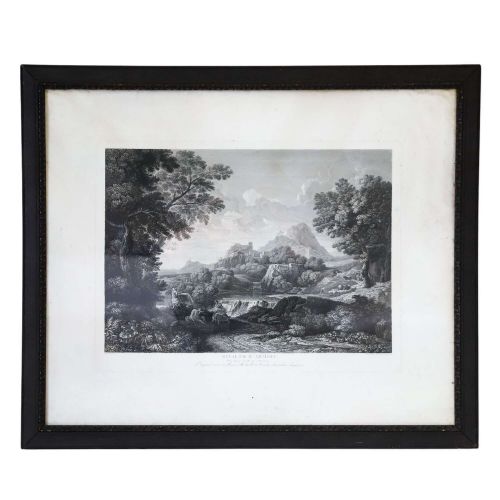
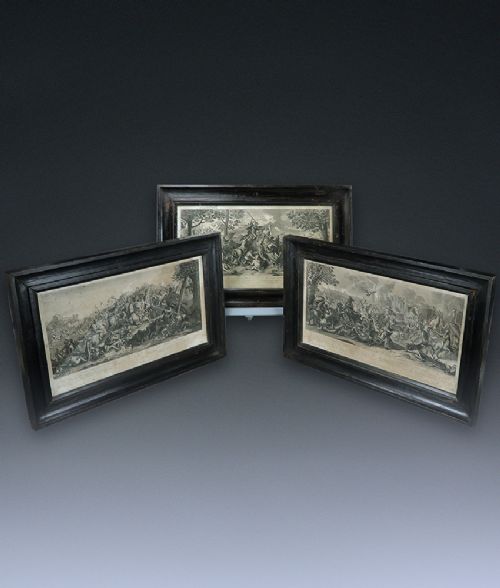


Framed Neoclassical Engraving
Framed neoclassical engraving works bring classical antiquity into domestic interiors through figures, architectural elevations and mythological scenes preserved behind glass.
Framed Neoclassical Engraving
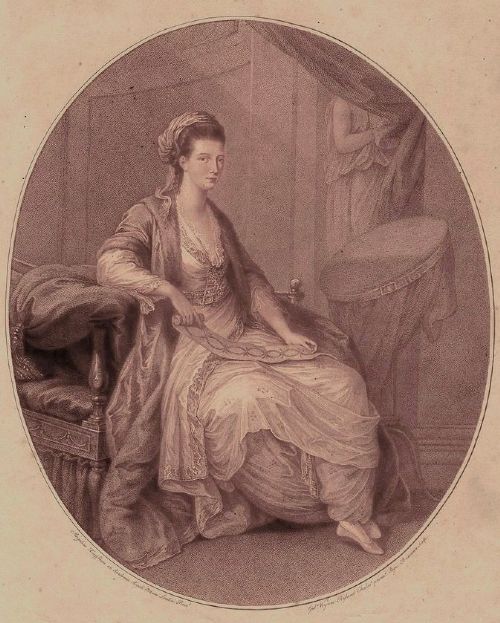
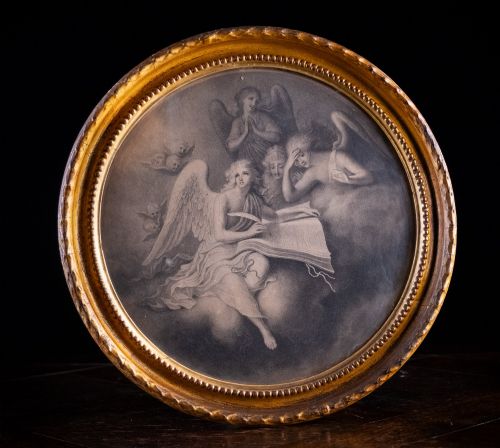
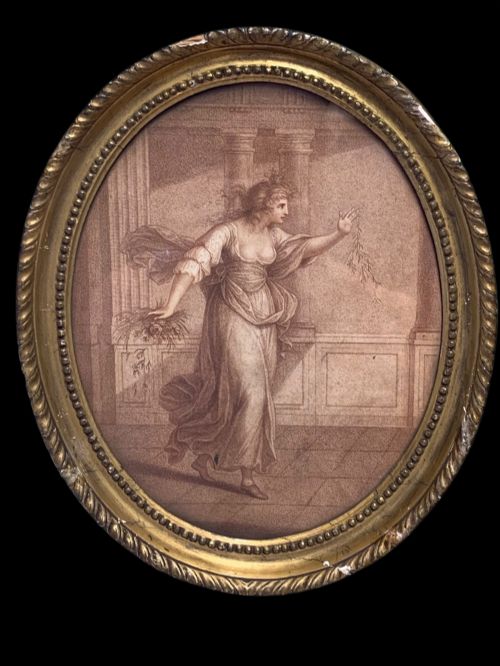
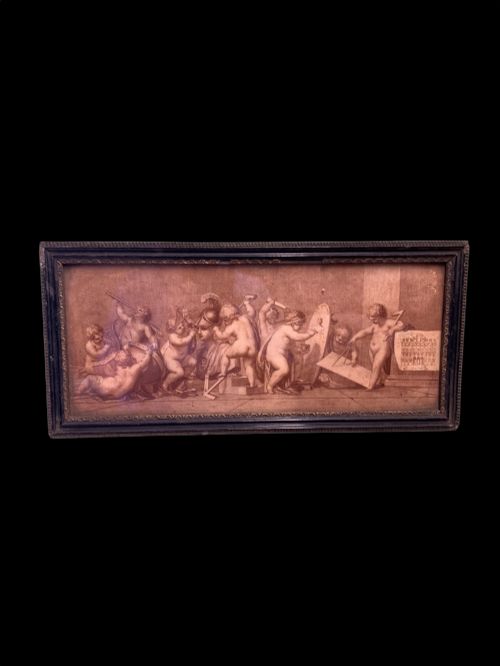
A framed neoclassical engraving presents subjects derived from classical sculpture, mythology and architecture, typically originating from the eighteenth and nineteenth centuries.
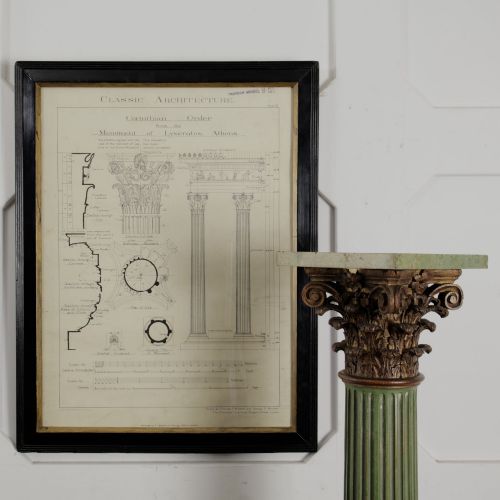
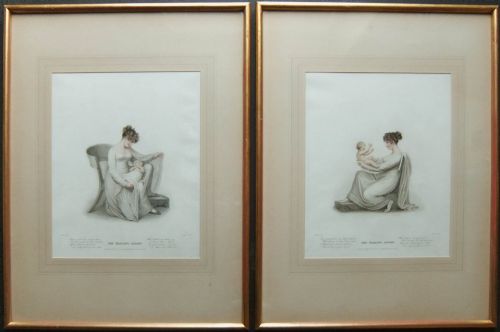
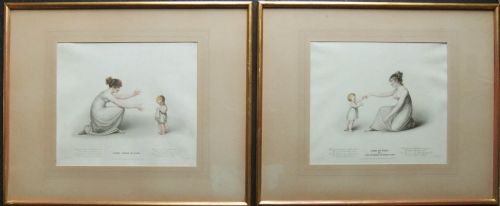
Collectors encounter single plates alongside uniform pairs and matched sets depicting subjects such as the Vatican Loggie, architectural orders, and Grand Tour antiquities.
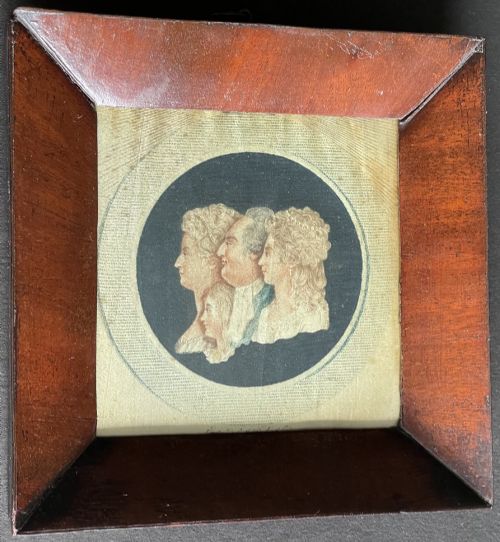
The selection ranges from detailed copperplate architectural elevations to stipple engravings and prints on silk produced across Georgian, Regency and Edwardian periods.
Materials and construction methods
Images are printed in ink from engraved copper plates onto paper, occasionally appearing as etchings or lithographs or printed upon silk.
Encasing frames utilise wood embellished with gold leaf, giltwood or simple gilding, protecting the delicate paper sheet behind a panel of glass.
Listings incorporate paper, ink, and glass housed within wooden frames finished in gold leaf or giltwood.
Assessing quality in plates and framing
The clarity of the inked line and the crispness of the impression distinguish fine contemporary printings from later strikes.
The integrity of the original frame, particularly the condition of the gold leaf or giltwood mouldings, dictates the overall preservation of the piece.
Adam Buck·Le Brun·John Flaxman·Simon François Ravenet·F R Roffe·J Brown·Pierre Buillon·Henri Chatillon·Victor Adam·Alessandro Mocchetti·Ottaviani·Francesco Piranesi·James Basire
The Framed Neoclassical Engraving Glossary
- Stipple engraving
- A printmaking technique using dots to render tonal gradations and figures. This method creates soft transitions rather than sharp lines.
- Copper engraving
- An intaglio process where an image is cut directly into a copper plate with a burin. The resulting lines hold the ink for transfer to paper.
- Grand Tour
- The traditional journey of European educational travel undertaken by young men. It generated a strong demand for classical prints and architectural views.
- Giltwood
- Wood carved and covered with a thin layer of gold leaf or gesso and gold paint. It provides a reflective border for works on paper.
Framed Neoclassical Engraving: Frequently Asked Questions
How do I identify a genuine period impression?
Examine the paper for watermark evidence and plate marks indented into the sheet by the printing press.
Period impressions display crisp ink lines without the dot patterns characteristic of modern photographic reproduction.
Are these pieces usually found in matched sets?
While individual plates appear frequently, architectural series and mythological subjects often survive in pairs or complete sets.
Sets depicting themes like the Vatican Loggie or temple antiquities were originally published together as bound volumes before being individually framed.
How should I care for prints framed behind glass?
Position the frame away from direct sunlight to prevent the ink and paper from fading over time.
Keep the room humidity stable to protect the paper substrate and the wooden gilt frame from environmental stress.
What subjects are most common in these works?
The imagery draws heavily on ancient Greek and Roman ruins, classical statues, and mythological narratives.
Architectural plates document Athenian temples and orders alongside interior decorative schemes from excavated sites like Herculaneum.