




Framed Narrative Engraving
A framed narrative engraving brings stories to interiors through historic printed plates.
Framed Narrative Engraving
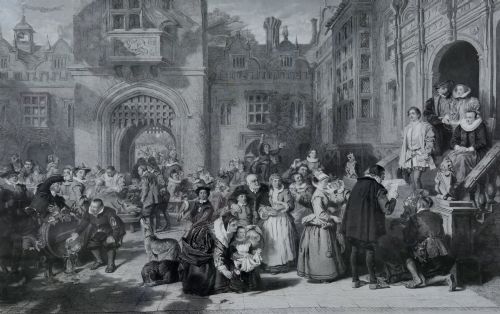
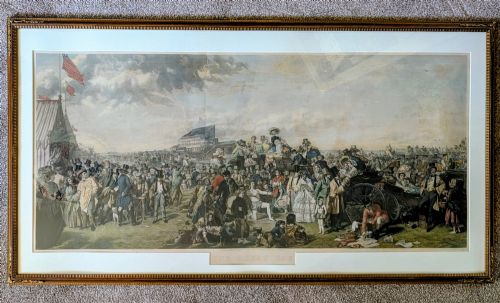
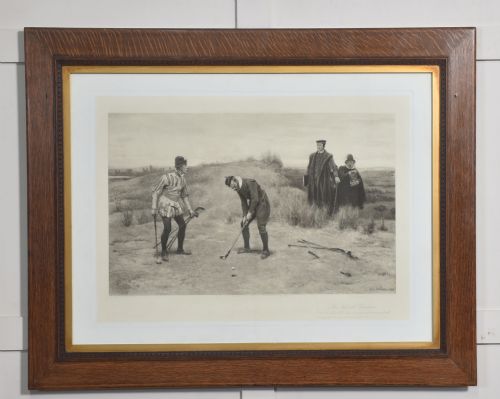
A framed narrative engraving represents a printed image that tells a story, captured through intaglio printmaking and preserved behind glass. These works document historical scenes, literary moments, and popular dramas of past centuries.
The versions encountered on this page span the eighteenth, nineteenth, and early twentieth centuries. They appear in traditional wooden frames such as oak, gilded wood, and original Hogarth mouldings.
Styles range across the Georgian, Victorian, and Regency periods, alongside later revivals. Subjects include bustling interior courtyards, biblical scenes, and pairs depicting dramatic tales.
Materials and construction
These works utilise paper or silk sheets carrying printed lines created through engraving, stipple, etching, or lithography. Some examples feature coloured stipple work upon fine fabric.
The backing materials rely on timber frames built from oak or gilded wood, often enhanced with gold leaf accents. Protection is provided by fitted glass panels fronting the framed prints.
Framed Narrative Engraving Retail Price Guide 2026
Typical asking prices for framed narrative engraving among the pieces listed under this phrase on Sellingantiques today, from the lower quarter to the upper quarter. They describe what is for sale here now, not the wider market.
Current listings feature pieces spanning the Georgian, Victorian, and early twentieth-century eras, incorporating paper, silk, oak, and gilded wood.
Distinctions in quality
Quality rests upon the crispness of the printed line and the depth achieved by the printmaker translating an original painting. Master engravers capture subtle facial expressions and complex architectural details far more sharply than minor artisans.
The integrity of the surrounding frame also dictates the overall standard. Original period frames, such as genuine Hogarth moulding or period gilt wood, elevate the historical completeness of the piece compared to later replacements.
William Powell Frith·J. C. Dollman·E. Jackson Stodart·Antonio Capellan·John Boydell·H. Singleton·David Wilkie
The Framed Narrative Engraving Glossary
- Engraving
- A printmaking technique where an artist cuts lines directly into a metal plate using a sharp steel tool called a burin. The inked plate then transfers the design under pressure to paper.
- Stipple engraving
- A method of creating tonal gradations using dots rather than continuous lines on the printing plate. This technique produced soft, painterly effects popular in Georgian portraiture and narrative works.
- Hogarth frame
- A narrow, dark wooden frame profile featuring a subtle inner gold slip, popular during the eighteenth century and revived later. It provides a classic border for period prints without overpowering the artwork.
- Lithography
- A planographic printing process based on the antipathy of oil and water, utilising a flat stone or metal plate. It allowed artists to produce detailed tonal illustrations and multi-coloured prints.
Framed Narrative Engraving: Frequently Asked Questions
How should I hang a framed narrative engraving?
Hang these works away from direct sunlight to protect the paper and any applied colour from fading behind the glass.
Ensure sturdy wall fixings are used to support the weight of the timber frames and glass.
What subjects do these engravings typically show?
The subjects depict dramatic literary narratives, historical battles, religious moments, and scenes from popular theatre and melodrama.
Artists frequently reproduced famous paintings by contemporary masters to make visual storytelling accessible for domestic interiors.
How do I identify a Georgian engraving?
Georgian examples often feature fine hand-laid paper watermarks and delicate stipple or line work characteristic of eighteenth-century print shops.
The framing and typography beneath the image plate typically reflect the restrained elegance of the Georgian and Regency eras.