
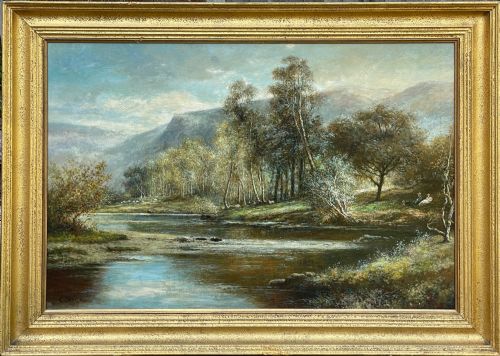
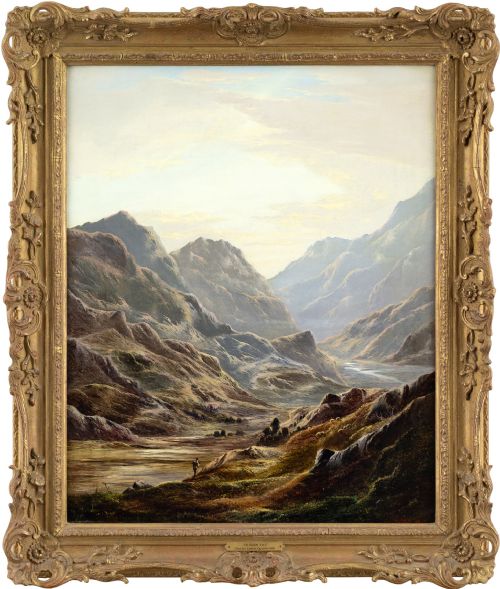
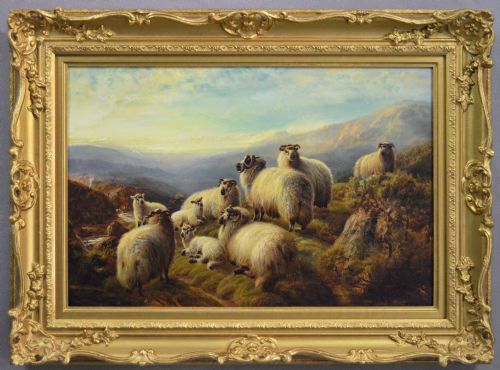
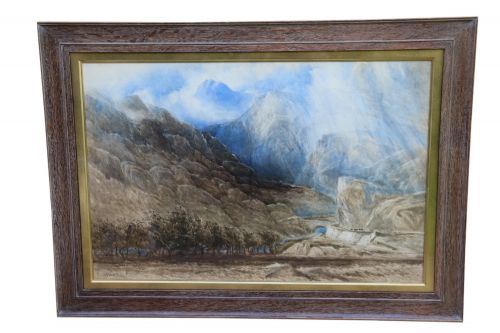
Framed Mountain Painting
A framed mountain painting brings the sweep and shadow of high ground directly into a room.
Framed Mountain Painting
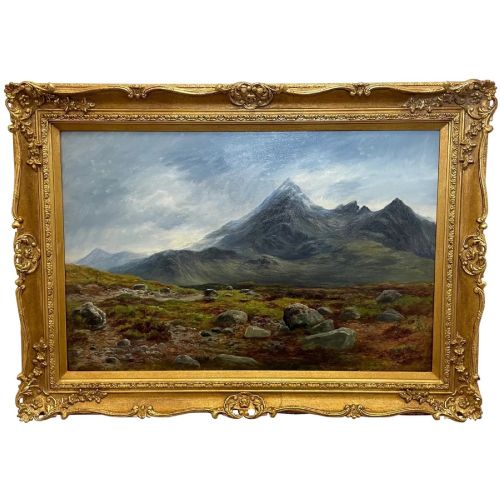
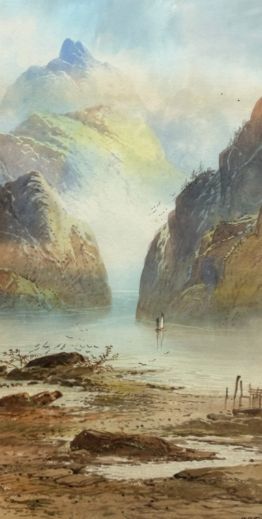
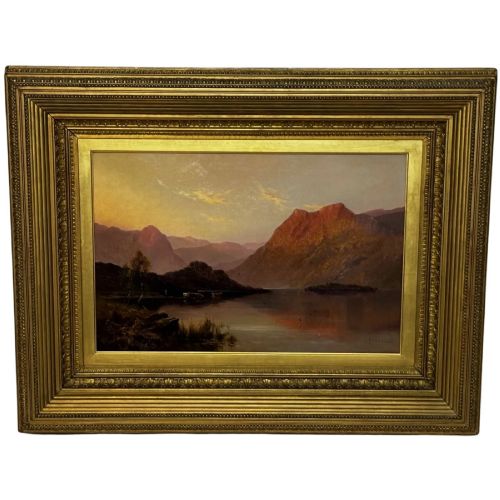
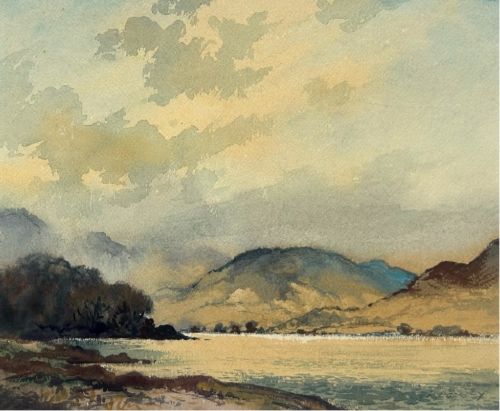
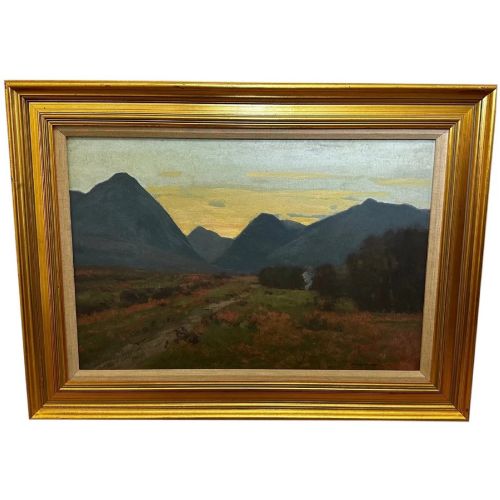
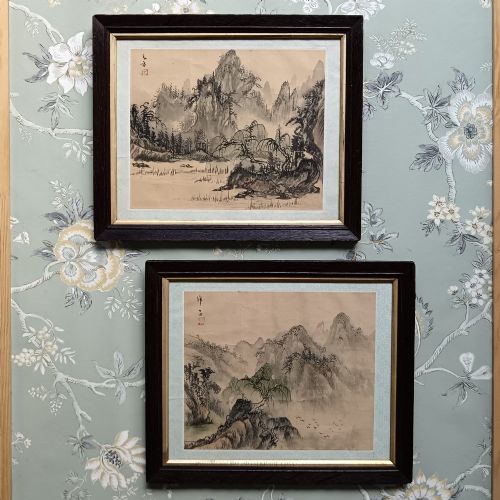
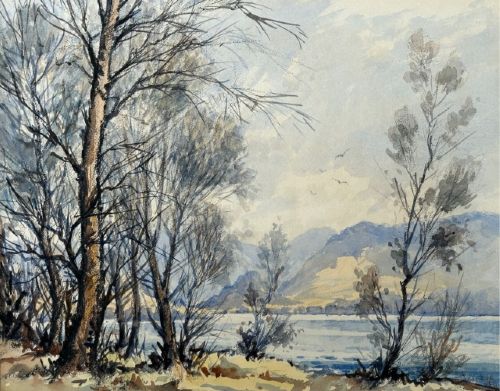
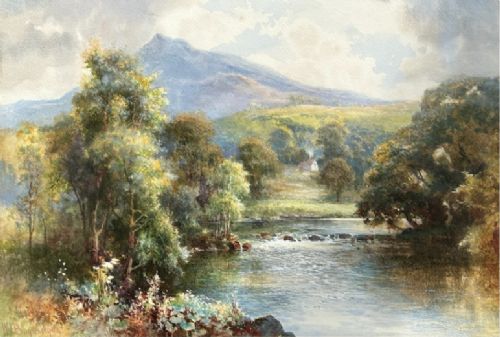
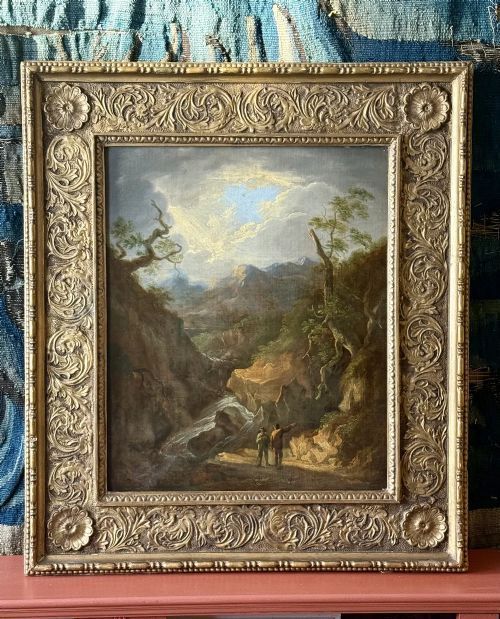
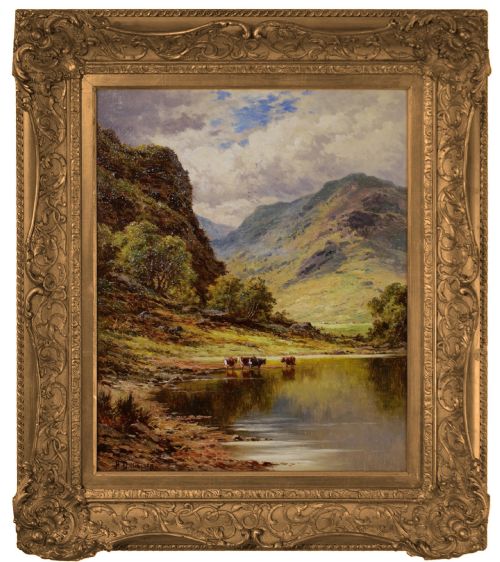
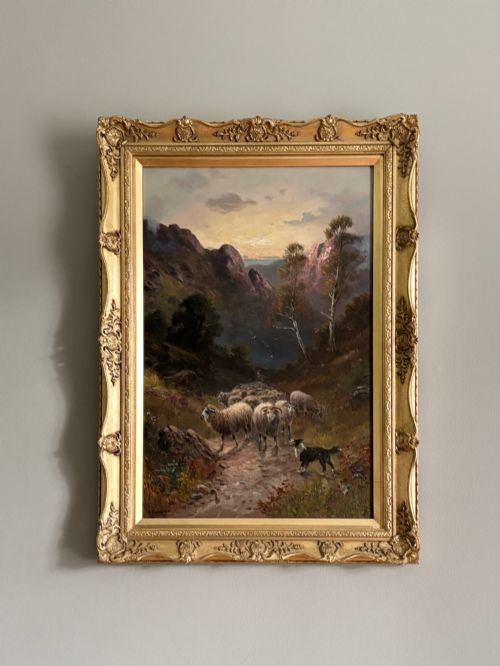
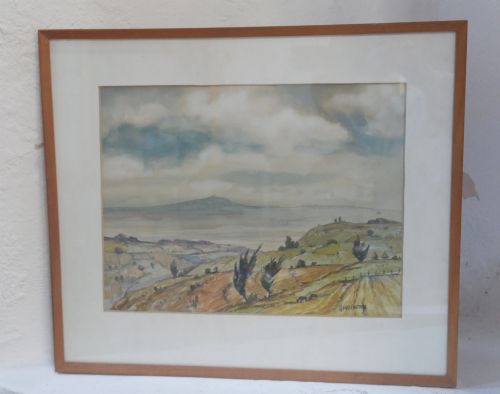
When you search for a framed mountain painting, you encounter works capturing crags, valleys, and highland lakes across British and European landscapes. These pieces record topographical views from Scotland, Wales, and the Lake District alongside continental alpine ranges. The selection on this page leans heavily toward 19th century and Victorian oils and watercolours, complemented by mid-century examples.
The subjects range from tranquil river valleys beneath looming peaks to dramatic studies of Scottish glens and Welsh mountain passes. Many retain their original surrounds, which complete the presentation of the artwork. Painters of these scenes often focused on the changing light over high terrain, capturing specific locations with careful draughtsmanship or fluid brushwork.
How they were made
Artists working on these landscapes relied primarily on oil on canvas or delicate watercolours on paper. Oil pigments provided rich texture and depth, allowing painters to build up the heavy impasto of rock faces and the soft expanse of skies. Watercolours offered immediacy and luminosity, frequently used for studies completed in the field.
The supporting frames are integral to the pieces, constructed from wood adorned with gesso and gilt finishes. Mouldings range from simple wooden battens to ornate gilded frames that enhance the sense of depth within the picture.
Materials range from oil on canvas and panel to delicate watercolours, housed in original gesso and giltwood frames.
What varies in quality
The distinction between ordinary and exceptional works rests on the artist's command of light, atmosphere, and spatial depth. Stronger pieces convey the genuine mass of rock and the moisture in highland air rather than relying on formulaic formulas for peaks and clouds.
The relationship between the artwork and its original frame dictates much of the visual harmony. Surviving period frames that complement the palette and scale of the canvas elevate the presentation far beyond later, mismatched replacements.
William Beattie-Brown·William Henry Earp·Alfred Fontville de Breanski·Robert Leslie Howey·George Houston·Benjamin Barker·Henry H. Parker·Douglas Cameron·Charles Leslie·Robert Watson·Henry Martin Pope·William George Tennick·John Grenville Fennell·William Henry Mander·William Hoggatt·Sidney Richard Percy·Thomas Spinks·Frank Hider·Giulio Cecchini·Walter J Watson·William Grant Murray·John Douglas Perrett
The Framed Mountain Painting Glossary
- Giltwood
- Wood carved and covered with a thin layer of gold leaf or gold paint. This finish frequently characterises the ornate frames accompanying 19th-century landscapes.
- Gesso
- A plaster-like mixture applied to wooden frame mouldings as a base for gilding or painting. It provides a smooth surface that takes crisp decorative detail.
- Impasto
- Paint applied thickly to a canvas, standing out in relief from the plane. This technique is often utilised to render the rugged texture of stone and crag.
- Provenance
- The documented history of ownership of an artwork. Clear attribution adds context to regional landscape studies.
Framed Mountain Painting: Frequently Asked Questions
Where were these landscapes usually painted?
Artists sought out dramatic topography across Britain and Europe, frequently returning to the Scottish Highlands, Snowdonia, the Lake District, and the Alps.
Many painters established themselves near these geographical landmarks to capture the shifting weather and lighting conditions firsthand.
How do I hang a heavy oil painting?
Large canvases set in thick gilt frames require secure wall fixings distributed into studs or masonry rather than standard picture hooks.
Ensuring the cord or wire on the reverse is structurally sound protects both the frame and the wall surface over time.
Should watercolours be kept out of sunlight?
Paper and watercolour pigments remain sensitive to ultraviolet light and fade when exposed to direct, bright sunshine for extended periods.
Positioning these works on walls away from direct windows preserves the subtlety of the original washes.
How do I identify the period of a frame?
Construction methods, corner joins, and the composition of the underlying gesso reveal the era in which a frame was manufactured.
Original frames often show minor signs of age that match the wear present on the accompanying canvas.