




Vintage Highland Watercolour
A vintage highland watercolour brings the mist, heather and wild terrain of the Scottish hills straight into a room.
Vintage Highland Watercolour
A vintage highland watercolour captures the remote Scottish landscape through traditional pigment on paper, often framed behind glass in wood or giltwood. These works span from the Victorian period and the nineteenth century through the early twentieth century, Edwardian era, and into the nineteen fifties and sixties.
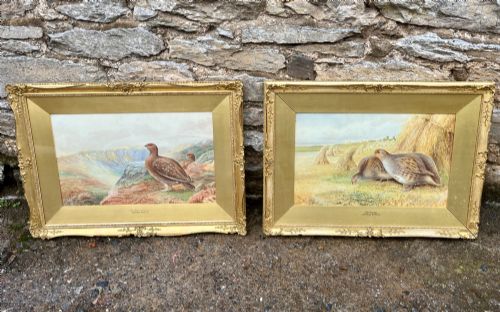
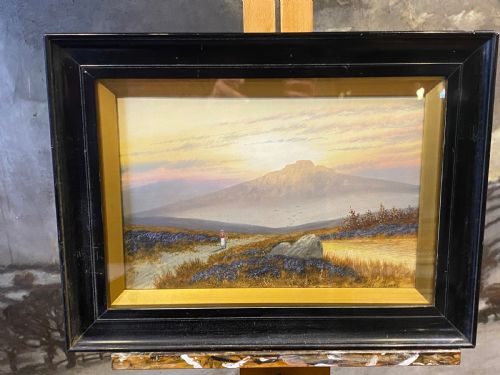
The subjects range from tranquil lochs and mountains near Killin and Wester Ross to sporting art, game birds, and figures dressed in kilts. Most pieces encountered here are framed paintings or original gouache and watercolour paintings produced by British artists working in traditional styles.
Buyers seek these works to add a distinct sense of Scottish topography and heritage to interior walls. The execution varies from detailed sporting depictions to atmospheric landscape studies rendered with translucent washes or opaque gouache pigments.
Materials and technique
Artists painted these works primarily using watercolour pigment and gouache applied to paper supports. Some compositions incorporate gold leaf accents, particularly within decorative frames or specific Victorian works.
Framing typically involves traditional wood mouldings and giltwood surrounds, paired with protective glass. These materials preserve the delicate paper supports and water-soluble pigments from atmospheric moisture.
Subject matter across the archive records Scottish highland landscapes, game birds, and figures in traditional dress near Killin and Wester Ross.
Judging quality and execution
Quality rests upon the confidence of the brushwork and the artist's ability to render light and weather across the highland terrain. Stronger examples display precise draughtsmanship in subjects such as game birds or figures, alongside atmospheric depth in distant mountain ranges.
The preservation of the paper and pigments dictates visual impact, as fading diminishes the contrast of early twentieth century washes. Original period framing in matching wood or giltwood also contributes to the integrity of the piece.
George Rankin·Harry Davis·Stanley Orchart·Snaffles·AJ Thornton·Milton Drinkwater·Alfred Graham·John B MacDonald·Archibald Thorburn·Kenneth Holmes
The Vintage Highland Watercolour Glossary
- Watercolour pigment
- Finely ground colour suspended in a water-soluble binder, applied in thin translucent washes to paper. This medium allows artists to build luminous effects that capture changing highland light.
- Gouche
- An opaque water-based paint containing pigment and a binding agent, mixed with white to create solid areas of colour. Artists utilised gouache to add highlights and dense details to paper works.
- Giltwood
- Wood carved and coated with gold leaf or gold paint, frequently used for traditional picture frames. It provides a warm metallic border that enhances the tones within the painting.
- Victorian British School
- A broad term describing artists working within British aesthetic traditions during the nineteenth century. These painters focused on naturalism, landscape topography, and sporting subjects.
Vintage Highland Watercolour: Frequently Asked Questions
How do I date a highland watercolour?
Dating relies on stylistic clues, framing methods, and artist signatures recorded on the paper. Victorian and Edwardian works often feature specific mounting styles and paper watermarks.
Mid twentieth century pieces transition toward looser brushwork and modern framing materials while retaining traditional highland subject matter.
Where should I hang these paintings?
These works suit traditional studies, hallways, or living spaces where landscape art creates a focal point. They pair well with wood furniture and period interiors.
Keep them away from direct sunlight to prevent the watercolour pigments and paper from fading over time.
What is the difference between watercolour and gouache?
Watercolour relies on transparent washes where the white of the paper illuminates the pigment from beneath. It creates luminous skies and soft atmospheric mists.
Gouache uses opaque water-based paint that allows for solid colour blocks and sharp highlights, often seen in detailed studies of birds or clothing.
How are these artworks framed?
Most pieces retain traditional wooden frames or ornate giltwood surrounds paired with protective glass. The glass shields the paper support from dust and moisture.
Original frames often show age-appropriate patina that complements the historical character of the painting.