


Scottish Loch Picture
A Scottish loch picture brings the wild expanses of northern waters and Highland cattle into a room through nineteenth-century oils and watercolours.
Scottish Loch Picture
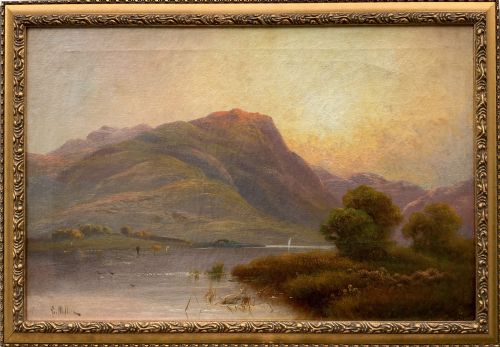
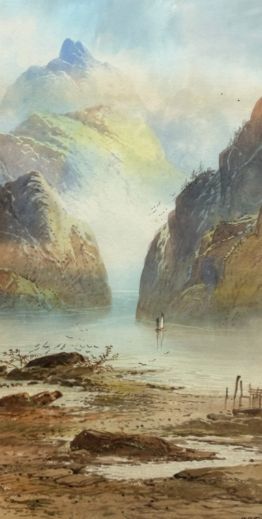
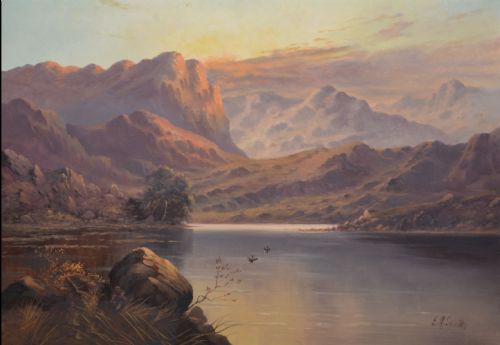
A Scottish loch picture depicts mountainous water landscapes, frequently featuring Highland cattle, ruined castles, or solitary bothies beside tranquil shores. These works capture the romantic topography of locations such as Loch Tay, Loch Earn, and Loch Ness under varying atmospheric conditions from morning mist to moonlight.
The pieces appearing most often on this page belong to the nineteenth century and the Victorian era, executed in oil on canvas or delicate watercolour on paper. Painters of the Highland School and the Victorian Scottish School dominated this genre, recording the rugged terrain with traditional academic methods.
Buyers encounter framed examples ranging from intimate watercolours signed by period artists to large oil paintings framed in gilt wood. Each composition reflects a distinct perspective on Scottish romanticism, whether created by contemporary artists working in the mid-twentieth century or Victorian masters.
How they were made
Artists built these scenes using oil paint on canvas or watercolour and gouache on paper, applying pigments to render the stillness of water and the dense textures of mountainous terrain. Canvas supports received heavy layers of oil to capture dramatic effects like moonlight on Loch Ness or morning mist on Ben Lawers.
Watercolour paintings rely on washes of tone on paper to achieve atmospheric mountain vistas and coastal perspectives. Gouache additions provided opaque highlights for skies and water ripples, while paper and canvas alike were mounted behind glass within wooden and gilt wood frames.
What varies in quality
The strength of a Scottish loch picture rests upon the artist's command of light, atmosphere, and topographical detail. Superior works display confident brushwork in the rendering of Highland cattle, mountain ranges, and shimmering reflections on the water.
Framing and material preservation also separate pieces, as original gilt wood frames and well-preserved canvas or paper surfaces maintain the integrity of the composition. Finer examples convey a distinct sense of Scottish romanticism through balanced composition and subtle colour palettes.
William Henry Earp·Henry Robinson Hall·Frank Hider·James Bell Anderson·R P Noble·Stanley Orchart·AJ Thornton·George Cole·James Kinnear·Gustave De Breanski·E M Seaton·F E Jamieson
The Scottish Loch Picture Glossary
- Gouache
- An opaque watercolour paint that dries to a matte finish, frequently used in these Scottish landscapes to add highlights to water and clouds. It provides greater opacity than traditional transparent watercolour.
- Bothy
- A small stone shelter found in remote Highland locations, often featured alongside lochs in nineteenth-century paintings. These refuges served shepherds and travellers in rugged terrain.
- Gilt wood
- Wood carved and coated with gold leaf or a gold-coloured finish to form decorative picture frames. This material characterises the grand presentation of Victorian oil paintings.
- Highland School
- A nineteenth-century artistic movement focused on the romantic portrayal of Scottish mountains, lochs, and cattle. Artists within this group emphasised dramatic natural lighting and atmospheric weather.
- Scottish Romanticism
- An artistic and cultural movement celebrating the wild, untamed beauty of the Scottish landscape. It inspired generations of painters to record remote lochs and ancient castles.
Scottish Loch Picture: Frequently Asked Questions
What subjects appear in these paintings?
The compositions show mountainous Highland scenery, loch shores, and ruined castles under varying light. Highland cattle and traditional stone bothies frequently populate the foregrounds.
Artists drew inspiration from specific locations including Loch Tay, Loch Earn, and Loch Ness.
Are these works painted in oil or watercolour?
Makers utilised both oil on canvas and watercolour or gouache on paper. Oils allowed for rich textures in large Highland landscapes, while watercolours captured delicate atmospheric effects.
Both mediums appear frequently across nineteenth-century and twentieth-century examples.
How do I date a Scottish loch picture?
Dating relies on the artist's recorded working period, framing styles, and the material support used. Nineteenth-century and Victorian pieces often feature heavy gilt wood frames and traditional academic brushwork.
Mid-twentieth-century examples reflect later interpretations of the same Highland scenery.
How should I hang and care for these pieces?
Artworks require placement away from direct sunlight and excessive moisture to protect paper, canvas, and gilt wood frames. Watercolour paintings under glass need stable indoor environments.
Regular dusting of the wooden frames preserves the finish without disturbing the artwork.