


Highland Mountain Landscape
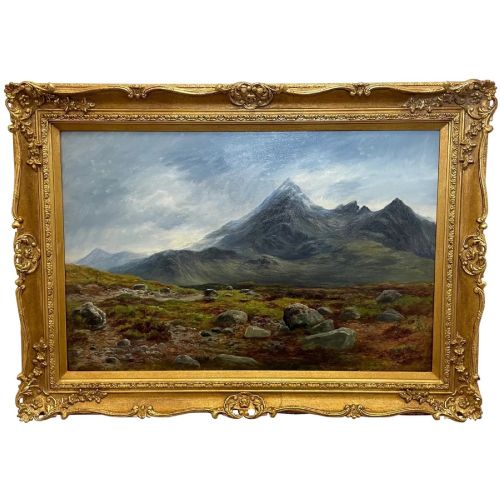
A highland mountain landscape captures the dramatic scenery, sweeping glens and tranquil lochs of Scotland and northern Britain through traditional canvas and paper works.
Highland Mountain Landscape
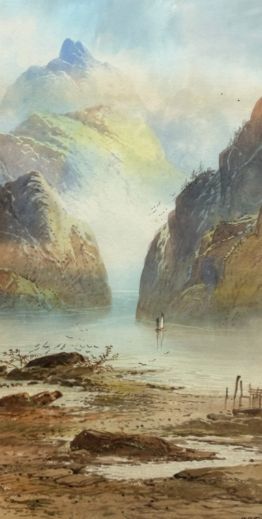
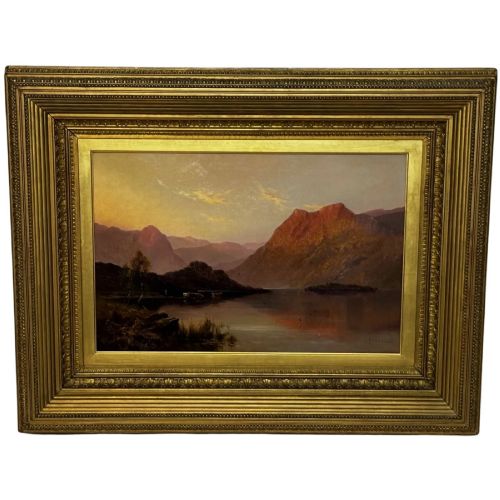
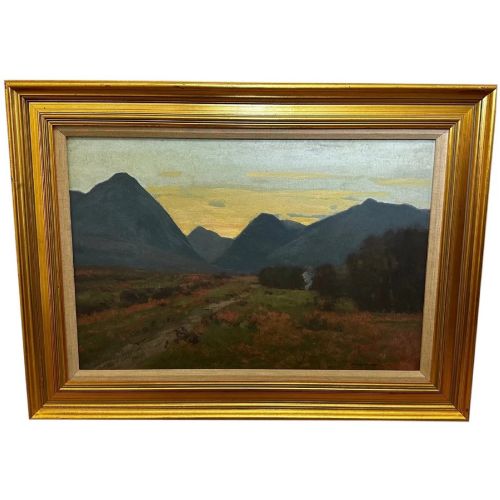
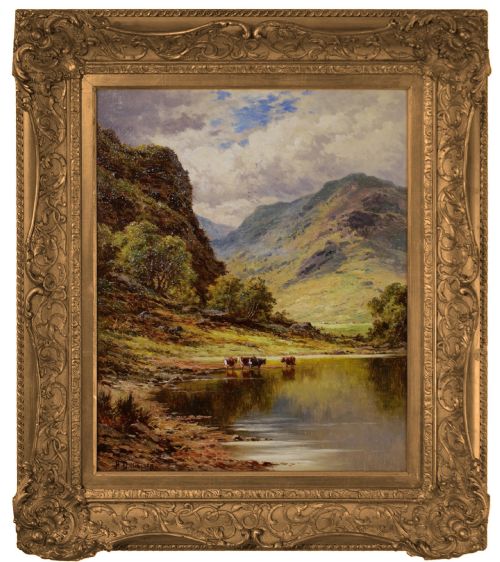
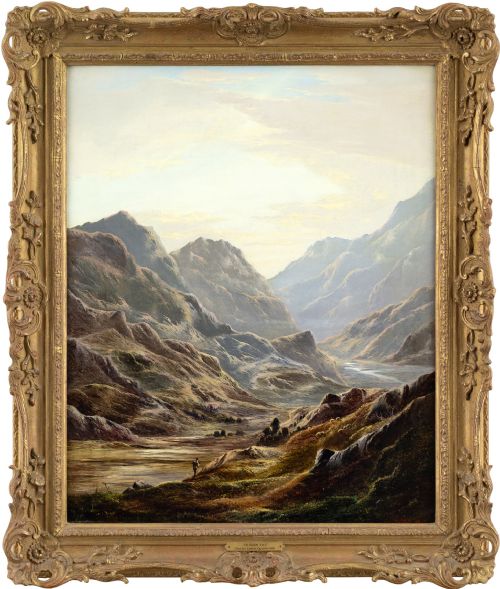
A highland mountain landscape depicts rugged terrain, elevated summits and valley floors, frequently incorporating bodies of water like lochs and rivers. These works span the nineteenth and twentieth centuries, capturing the enduring appeal of British and Scottish scenery.
The material surface most commonly encountered on this page is oil on canvas, accompanied by watercolours on paper and gouache paintings. Artists render these elevated vistas through distinct regional traditions including Scottish Impressionism and Victorian fine art.
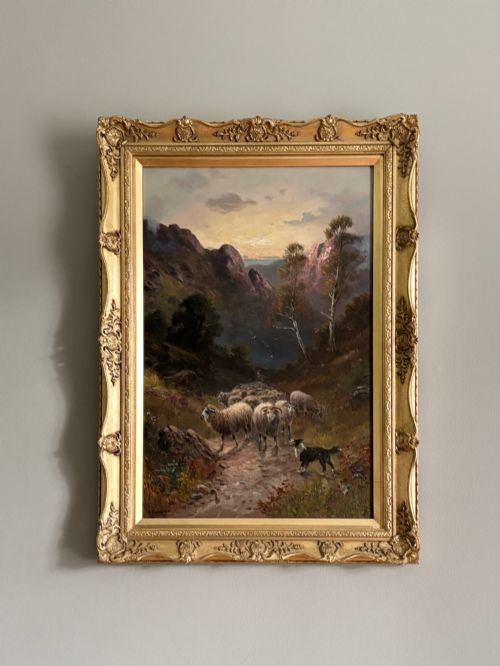
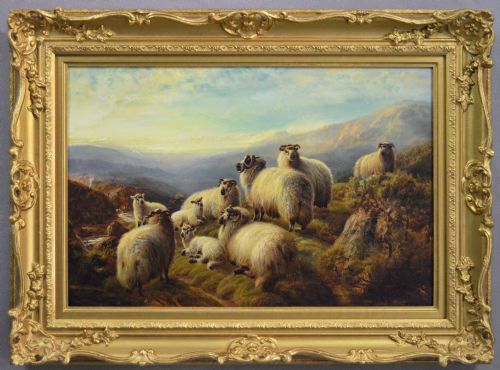
Compositions frequently integrate elements of rural life alongside the natural topography. Herds of Highland cattle, sheep, figures with livestock and solitary cottages appear regularly within the sweeping mountain views.
How They Were Made
Painters utilised oil paint applied to canvas, board or panel substrates, building up layers of pigment to capture changing weather and light across distant peaks. Many pieces incorporate gesso preparation beneath the paint layer to provide a stable, luminous ground.
Watercolour and gouache works on paper rely on fluid washes and opaque highlights to depict atmospheric moisture and reflective water surfaces in remote glens. Giltwood frames frequently enclose these completed paintings, providing a traditional decorative boundary.
Subject matter centres on Scottish and British geography, recording specific locations including Arran, Skye, Loch Tay and the Trossachs.
What Varies in Quality
The articulation of atmospheric depth and geological structure separates proficient topographical studies from exceptional artistic interpretations. Superior examples demonstrate a careful balance between the vast scale of the mountains and the rendered details of vegetation and livestock.
Brushwork precision and palette control influence the visual impact of each composition. Works by established academic painters display a confident handling of light reflecting off lochs and mountain mists, whereas lesser examples rely on repetitive formulas.
William Beattie-Brown RSA·William Henry Earp·Alfred Fontville de Breanski Jr·George Houston RSA RSW·Henry H. Parker·Douglas Cameron·Charles Leslie·Robert Watson·William George Tennick·William Henry Mander·Charles Jones·William Grant Murray·Stanley Orchart·George Melvin Rennie·William Miller Frazer·George Turner·Alfred de Breanski·Frederick Richard Lee·Thomas Sidney Cooper·AJ Thornton·Gustave De Brianski·Milton Drinkwater·Louis Bosworth Hurt·Alfred Graham·Edward John Niemann
The Highland Mountain Landscape Glossary
- Gouache
- An opaque water-based paint medium that dries to a matte finish, frequently utilised for detailed landscape highlights.
- Giltwood
- Carved wood treated with gold leaf or metallic gilding, commonly used for traditional picture framing.
- Gesso
- A plaster-like primer mixture applied to canvas or panels to create a smooth, absorbent surface for oil painting.
- Impressionism
- An artistic approach focusing on visual impressions of light and movement rather than precise botanical or geological detail.
- Panel
- A flat wooden support used as a rigid alternative to stretched canvas for oil paintings.
Highland Mountain Landscape: Frequently Asked Questions
What subjects appear in highland mountain landscape paintings?
These works depict mountainous terrain, deep glens, still lochs and passing weather systems across Scottish and British scenery. Many compositions include herds of Highland cattle, sheep resting on moors, or figures walking near remote cottages.
The inclusion of rural life adds a sense of scale and human narrative to the wild topography. Artists recorded both tranquil morning mists and dramatic stormy conditions over ranges such as Snowdon and the Trossachs.
How do I identify the period of a landscape painting?
Victorian and nineteenth-century examples often favour detailed academic realism with careful attention to botanical and geological accuracy. Later works from the twentieth century frequently adopt looser brushwork influenced by Scottish Impressionism.
Examining the stretcher bars, framing materials and any artist signatures or dates inscribed on the reverse provides further chronological context. Canvas texture and preparation methods also shift between nineteenth-century traditions and later twentieth-century supports.
Where should I hang a framed oil painting?
Display these works away from direct sunlight and excessive humidity to protect both the oil pigments and the traditional giltwood frames. Stable indoor environments prevent warping in wooden panels and canvas supports over time.
Positioning the piece at eye level in a room with balanced ambient lighting allows the tonal depth of the mountains and lochs to be fully appreciated. Adequate wall space helps accommodate the substantial frames typical of nineteenth-century fine art.
What is the difference between oil and watercolour landscapes?
Oil paintings utilise slow-drying pigmented linseed oil on canvas or panel, allowing for rich texture, deep shadows and luminous layering. Watercolours employ water-soluble pigments on paper, creating translucent washes that capture bright skies and reflective water.
Watercolour and gouache works on paper require protective glass framing to prevent moisture damage and fading. Oil paintings on canvas are more robust but benefit from breathable mounting within their original or period frames.