
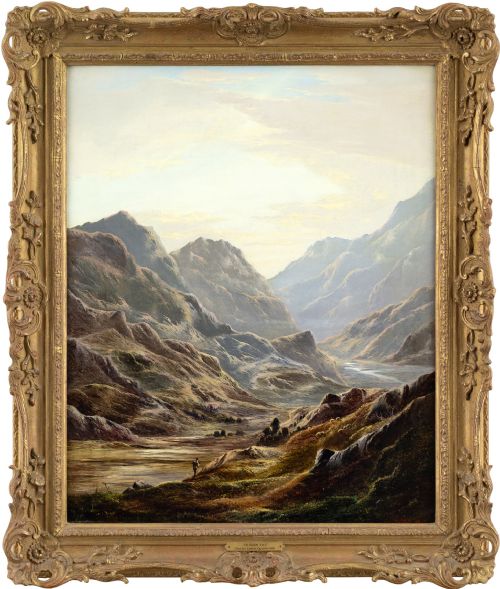
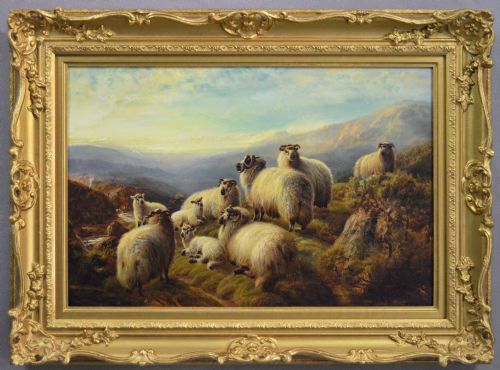
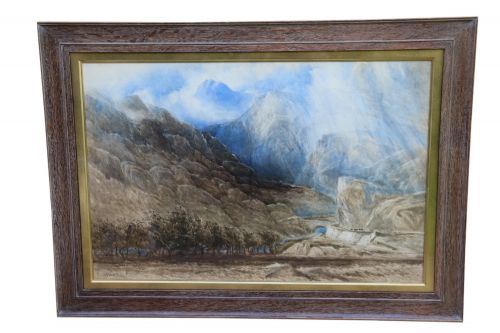

Framed Mountain Landscape Artwork
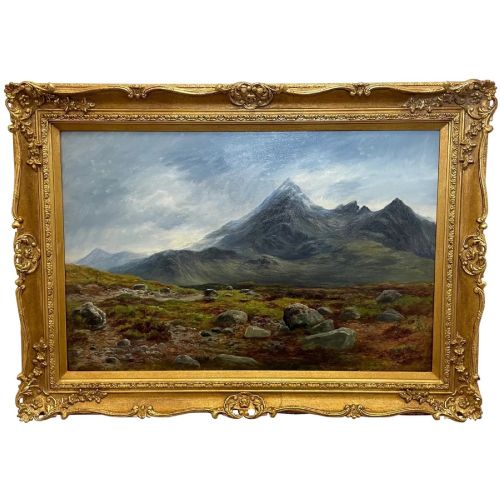
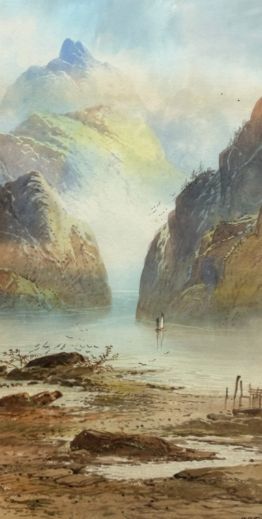
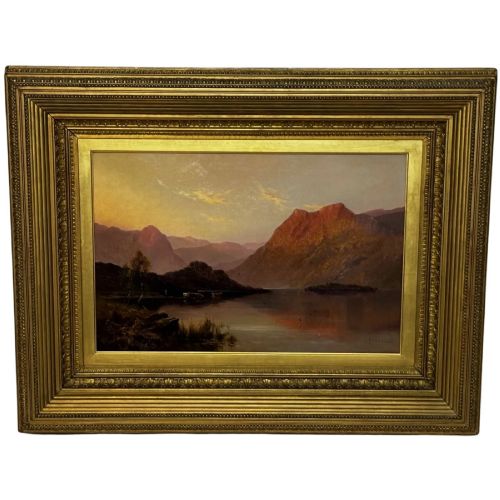
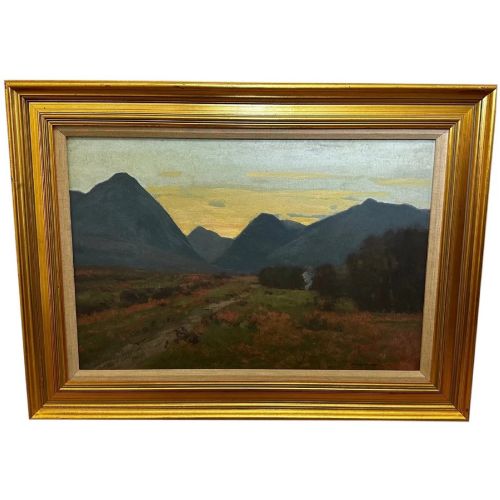
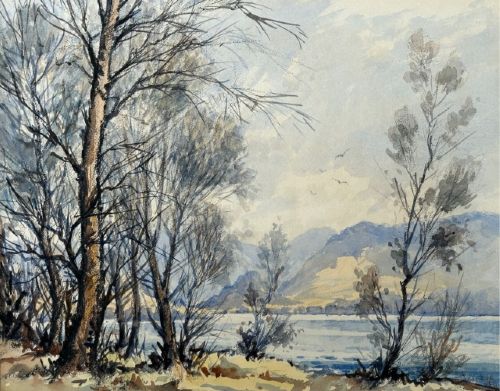
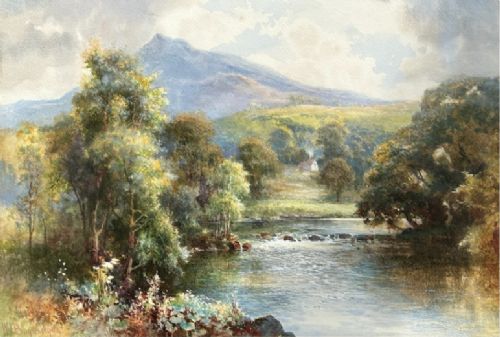
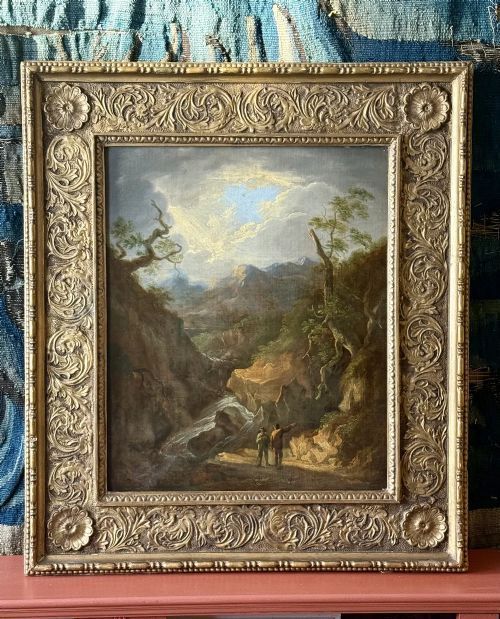
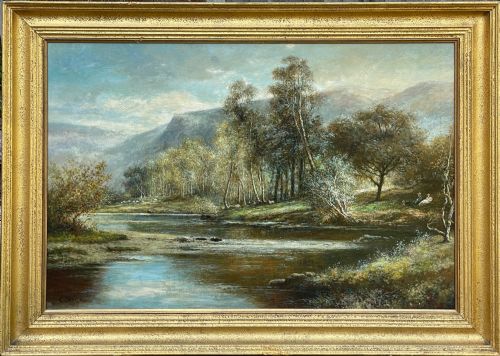
Framed mountain landscape artwork captures peaks, valleys and Highland vistas through oil on canvas, watercolour and pencil across the nineteenth and twentieth centuries.
Framed Mountain Landscape Artwork
A framed mountain landscape artwork depicts rugged terrain, lochs, rivers and peaks set within traditional surrounds. The selection on this page centres primarily on nineteenth-century oil paintings and watercolours, alongside works from the early and mid-twentieth century.
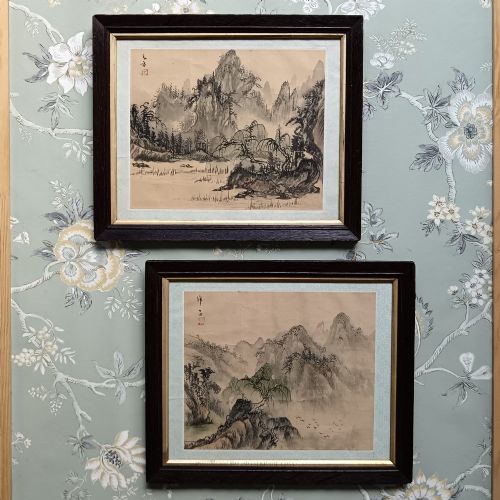
Makers recorded in the evidence range from Victorian British and Scottish painters to continental European schools and twentieth-century regional artists. Common formats include oil on canvas, oil on panel, silk paintings and watercolour on paper, housed within original wood, giltwood and gesso frames.
Materials and methods of production
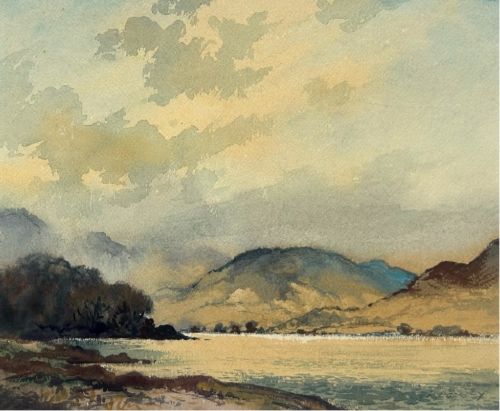
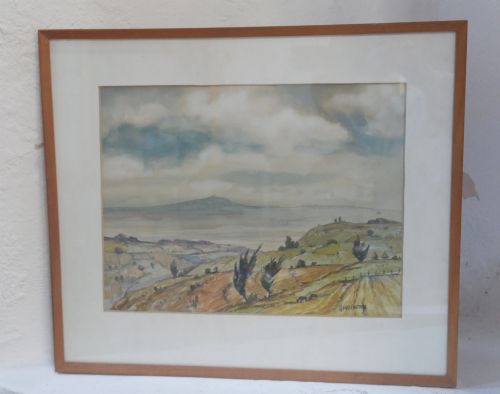
Painters applied oil pigments to stretched canvas, wooden panel or paper to build depth in mountainous scenery. Watercolour washes were also used on paper, sometimes supported by pen-and-ink drawing lines.
Works are typically preserved behind glass for paper or left open for canvas, mounted in timber frames finished with carved or moulded gesso and gilt details.
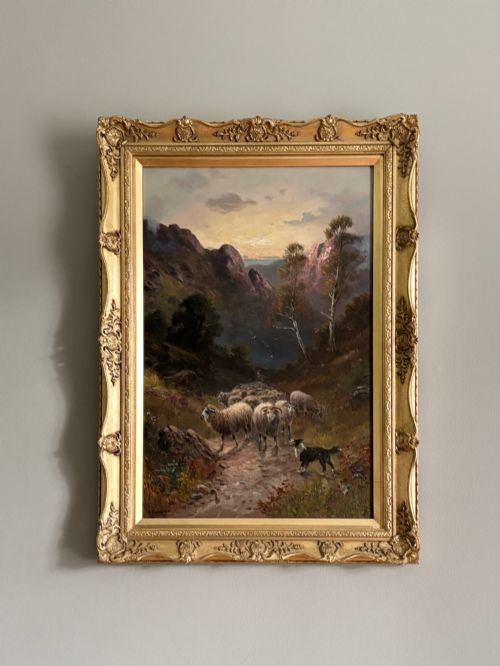
Several mountain views manage to squeeze Highland cattle, golf courses and placid sheep into the same craggy valley.
Evaluating quality and execution
Quality rests upon the handling of light, atmosphere and topography by the artist. Stronger examples display confident brushwork and precise draughtsmanship in rendering crags, water and Highland cattle.
The condition and originality of the surrounding frame also influence the piece, particularly where period giltwood or gesso mouldings remain intact alongside the canvas or paper artwork.
William Beattie-Brown·William Henry Earp·Alfred Fontville de Breanski Jr·Robert Leslie Howey·George Houston·William Joseph Boyes·Benjamin Barker of Bath·Douglas Cameron·Henry Martin Pope·John Grenville Fennell·William Henry Mander·Sidney Richard Percy·Thomas Spinks·Frank Hider·Walter J Watson·William Grant Murray·J Barclay·John Douglas Perrett·Edward Horace Thompson
The Framed Mountain Landscape Artwork Glossary
- Oil on Canvas
- Pigment mixed with drying oil applied to a woven fabric support. This material allows for rich colour blending and textured brushwork.
- Watercolour
- A paint method where colour pigments are suspended in a water-based solution on paper. It produces translucent washes suited to atmospheric mountain views.
- Giltwood
- Timber that has been coated with a thin layer of gold leaf. It is frequently found on nineteenth-century picture frames.
- Gesso
- A plaster-like mixture applied to wood frames to create a smooth surface for gilding and moulding. It forms the decorative relief work on period frames.
- Scottish Impressionism
- A painting style characterised by loose brushwork and vibrant light effects. Artists in this tradition recorded Highland landscapes and coastal scenes.
Framed Mountain Landscape Artwork: Frequently Asked Questions
What periods do these mountain landscapes come from?
The works span from the seventeenth century through the Victorian era and into the mid-twentieth century. Nineteenth-century pieces form a large portion of the available selection.
Later examples extend into the nineteen-twenties and nineteen-sixties, reflecting changing artistic movements across Britain, Europe and beyond.
How were these artworks originally framed?
Frames typically consist of wood, giltwood or gesso, often original to the period of the painting. Elaborate moulded frames complement traditional oil works.
Watercolours and drawings are frequently framed and glazed under glass to protect the paper substrate from atmospheric moisture.
Which regions do the landscape subjects depict?
Subjects concentrate heavily on British and Scottish topography, including the Lake District, North Wales and the Scottish Highlands. Locations such as Snowdonia and Isle of Arran appear frequently.
Continental and global locations also feature, including Alpine views, New Zealand, Kenya and China.
Are these paintings signed by the artists?
Many of the listed works feature signatures or attributions to named historical painters and regional artists. Documentation on the canvas or reverse often records the creator.
Unsigned pieces are frequently attributed to specific nineteenth-century or continental schools based on style and technique.