
Scottish Highlands Oil Canvas
These scottish highlands oil canvas works capture rugged terrain and moody light across the Victorian era into the twentieth century.
Scottish Highlands Oil Canvas
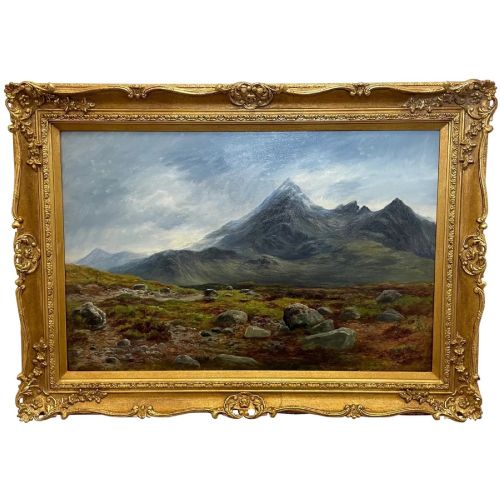
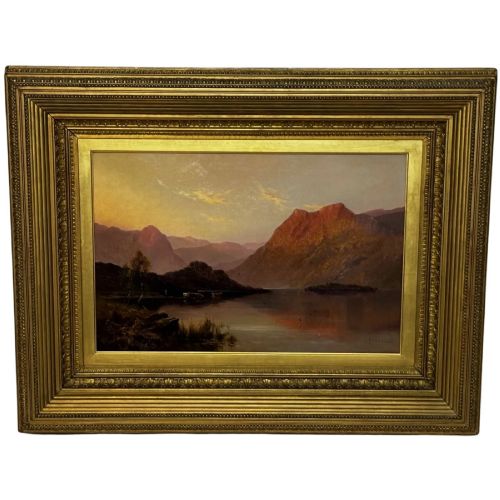
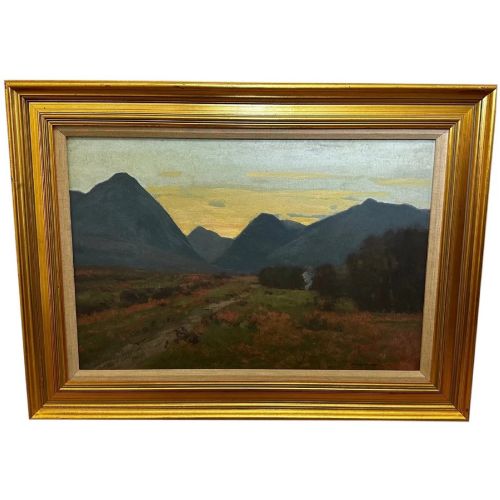
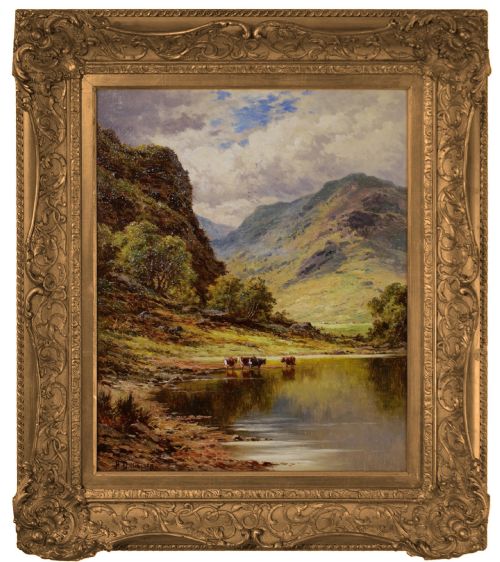
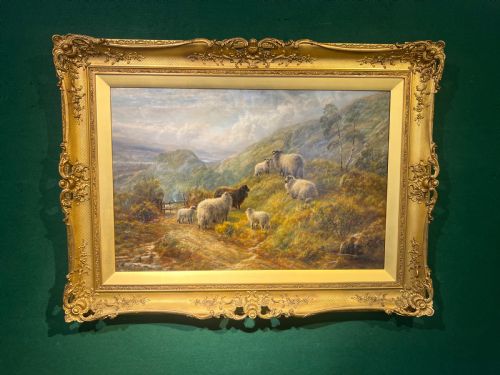
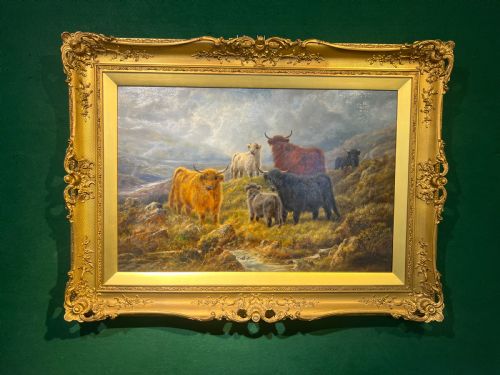
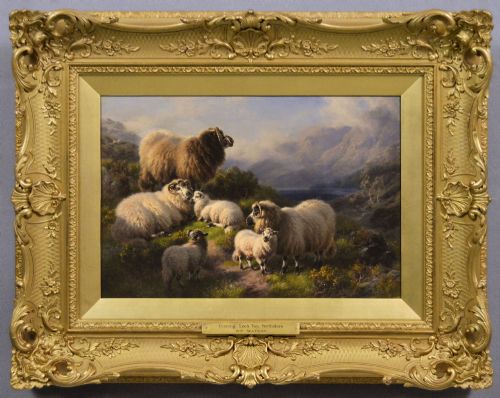
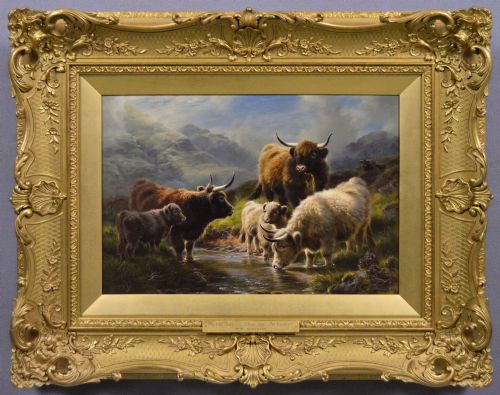
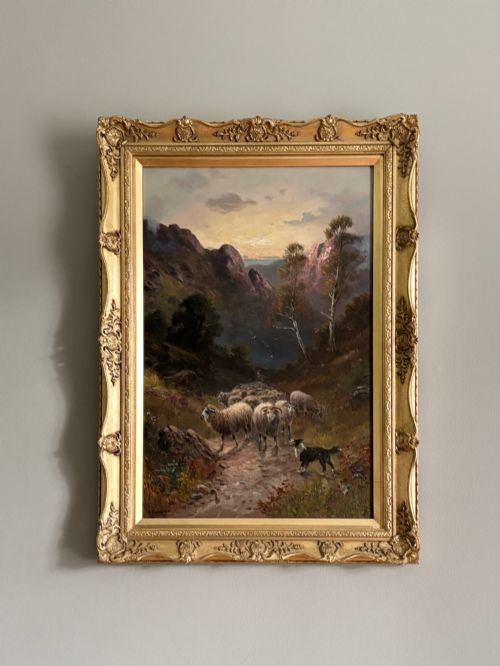
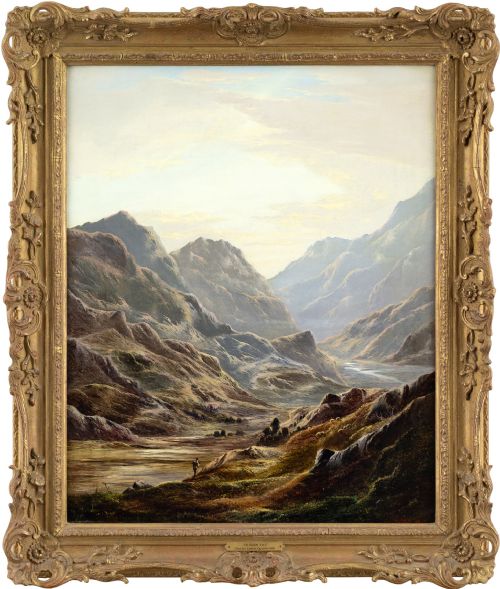
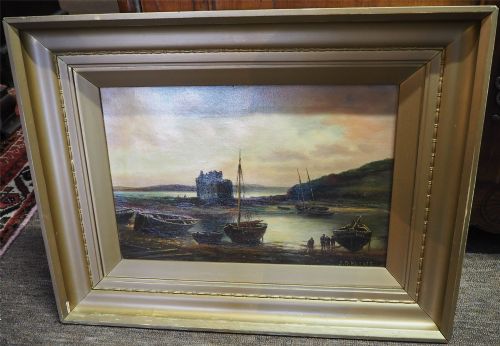
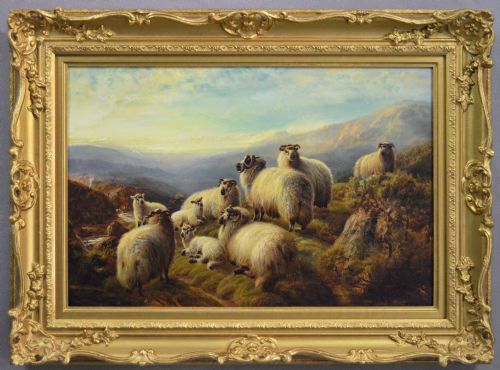
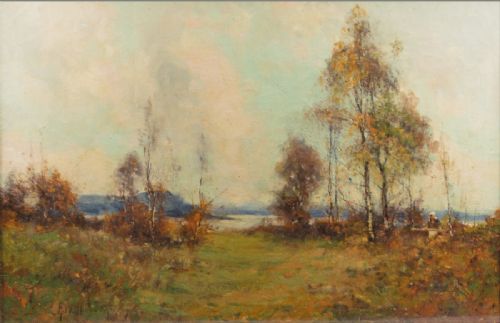
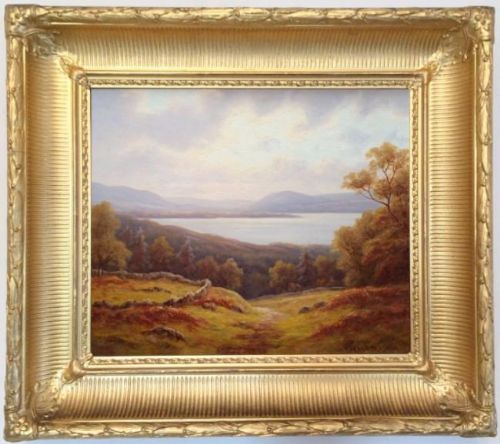
A scottish highlands oil canvas depicts dramatic northern scenery, typically featuring misty lochs, heather-clad glens, and grazing cattle or sheep. You will frequently encounter Victorian and early twentieth-century examples that celebrate the romantic topography of Scotland.
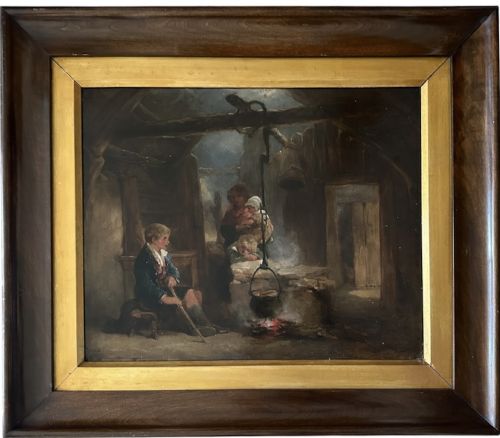
The compositions range from intimate pastoral studies of rustics and animals to vast panoramic views of mountains such as Ben Lawers and Skye. Many works bear the signatures of established regional artists who specialised in capturing atmospheric highland weather.
Materials and construction
Painters applied oil paint directly onto stretched canvas, utilising rich earth pigments and fluid brushwork to render the changing textures of water, stone, and animal coats. Ground layers and underpainting gave these works depth before the final tonal glazes were added.
Surviving canvases are housed in period wooden frames, frequently finished with gesso ornaments and gold leafing. These ornate surrounds complement the pastoral grandeur depicted within the picture plane.
The listings demonstrate a strong preference for nineteenth-century Victorian periods, utilising oil on canvas stretched over wood frames.
Distinctions in craftsmanship
Mastery is evident in how an artist handles atmospheric moisture and light, where superior canvases reveal subtle transitions of tone in skies and distant mountain peaks. Weaker works often rely on formulaic foliage and static animal placement.
The handling of the oil medium itself dictates the upper tier of production, with assured impasto and confident brush strokes separating ambitious gallery pieces from standard decorative studies.
William Beattie-Brown·Alfred Fontville de Breanski·George Houston·Henry H. Parker·Robert Watson·William Watson Jnr·Robert Cleminson·Charles Leslie·Alexander Wellwood Rattray·Everett Watson Mellor·Archibald Kay·Henry Robinson Hall·William Grant Murray·Sir David Murray·George Melvin Rennie·William Miller Frazer·John W Morris·Walter Linsley Meegan·Gustave de Breanski
The Scottish Highlands Oil Canvas Glossary
- Impasto
- Paint applied thickly to a canvas, standing out in relief from the surface. This technique allows artists to capture the tactile texture of Highland rocks and vegetation.
- Gesso
- A paint mixture consisting of a neutral binder mixed with chalk, gypsum, and pigment. It prepared wooden frames before the application of gold leaf.
- Giltwood
- Wood that has been covered with a thin layer of gold leaf or gold paint. Frames finished in this manner were standard for nineteenth-century landscape displays.
- Provenance
- The chronological record of ownership of a work of art. Documented history aids in confirming the attribution of nineteenth-century paintings.
Scottish Highlands Oil Canvas: Frequently Asked Questions
How do I date a scottish highlands oil canvas?
Dating relies on stretcher construction, canvas type, and stylistic markers such as costume or framing conventions. Victorian examples often display specific nineteenth-century registration stamps or gallery labels on the reverse.
Signatures, when legible, allow cross-referencing with exhibition records from institutions like the Royal Scottish Academy. Comparing the handling of light and pigment to dated comparator works helps narrow the decade of execution.
Where should I hang these landscape paintings?
These works suit traditional reception rooms, libraries, or studies where their rich earth tones and pastoral subjects can be appreciated at eye level. Direct sunlight should be avoided to prevent the oil paint and canvas from drying out.
Providing stable ambient humidity prevents the wooden stretcher bars from warping and protects the fragile gesso on the period frames. Wall placement should also keep the canvas away from active heat sources.
What subjects besides cattle appear in these scenes?
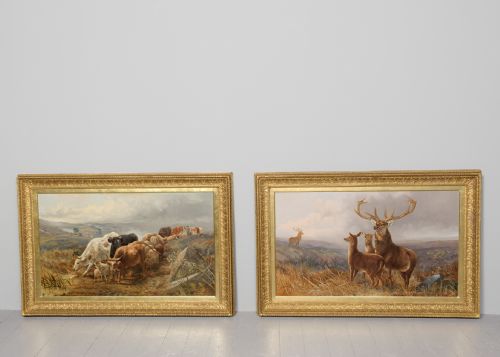
While Highland cattle and sheep dominate the pastoral genre, artists also recorded working ponies, red deer stags, and domestic gun dogs resting in the heather. Figures of shepherds, ghillies, and clan members engaged in daily life or sporting pursuits are equally common.
Topographical landmarks such as Loch Lomond, Loch Tay, and the peaks of Arran provide recognizable geographic anchors for these compositions. Winter snow scenes and moonlit castle views offer alternative moods to the standard daylight panorama.