
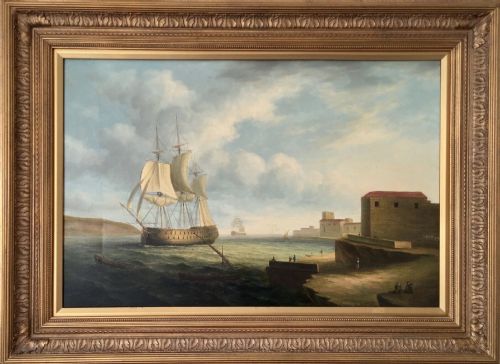


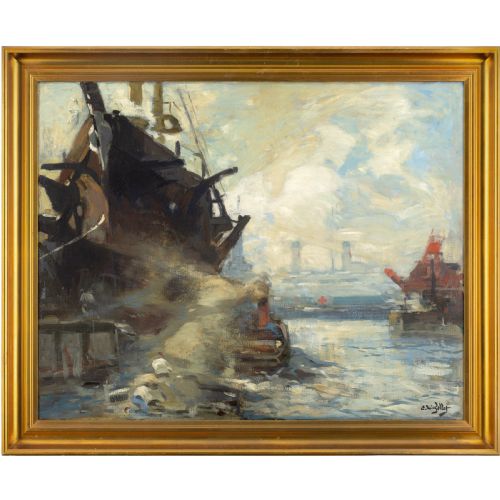
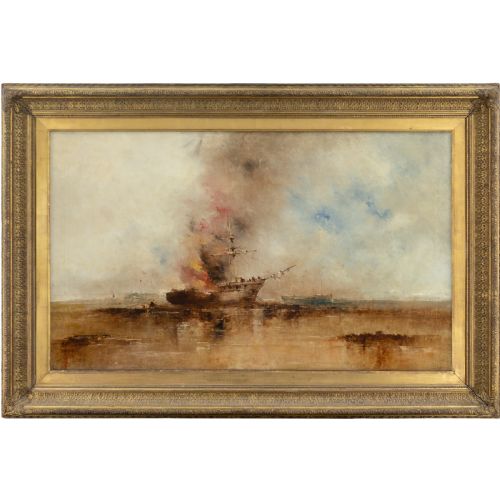
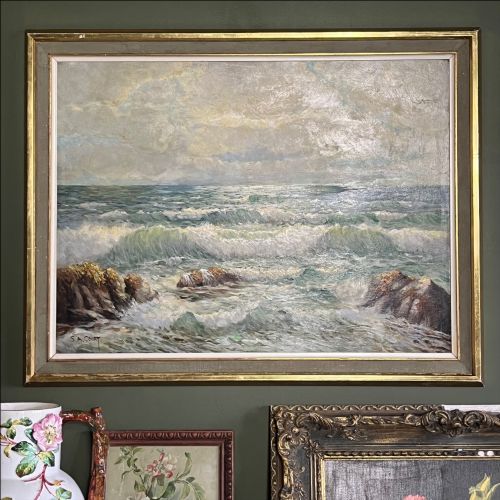
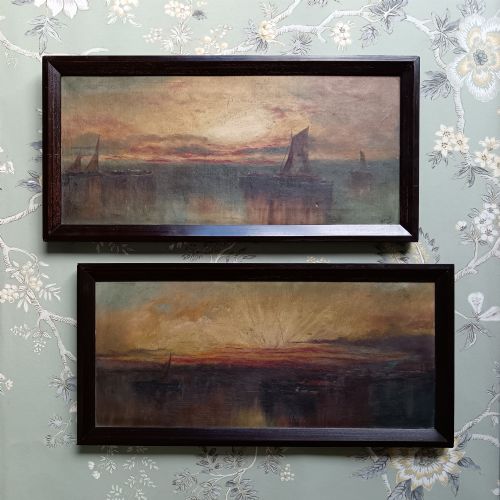
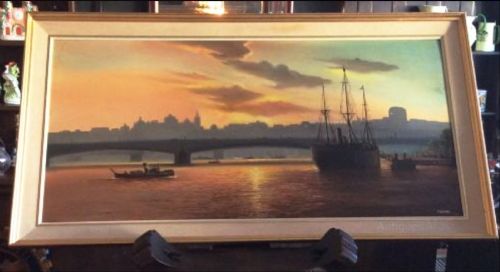
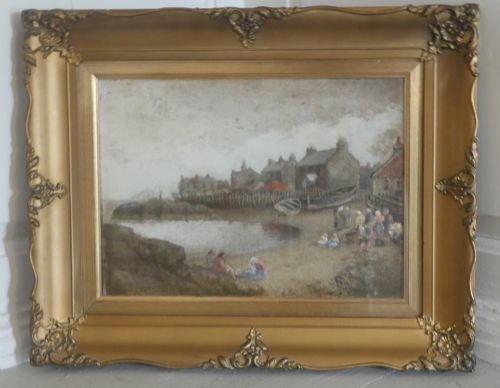
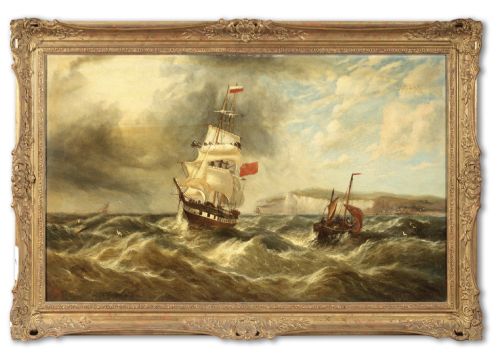
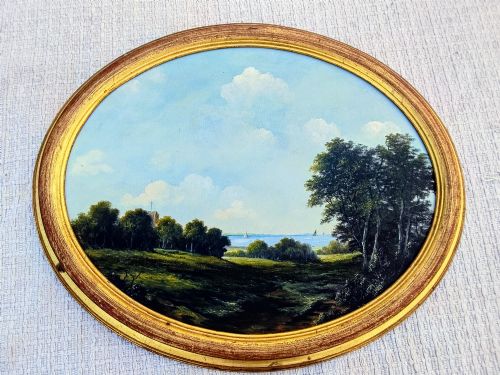
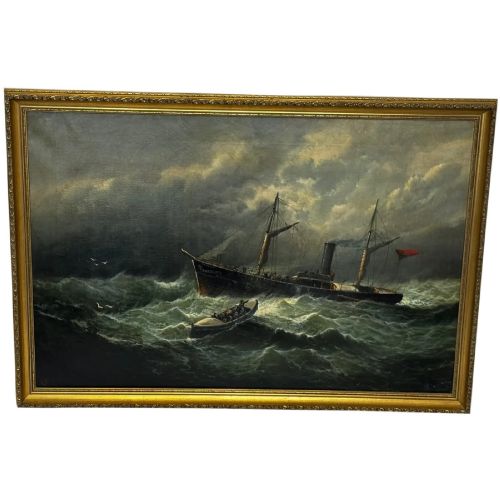
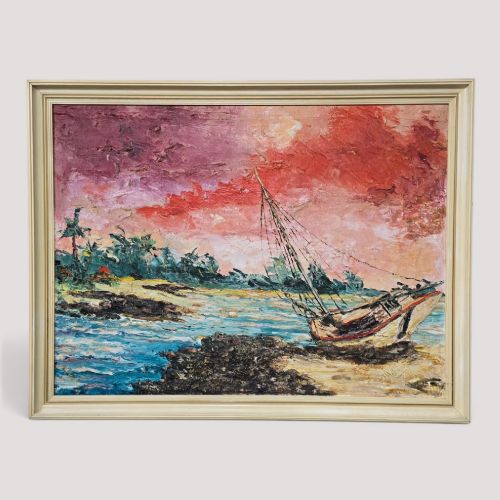
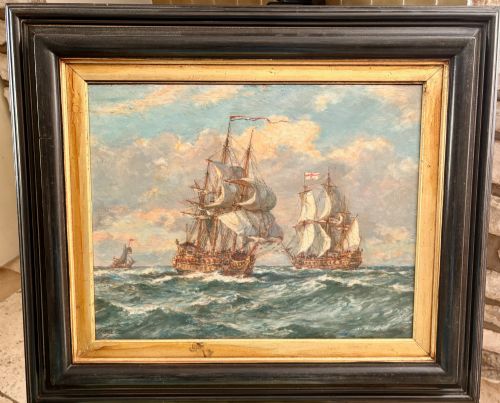
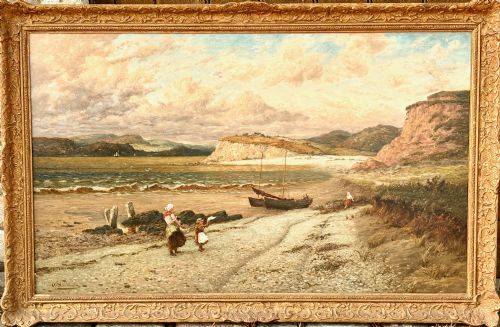
Framed Marine Oil Seascape
A framed marine oil seascape captures coastal views and tall ships on canvas, wood, or board, held in traditional surrounds.
Framed Marine Oil Seascape
These works present coastal views, harbours, and ships on water, captured primarily in oil paint across canvas, panel, and board. A buyer searching for a framed marine oil seascape encounters depictions ranging from calm coastal stretches to turbulent storms and shipping scenes.
The selections span the 19th century into the mid-20th century, with Victorian and Edwardian examples appearing frequently alongside later pieces. Painters worked in styles such as British Impressionism, Post-Impressionism, and traditional maritime representation.
Surviving pieces frequently retain their original or period surrounds, which range from simple wooden mouldings to elaborate giltwood frames. Works often depict specific locations, such as local harbours, river views, and international coastal waters.
Materials and Technique
Painters utilised oil paint applied to prepared canvas stretched over wooden frames, or directly onto wooden panels and boards. Artists built up textures using brushwork and sometimes palette knives to render the movement of water, skies, and coastal terrain.
Surrounds consist of wood, often finished with gilt or gilding to complement the maritime subject matter. These frames protect the edges of the canvas or panel and provide a finished architectural boundary for the artwork.
Listings feature works created across the 19th and 20th centuries, including Victorian, Edwardian, and 1960s periods.
Judging Quality
Quality rests upon the artist's ability to render light, atmosphere, and the movement of water convincingly within the composition. Stronger works demonstrate a secure handling of perspective, tone, and maritime detail in depicting vessels and coastal architecture.
The condition of both the painted surface and the surrounding frame influences the overall integrity of the piece. Intact original giltwood surrounds and well-preserved paint layers without extensive overpainting elevate the standing of the work.
Eugène-Louis Gillot·William McAlpine·Bernard Benedict Hemy·Thomas Creswick·Willem Bos·John Wilson Carmichael·Joseph Farquharson·John Moore of Ipswich·William Henry Williamson
The Framed Marine Oil Seascape Glossary
- Canvas
- A heavy woven fabric stretched over a wooden frame to serve as a support for oil painting.
- Giltwood
- Wood carved and coated with a thin layer of gold leaf or metallic gilt, commonly used for period picture frames.
- Panel
- A flat piece of wood used as a rigid support for painting in place of flexible fabric.
- En plein air
- A French term describing paintings executed outdoors to capture natural light and atmospheric conditions directly.
Framed Marine Oil Seascape: Frequently Asked Questions
How do I identify the age of a marine painting?
Dating relies on examining the support materials, framing style, and stretcher construction used behind the canvas. Canvas types, nail styles, and backing boards often point toward specific periods like the Victorian era or the mid-20th century.
Signatures, inscriptions on the reverse, and artist biographical dates recorded in the evidence help narrow down the decade of creation. Stylistic markers such as Victorian maritime conventions or later impressionist techniques also clarify the timeframe.
What subjects typically appear in these seascapes?
Common subjects include tall ships, merchant vessels, and warships navigating coastal waters, rivers, or open seas in varying weather conditions. Harbour scenes, lighthouse views, and quiet shorelines also feature prominently.
Specific geographical locations often appear in titles, ranging from British ports to European harbours and coastal towns. Artists recorded both dramatic maritime incidents, such as shipwrecks and rescues, and peaceful sunset coastal views.
Are these paintings usually housed in original frames?
Many works retain period wooden or giltwood frames that match the age and style of the artwork. These surrounds were often selected by the artist or contemporary owners to complement the composition.
Frames can range from simple dark wood mouldings to ornate Victorian gilt designs. Examining the fit and wear on the frame helps determine its association with the painting.
How should I care for an antique oil painting?
Display oil paintings away from direct sunlight, high humidity, and rapid temperature fluctuations to protect the canvas and paint layers. Gentle dusting with a soft, dry brush keeps the surface clean without disturbing the pigment.
Avoid using liquids or chemical cleaners on the painted surface or the gilt frame. Professional conservators should handle any structural repairs or deep cleaning of the canvas.