
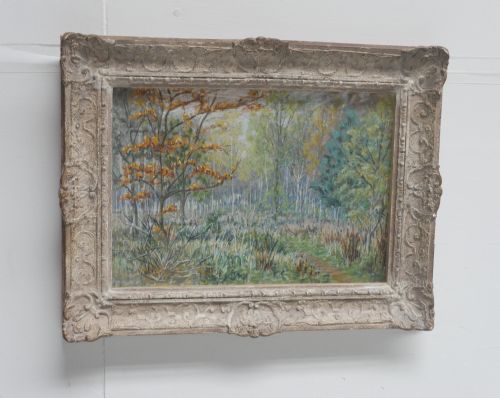
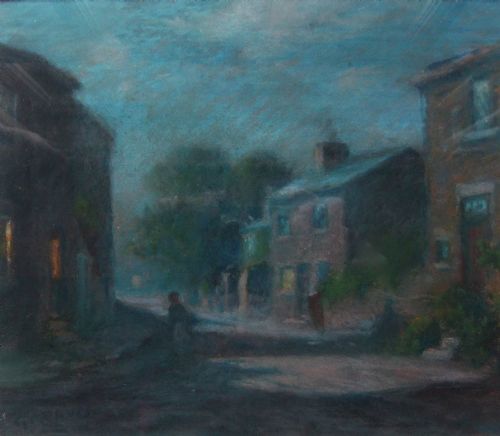


Framed Landscape Drawing
A framed landscape drawing captures scenery on paper through ink, pencil or pastel, preserved behind glass within wood or gilt frames.
Framed Landscape Drawing
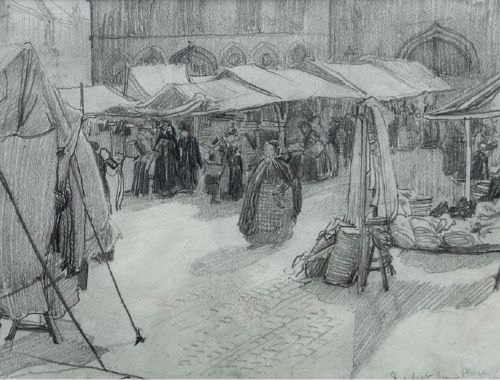
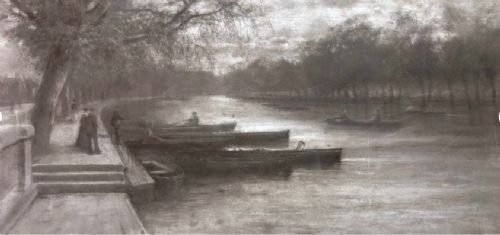
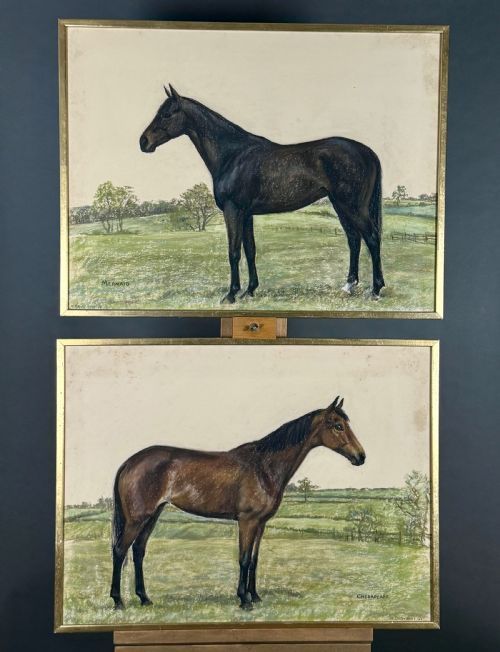
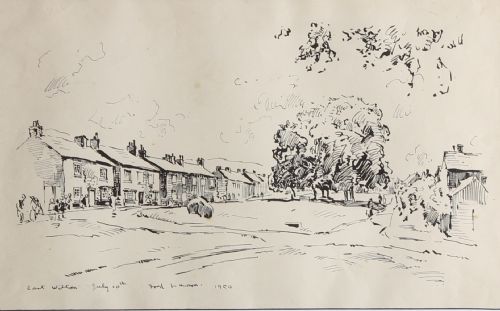
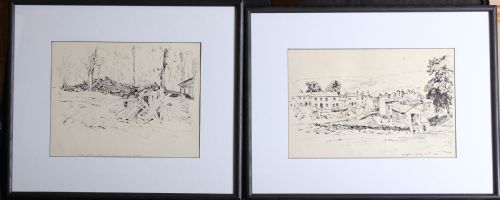
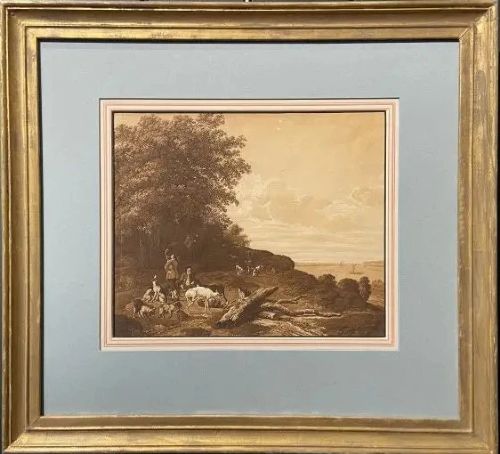
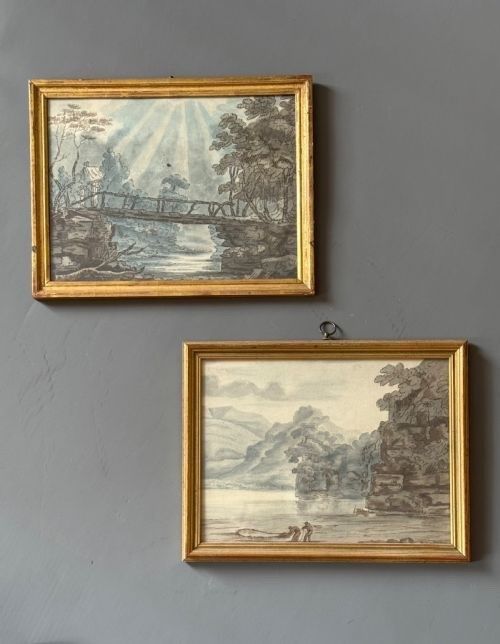
When searching for a framed landscape drawing, collectors encounter works on paper executed in media such as pencil, ink, charcoal, pastel and watercolour. These pieces span from the Georgian and Victorian eras through to the mid-twentieth century, capturing natural scenery and architectural views.
The selection frequently includes English School watercolours, early twentieth-century British works, and continental scenes from the Grand Tour. Buyers most commonly meet pieces framed in wood, burr timber or gilt surrounds protecting the delicate paper underneath.
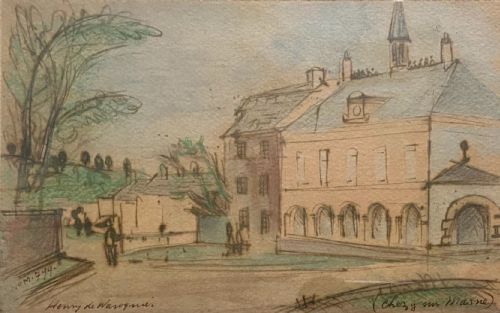
Subjects range from Yorkshire vales and Lake District studies to continental street scenes and Venetian lagoons. Each item combines graphic draughtsmanship with the atmospheric depiction of open terrain or urban topography.
Materials and Technique
Artists create these works on paper using dry mediums like pencil, charcoal and pastel, or fluid mediums such as ink, wash and watercolour. Mixed media combinations frequently appear, blending pen outline with watercolour washes.
Protective framing relies on glass mounted over the paper to shield the fragile surface from atmospheric damage and moisture. Timber mouldings, sometimes finished in gilt or burr wood veneers, complete the construction of the hanging piece.
Listings feature paper, glass, ink, wood, watercolour, pastel, gilt wood and pencil across the 19th Century, 1930, 1960, 1950, 1940, 1920, 1800 and 1910 periods.
Evaluating Quality
Quality rests upon the sureness of the draughtsmanship and the artist's ability to convey light and depth on a flat sheet. Strong compositions with confident ink lines or nuanced pastel blending stand apart from hesitant or generic renderings.
The preservation of the paper and the integrity of the original framing elements influence the desirability of the piece. Works that retain their vibrant pigment without excessive fading or foxing represent the finer end of the surviving range.
Henry Percy Huggill·Fred Lawson·Johannes Lingelbach·Henry de Waroquier·William Greaves·John Hobson Nicholson·Stanley Orchart·J W Hogley·C Lainé·Samuel Henry Alken·Eduard Leon Cortes·Berthe des Clayes·John Charles Maggs·Sir Francis Leggatt Chantrey·Charles H Poingdestre·William Manners·Amos Green
The Framed Landscape Drawing Glossary
- Watercolour
- A paint consisting of a pigment suspended in a water-soluble vehicle. It is typically applied to paper in transparent washes to create luminous landscape effects.
- Pastel
- A dry art medium in the form of a stick, consisting of powdered pigment and a binder. It produces rich, velvety colour fields well suited to atmospheric skies and terrain.
- Gilt Wood
- Timber carved or assembled and coated with a thin layer of gold leaf or metallic paint. This finish provides an ornate or reflective border for works on paper.
- Grand Tour
- A traditional trip of Europe undertaken by upper-class European young men of sufficient means. Watercolours and prints depicting classical ruins were often acquired as mementos of these travels.
- Charcoal
- A form of dry carbonaceous material made from slowly burned wood used for sketching and drawing. It allows for deep, expressive dark marks and rapid tonal shading.
Framed Landscape Drawing: Frequently Asked Questions
How should I hang a framed landscape drawing?
Position the artwork at eye level on an interior wall away from direct sunlight to protect the fragile paper pigments from fading.
Ensure the hanging fixings match the weight of the timber frame and glass to keep the piece secure.
Can I remove the drawing from its frame?
Opening historic frames risks introducing dust, moisture and acidity to unprotected paper that has stabilised in its environment over decades.
Keep the original backing and glass intact to preserve the conservation state of the artwork.
How do I identify a watercolour from a pastel?
Watercolours utilise transparent fluid washes of pigment where the white of the paper often provides highlights.
Pastels consist of opaque powdery dry strokes that sit on top of the paper surface and require glass to prevent smudging.
What periods do these drawings come from?
The works span from the Georgian and Victorian eras through Edwardian times and into the mid-twentieth century.
Each period reflects the changing sketching styles and framing preferences of British and continental artists.