
Framed Horse Portrait Art
Framed horse portrait art captures the dignity of the equine form through centuries of painting, drawing and printmaking.
Framed Horse Portrait Art
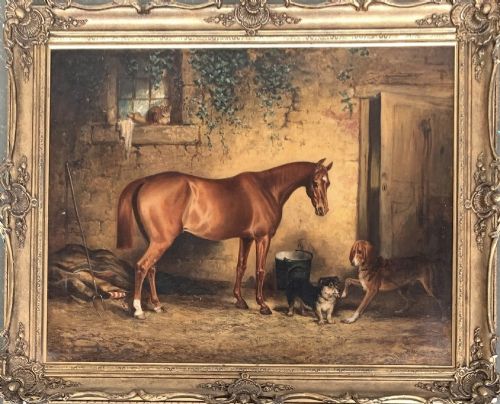
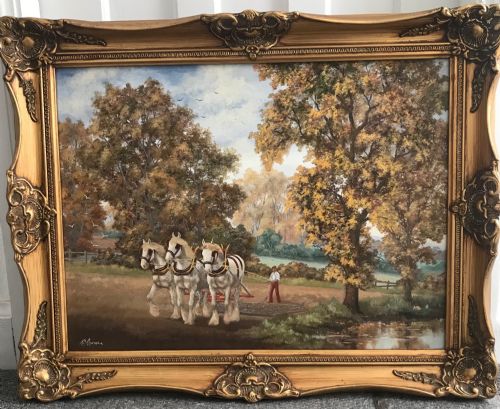
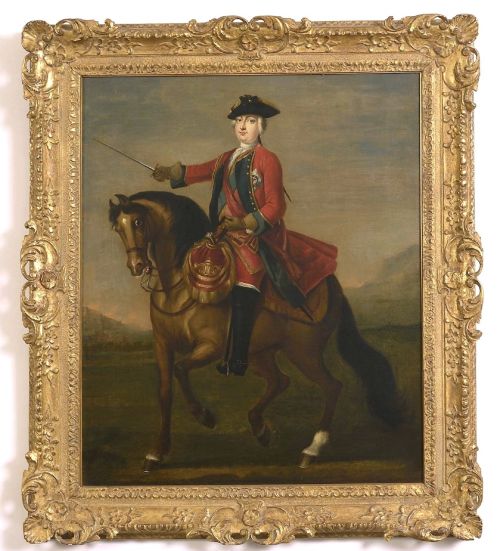
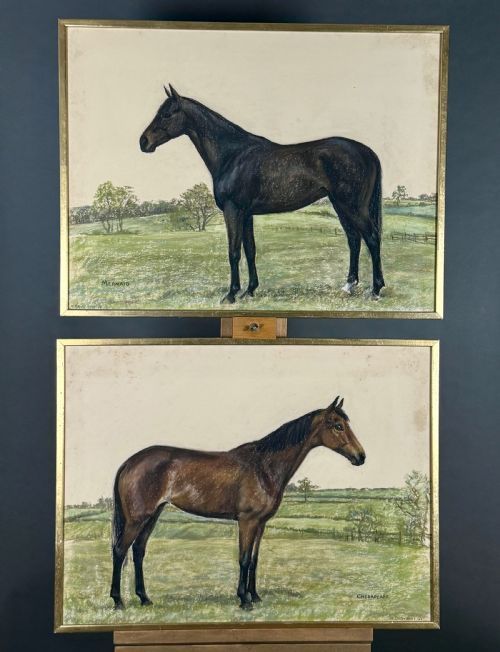
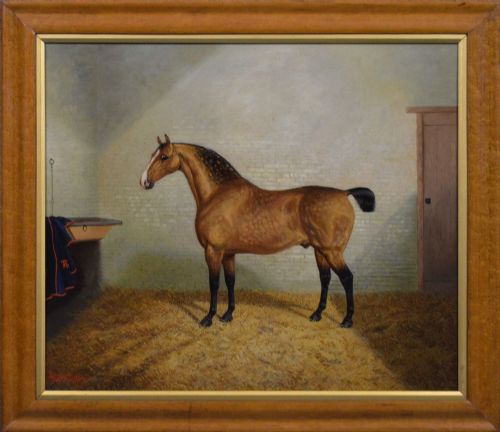
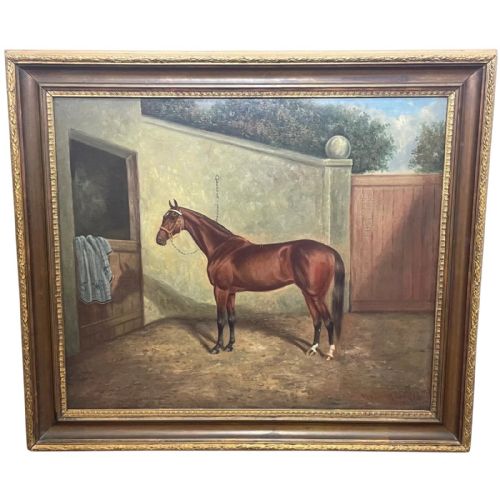
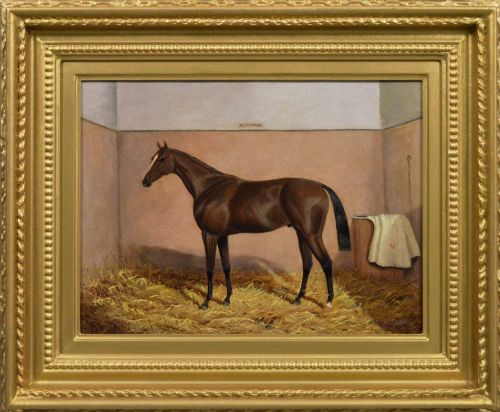
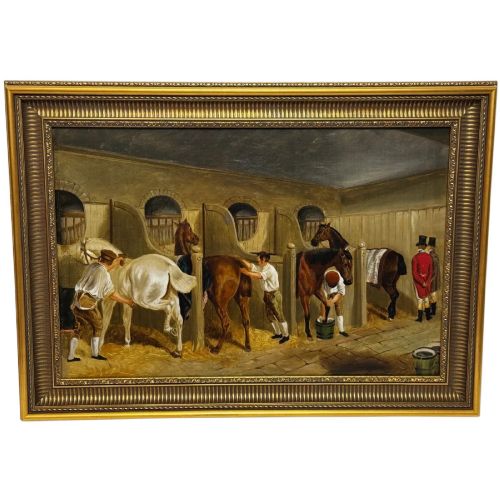
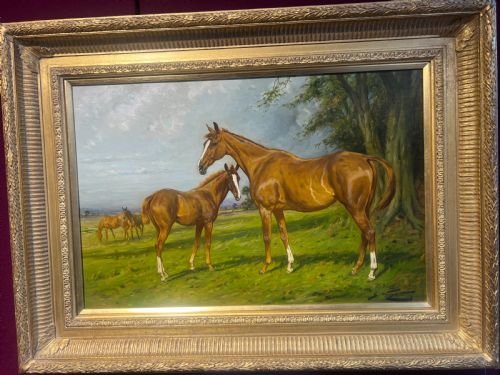
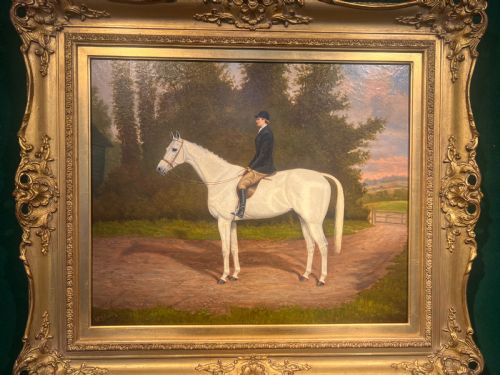
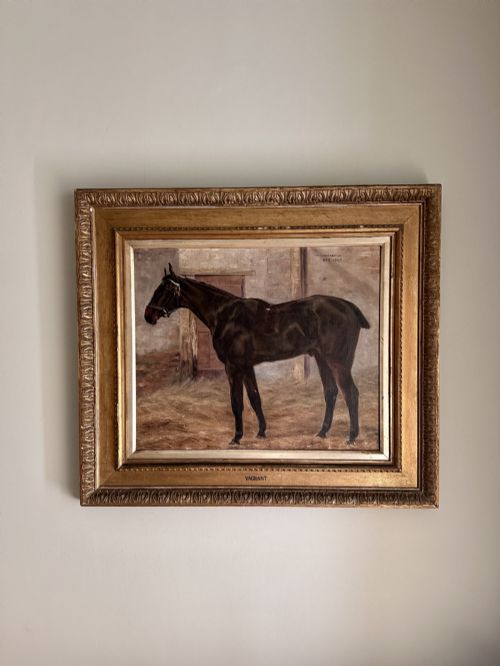
Framed horse portrait art comprises works depicting horses from the eighteenth, nineteenth and twentieth centuries. These pieces record specific racehorses, hunters, working Shires and stable scenes rendered by period artists.
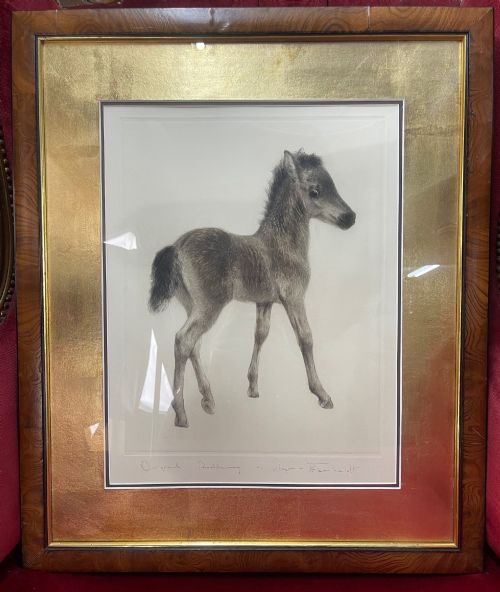
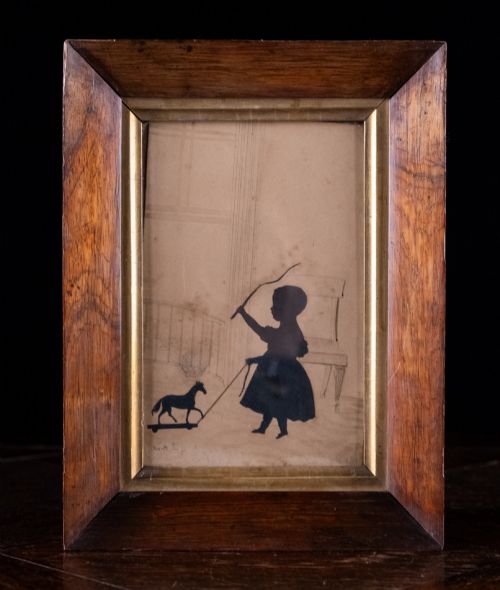
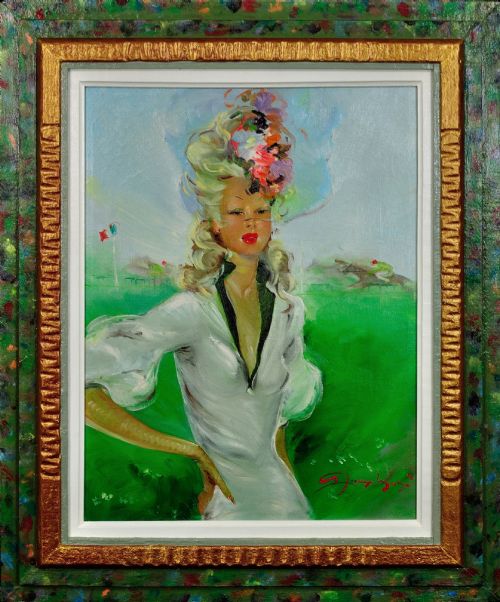
The selection ranges from detailed oil paintings on canvas and panel to pastels, watercolours and drypoint prints. Many examples originate from Victorian sporting traditions and mid-century rural studies.
Buyers encounter framed pieces spanning Georgian, Victorian, Edwardian and later periods, housed in wood and giltwood surrounds appropriate to their era.
How they were made
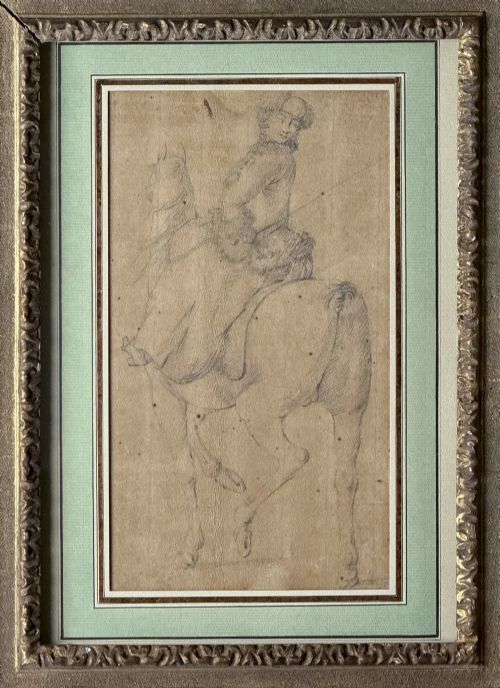
The works rely upon oil paint applied to canvas or wood panel, alongside pastel, charcoal and watercolour on paper. Drypoint printmaking provides a fine-lined alternative for intimate animal studies.
Substantial wood and giltwood frames enclose these works, protecting the paper or canvas and completing the presentation of the artwork.
Several horses recorded here outlived their jockeys' waistcoats and certainly their own racing records.
What varies in quality
Quality rests upon the artist's command of equine anatomy, movement and expression, distinguishing careful studies from generic depictions. Stronger pieces capture the distinct bone structure, musculature and character of the individual animal.
The integration of the subject within its landscape or stable setting also dictates the success of the work. Superior handling of light, brushwork and proportion elevates a standard animal study into fine art.
Henry Barraud·Edward Fisher·Sir Joshua Reynolds·Kurt Meyer-Eberhardt·Albert Clark·Augustin Edouart·Jean-Gabriel Domergue·Fred Fitzpatrick·Sir Anthony van Dyck·Ernest Payne·Edward Priestley·John Alfred Wheeler·Thomas Walker Bretland·John Ferneley Senior
The Framed Horse Portrait Art Glossary
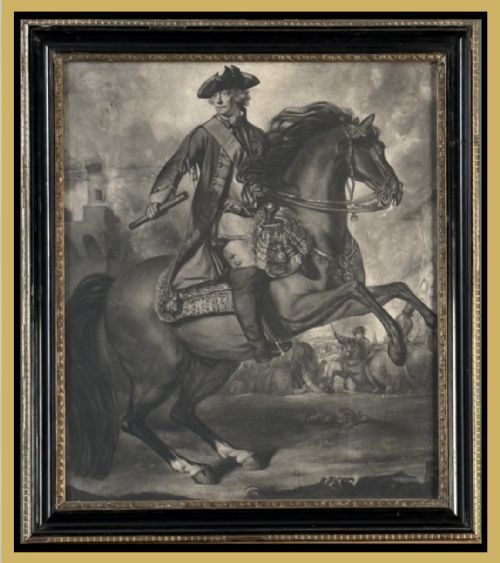
- Mezzotint
- A printmaking process of the intaglio family where the plate is roughened to achieve tones and rich darks. It allows for subtle gradations in portraiture.
- Drypoint
- A printmaking technique where an image is scratched directly into a metal plate with a sharp needle. This produces a characteristically soft, velvety line.
- Giltwood
- Wood that has been treated with gold leaf or a gold-coloured finish. It is commonly found on traditional frames from the eighteenth and nineteenth centuries.
- Equestrian study
- An artwork focused specifically on horses, often detailing their conformation and posture. These range from quick preparatory sketches to finished exhibition canvases.
- Provenance
- The documented history of ownership of an artwork. It helps establish authenticity and traces the path of the piece through galleries and estates.
Framed Horse Portrait Art: Frequently Asked Questions
What periods do these horse portraits cover?
The available pieces span from the eighteenth century through the Victorian era and into the mid-twentieth century. Each period brings distinct framing choices and painting techniques.
Earlier examples often depict named racehorses or military mounts, while later nineteenth and twentieth-century works frequently capture rural scenes, hunting subjects and working animals.
How do I identify the medium of the artwork?
Oil paintings display a textured surface on canvas or panel, sometimes showing fine craquelure due to age. Works on paper typically utilise pastel, watercolour, charcoal or drypoint.
Glass usually protects pieces executed on paper, whereas oil paintings on canvas remain unglazed to let the brushwork breathe.
Where were these equine portraits displayed originally?
Period horse portraits traditionally hung in country houses, estate offices, hunting lodges and stable blocks. They celebrated prized bloodlines, hunting victories and working animals.
Today, they suit studies, living rooms and hallways, bringing a classic sporting aesthetic to domestic interiors.
How should I care for a framed antique horse portrait?
Keep framed pieces away from direct sunlight and damp environments to protect the canvas, paper and giltwood frames. Dust frames gently with a dry, soft cloth.
Avoid using liquid cleaners on oil surfaces or vintage frames to preserve the original materials.