


Victorian Sporting Art Oil
Victorian sporting art oil works capture horses, hounds, and field sports through nineteenth-century brushwork that brings nineteenth-century country pursuits directly into your study.
Victorian Sporting Art Oil
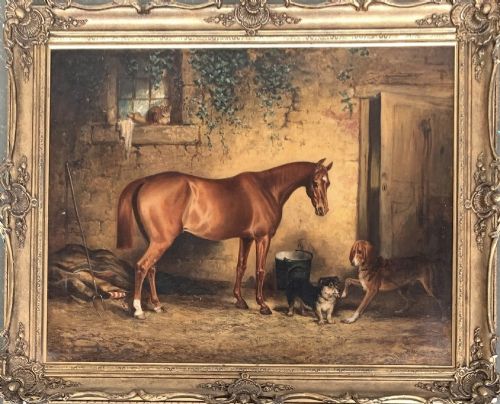
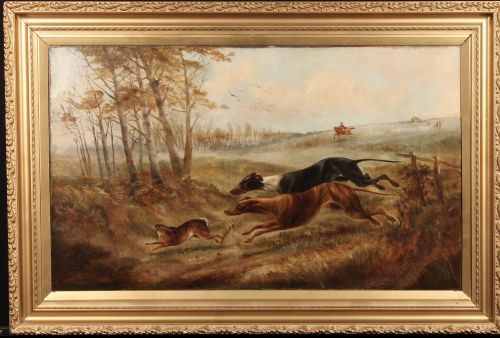
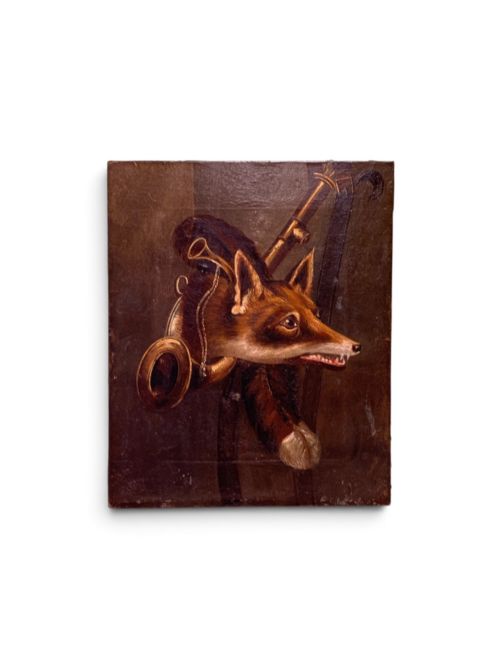
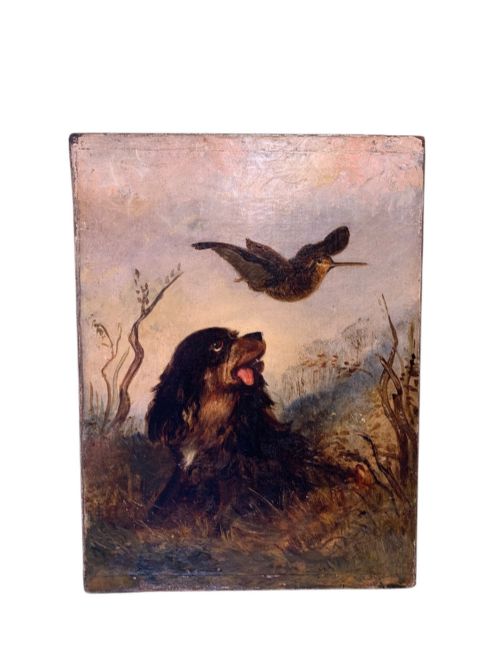
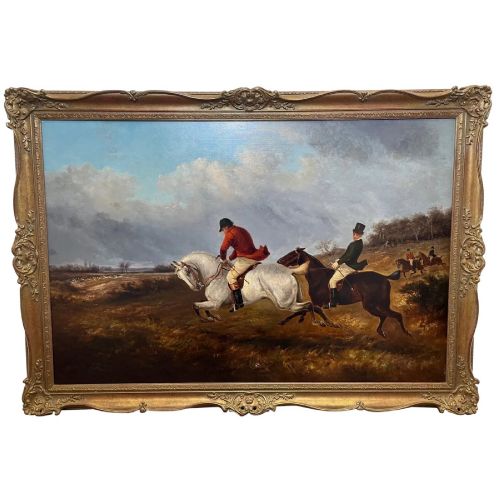
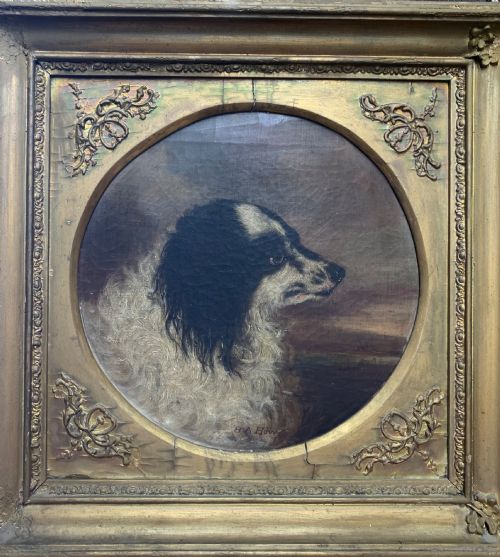
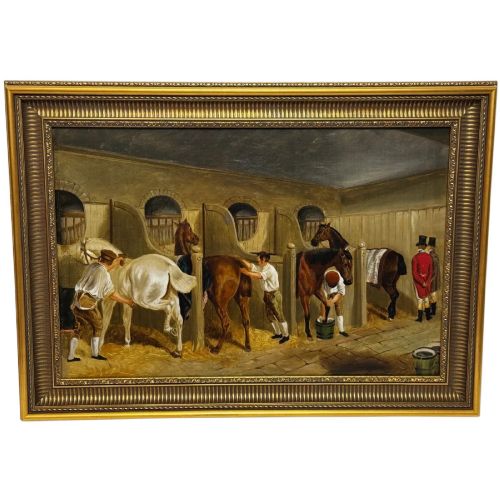
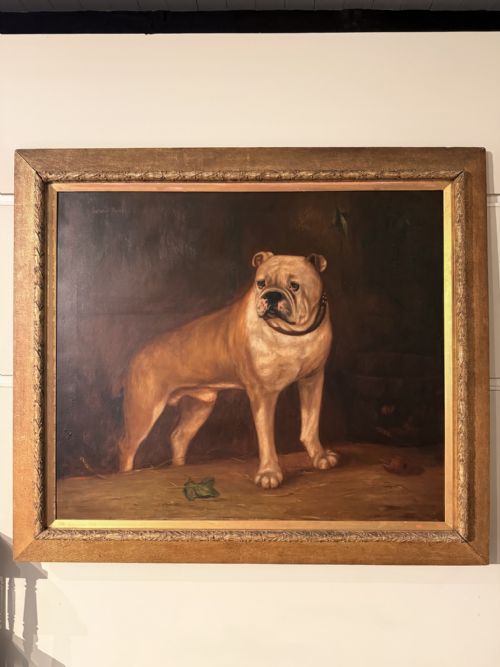
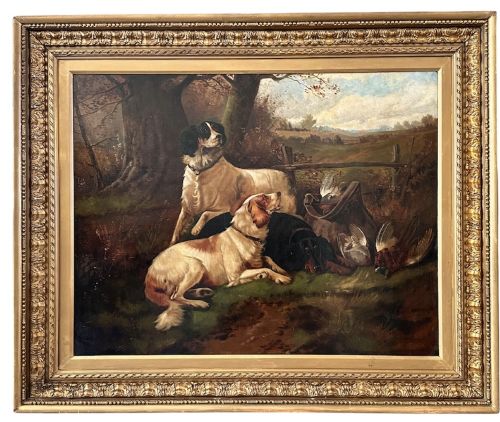
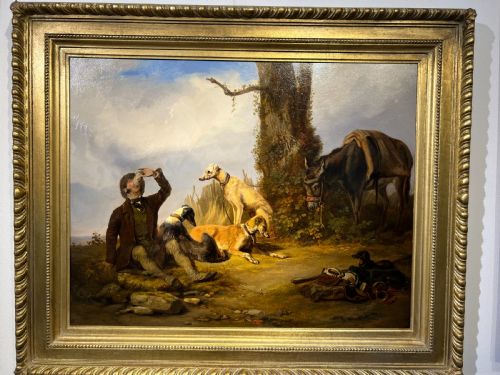
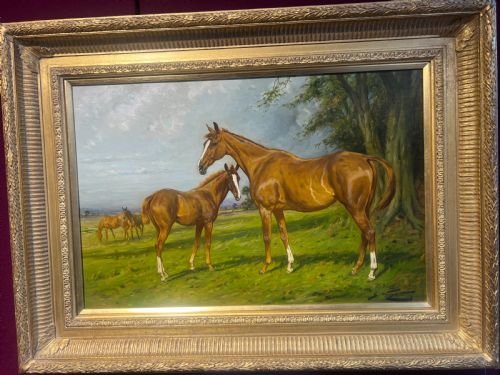
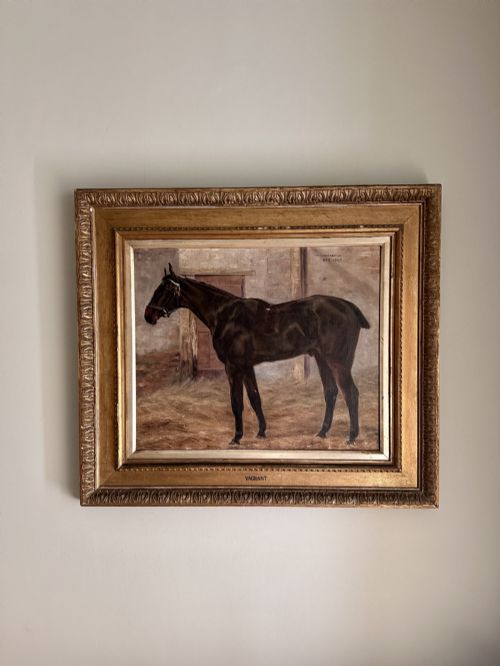
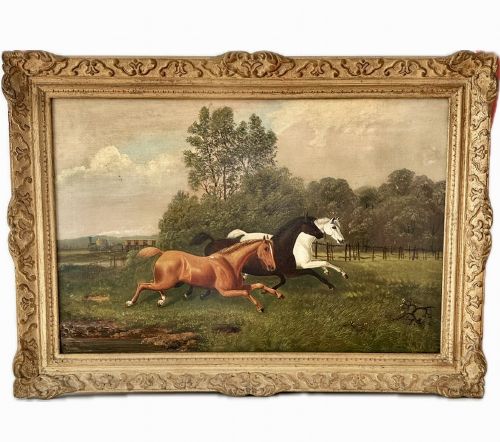
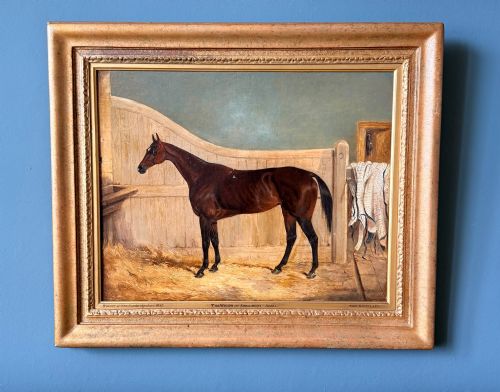
Victorian sporting art oil pieces portray the horses, hunting hounds, gun dogs, and field sports of the nineteenth century. You will meet portraits of individual thoroughbreds, dramatic hunt scenes, and depictions of game birds alongside working terriers.
The versions most common on this page date primarily from the nineteenth century, spanning decades from the 1850s through to 1900. These works frequently record specific named animals, winning racehorses, and family estates.
Canvases appear either unframed, set within period giltwood frames, or mounted in moulded wood borders. The formats range from intimate cabinet paintings to large gallery canvases meant for prominent wall placement.
Materials and Construction
Painters of this period utilised oil paint applied to stretched woven canvas or wooden board supports. The pigments capture rich earth tones, deep foliage greens, and the glossy coats of horses and hounds.
Many works retain their original gilt wood or gold leaf frames, often embellished with moulded corner ornaments and decorative slip borders.
Evaluating Quality and Execution
Quality rests upon the artist's command of animal anatomy, muscle structure, and the authentic movement of horses at gallop or dogs on the scent. Superior works capture the alert expression and individualized character of the subject rather than relying on generic formulas.
The handling of light across the landscape and the integration of the animal into its natural or stable environment distinguish master output from standard workshop production.
Henry Barraud·George Armfield·Thomas Smythe·Sir Edwin Henry Landseer·George Wright·Fred Fitzpatrick·Edward Priestley·Thomas Walker Bretland·John Emms·John Ferneley Senior·John Frederick Herring Senior·Benjamin Blake·John Arthur Lomax·Albert Clark·Edward Lloyd of Ellesmere·George E Sharpe·Colin Graeme Roe·Valentine Thomas Garland·John Trivett Nettleship·Samuel Spode·Charles Faulkner
The Victorian Sporting Art Oil Glossary
- Oil on Canvas
- A painting medium where pigments suspended in drying oils are applied to a woven fabric support. This combination forms the primary medium for nineteenth-century easel painting.
- Giltwood
- Wood that has been coated with a thin layer of gold leaf or metallic powder. Frames made in this manner provide the traditional surround for nineteenth-century canvases.
- Equine Portrait
- A specialised painting genre dedicated to recording the likeness of a specific horse. These works often document race winners, hunters, or prized stud animals.
- Provenance
- The documented history of ownership belonging to an artwork. Tracing this lineage confirms authenticity and connects the piece to historical estates or galleries.
Victorian Sporting Art Oil: Frequently Asked Questions
What subjects appear in these paintings?
The canvases feature named racehorses, gun dogs, working terriers, and mounted hunting parties in rural landscapes.
Many compositions record specific estates, hunts, and prized animals commissioned by their owners.
How do I care for an oil painting?
Keep the canvas away from direct sunlight, high humidity, and extreme temperature fluctuations.
Dust the surface gently with a soft, dry brush and avoid using liquid cleaners on the paint or frame.
Are original frames common?
Many works retain their period giltwood frames, which show the characteristic wear of the nineteenth century.
These surrounds often complement the scale and subject matter of the central canvas.
How are dates verified?
Dates rely upon artist signatures, contemporary inscriptions on the canvas reverse, and stylistic markers.
Archival records and exhibition histories frequently provide additional confirmation for specific works.