




Framed Historical Watercolor Artwork
Framed historical watercolor artwork records past military figures, landscapes, and domestic interiors in pigment upon paper.
Framed Historical Watercolor Artwork
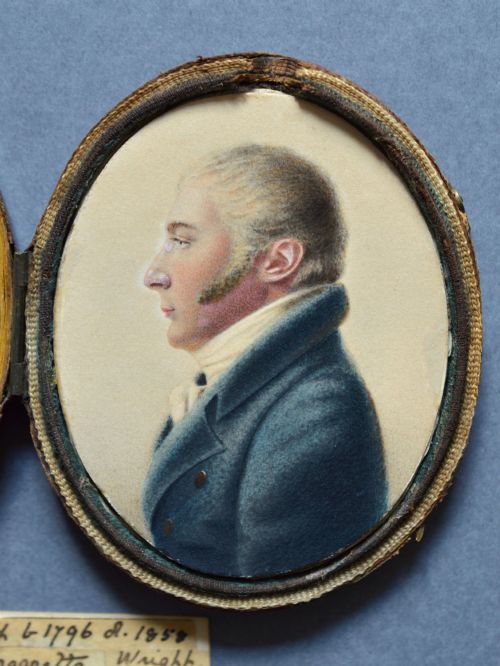
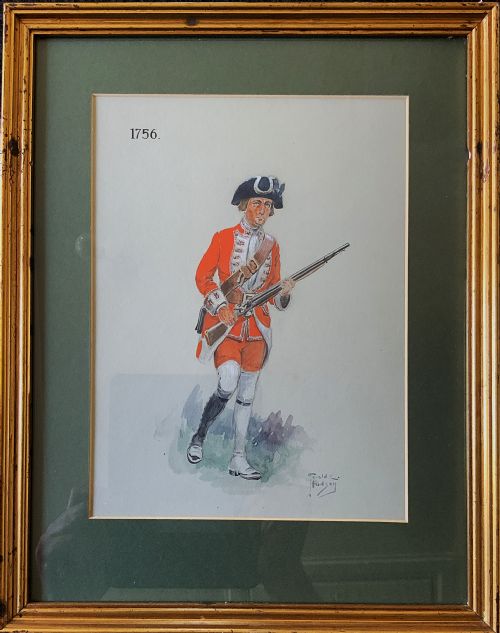
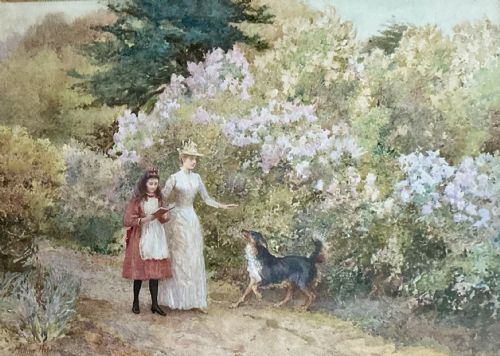
Framed historical watercolor artwork captures narrative scenes, military subjects, topographical views, and portraiture executed on paper. Buyers frequently encounter pieces originating from the nineteenth century alongside works dated through the Regency, Victorian, and early twentieth-century periods. These range from detailed portrait miniatures and coastal marine views to naive character studies and townscapes.
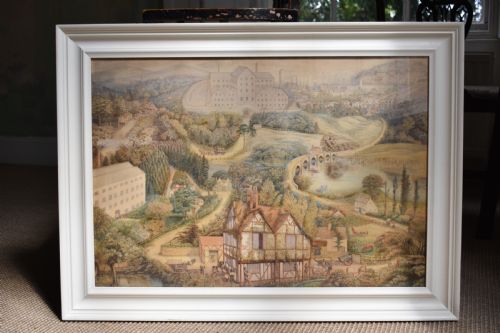
Portraits of named individuals, soldiers, and historical personages form a significant group among the paintings. Artists also recorded specific locations, such as harbours, northern towns, and distant landscapes, often applying wash and ink alongside pigment. The works commonly arrive preserved behind glass within wooden or gilt frames.
Materials and Technique
Finishing involved mounting the paper beneath glass and enclosing the artwork within wooden frames, frequently finished in gilt. This framing protected the delicate water-soluble pigments from moisture and handling over successive centuries. The paper support occasionally shows age toning, foxing, or watermark evidence consistent with nineteenth-century manufacture.
One delightfully unusual portrait depicts a three-month-old infant named Robert Spearman Swinburne solemnly styled as a participant in the Battle of Waterloo.
Quality and Execution
Quality rests upon the precision of the draughtsmanship and the control of the watercolour pigment. Finer works display meticulous brushwork in facial expressions, textiles, and architectural detail, whereas simpler pieces rely on naive or formulaic execution. The handling of light and atmospheric perspective distinguishes accomplished professional output from amateur production.
The condition of the paper and the retention of original colour intensity influence the standing of a piece. Works that retain their initial pigment vibrancy without excessive fading or damp staining demonstrate superior preservation. Additionally, the presence of original period framing adds integrity to the object.
Thomas John Horsley·Vincenzo D’Esposito·Arthur Hopkins·Florence Hess·Samuel Owen·Thomas Woolnoth·Frank Wood·Henry Spernon Tozer·Frank Dadd·Edward Smyth·Walter Emsley·Frank Wasley·George Cattermole·Fred Lawson·George Goodwin Kilburne·Herbert John Finn·George Perfect Harding
The Framed Historical Watercolor Artwork Glossary
- Watercolour
- A painting method in which the paints are made of pigments suspended in a water-based solution. Artists applied these onto paper supports to achieve translucent washes or opaque details.
- Wash
- A thin, semi-transparent layer of diluted watercolour paint or ink spread evenly across the paper. This technique established background skies, shadows, or uniform colour fields.
- Portrait Miniature
- A small, highly detailed painting depicting a specific person. These works often utilised fine brushwork on paper or vellum.
- Gilt Wood
- Timber framing finished with a thin layer of gold leaf or metallic gilt gesso. This material provided traditional decorative borders for nineteenth-century pictures.
- Topographical
- Artwork depicting a specific real-world place, building, or landscape rather than an imagined scene. Such works recorded towns, rivers, and coastal harbours with documentary intent.
Framed Historical Watercolor Artwork: Frequently Asked Questions
What periods do these watercolors cover?
The listings span from the Regency and Victorian eras through the early twentieth century, with examples dated from the eighteenth to the mid-twentieth century.
Most items originate in the nineteenth century, reflecting British school traditions and historical revival interests.
How should I hang these framed artworks?
Keep the paintings away from direct sunlight to prevent the watercolour pigments from fading over time. Stable indoor humidity protects both the paper support and the antique wooden frames.
Use picture wire secured to wall studs to support the weight of the glass and wooden framing safely.
Are these works signed by the artists?
Many examples bear artist signatures, studio inscriptions, or contemporary notations on the front or reverse of the paper. Attributions often rely on documented signatures or stylistic comparisons with known British school painters.
Unsigned pieces frequently emerge from provincial studios, historical records, or anonymous sketchbooks of the period.
What subjects are most common?
Portraits of military personnel, historical figures, and private citizens appear frequently among the painted works. Townscapes, coastal harbours, and narrative historical scenes also form a major part of the selection.
Artists frequently documented British landscapes, naval vessels, and domestic interior settings.