




Antique English Portrait Watercolour
An antique English portrait watercolour captures the personality and dress of earlier centuries through delicate pigment and fine line.
Antique English Portrait Watercolour
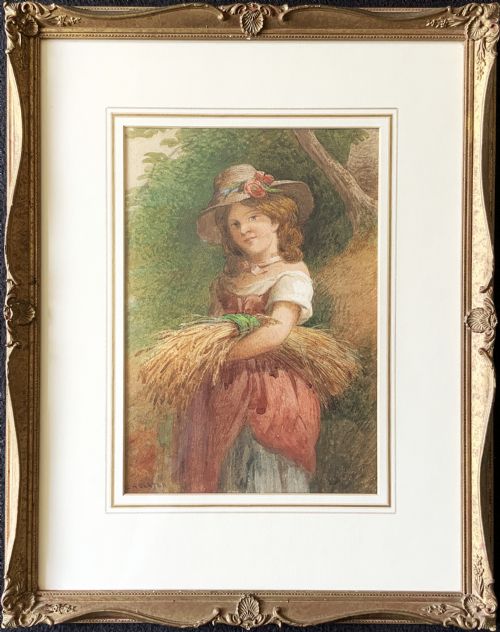
When searching for an antique English portrait watercolour, a buyer encounters paper works capturing individual sitters, family groups, and children from the nineteenth century onward. The most common examples on this page are Victorian and Regency framed paintings, often executed by named regional artists or anonymous English School hands.
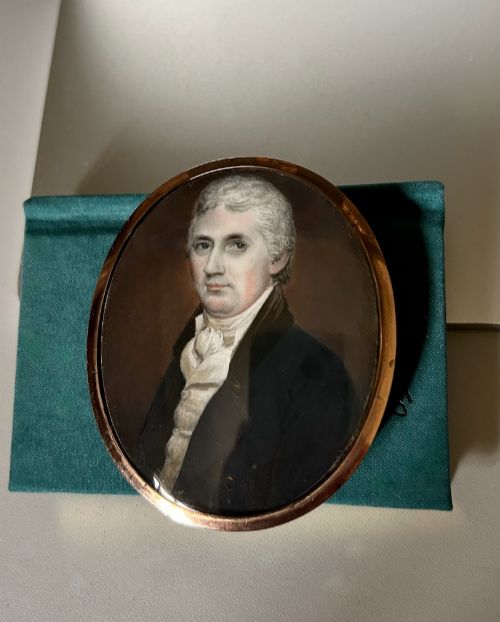
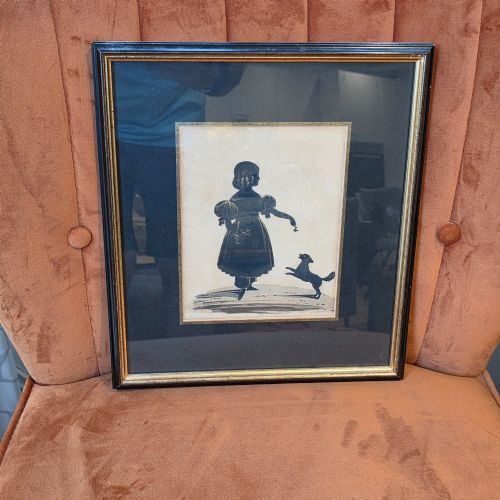
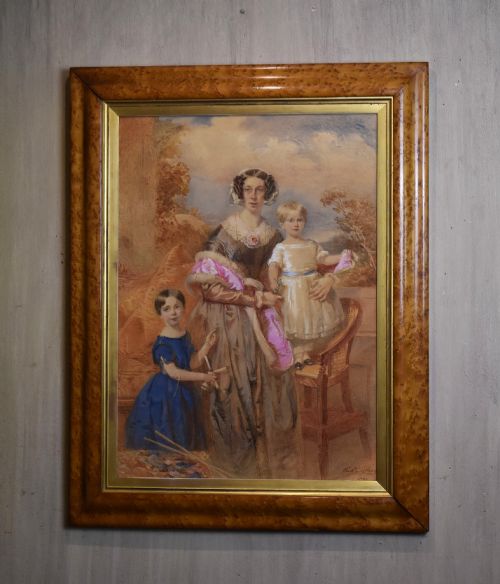
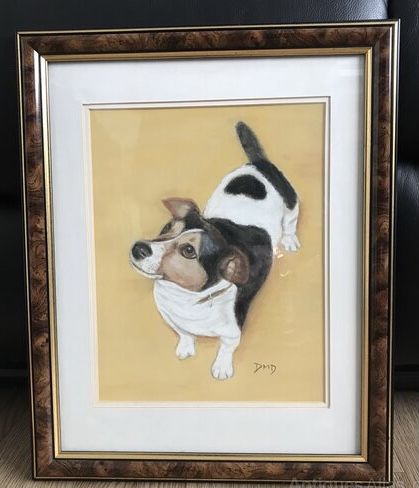
These works range from intimate miniature profile portraits housed in gilt wood frames to larger genre studies depicting country gentlemen, young ladies, and children with their dogs. The historical subjects preserve social history through contemporaneous garments, hairstyles, and domestic settings.
Many of these pieces bear signatures, dates, or inscriptions on the reverse, identifying sitters such as countesses, military gentlemen, and local figures. The style shifts from crisp Regency precision to the softer palettes of the Victorian era and the Pre-Raphaelite movement.
Materials and technique
Artists painted these works on paper using water-soluble pigments, occasionally combining watercolour with bodycolour, gouache, or ink to build opacity and highlights. Monochrome ink washes and pencil underdrawings frequently anchor the composition before the application of transparent colour.
Framing materials reflect the period of production, utilising wood, gilt wood, and gold leaf to protect the fragile paper surface behind glass. Some specialised miniature pieces incorporate paper mache frames or delicate cut paper silhouette elements alongside the painted portrait.
Antique English Portrait Watercolour Retail Price Guide 2026
Typical asking prices for english portrait watercolour among the pieces listed under this phrase on Sellingantiques today, from the lower quarter to the upper quarter. They describe what is for sale here now, not the wider market.
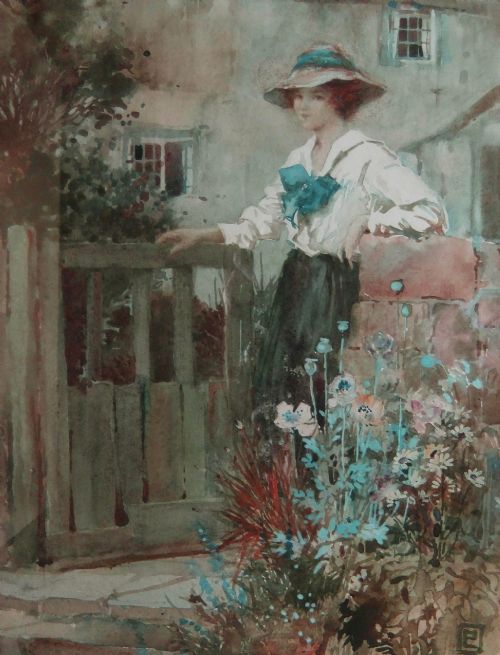
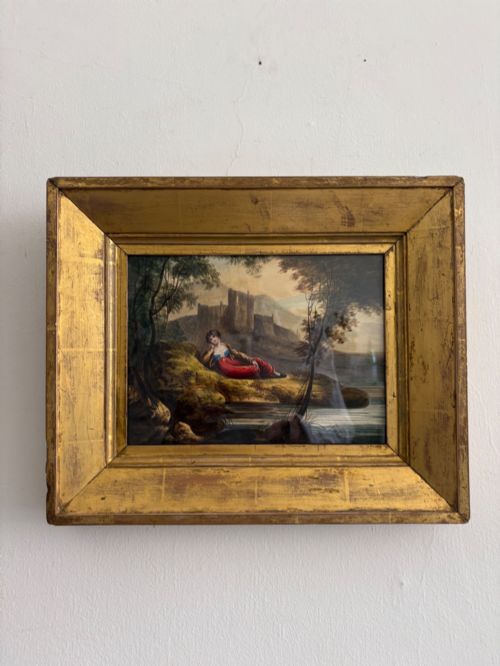
Subject matter includes family groups, country gentlemen, young ladies with flowers, sporting hounds, and architectural studies.
Assessing quality and execution
The preservation of the paper and the vibrancy of the pigments separate exceptional pieces from those degraded by light or dampness. Original period framing and documented provenance also contribute to the distinction of the work.
William James Hubard·Frederick Tatham·Charles Henry Slater·Philip Richard Morris·Alice Anne Renshaw·Arthur Wardle·Henry E Hobson·Helena Maguire·William Egley·Thomas Woolnoth·William Powell Frith·Jeremiah Steele·George Perfect Harding·John Downman·Miles Birket Foster·Keturah Collings·Walter Langley·Walter Ernest Webster
The Antique English Portrait Watercolour Glossary
- Watercolour
- A painting method in which the paints are made of pigments suspended in a water-based solution. The technique relies on the transparency of the paper to reflect light back through the layers of colour.
- Gouache
- An opaque water-based paint, sometimes called bodycolour. Artists used it alongside watercolour to add solid highlights and opaque details to portraits.
- Miniature portrait
- A small-scale painting executed with fine detail. These works were often housed in protective cases or ornate gilt frames for intimate viewing.
- English School
- A designation for works produced by British artists whose specific individual identities remain unrecorded or grouped by national tradition.
- Regency
- A stylistic period spanning the early nineteenth century, characterised by neoclassical elegance and refined, restrained portraiture.
Antique English Portrait Watercolour: Frequently Asked Questions
How should I display a watercolour?
Keep these paper works away from direct sunlight to prevent the pigments from fading over time. Maintaining stable indoor humidity protects both the antique paper and its original frame.
Ensure the piece remains securely sealed behind glass with proper backing to guard against atmospheric dust and moisture.
What is an English School painting?
The term denotes a work created by an artist trained or working within the British artistic tradition whose specific name is lost to history. These pieces reflect the prevailing technical standards and aesthetic values of their period.
Many high-quality portraits from the nineteenth century carry this attribution when the signature is absent or illegible.
How do I identify a Victorian portrait?
Victorian watercolours often feature sitters in elaborate period dress, surrounded by narrative elements like domestic pets, books, or garden flowers. The palette frequently expands beyond the restrained tones of the preceding Regency era.
Signatures, dates on the mount, and framing styles help confirm the production decade.
Why are some portraits painted on paper?
Paper served as an accessible, portable medium for artists travelling to commission portraits or working rapidly in the studio. It allowed for delicate washes and fine line work impossible to achieve on traditional canvas.
Watercolour on paper became the standard medium for intimate family records and miniature studies.