
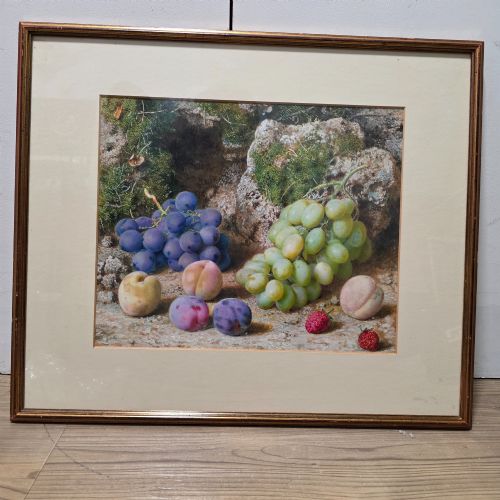


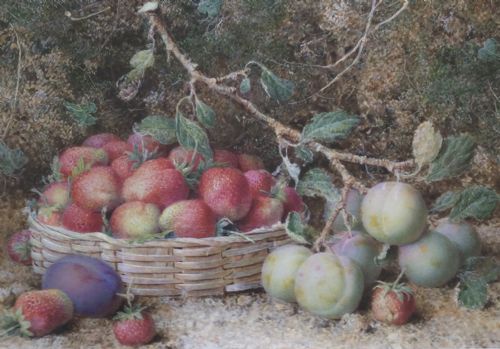

Framed Fruit Watercolour
A framed fruit watercolour brings the rich colour of traditional botanical and still life painting directly to the wall in paper and pigment.
Framed Fruit Watercolour
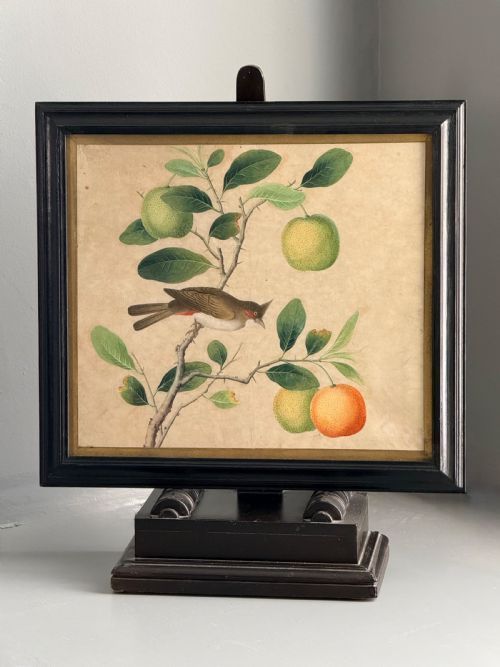
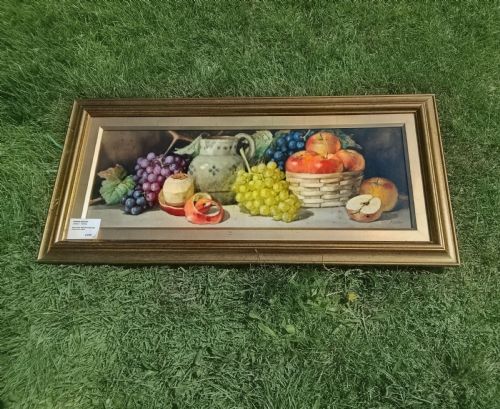
A framed fruit watercolour is a work on paper depicting arrangements of fruit, baskets, or botanical specimens, usually protected behind glass in a timber frame. The pieces seen here span from the eighteenth century through the Regency period and the Victorian era into mid-century modern and nineteen-forties works.
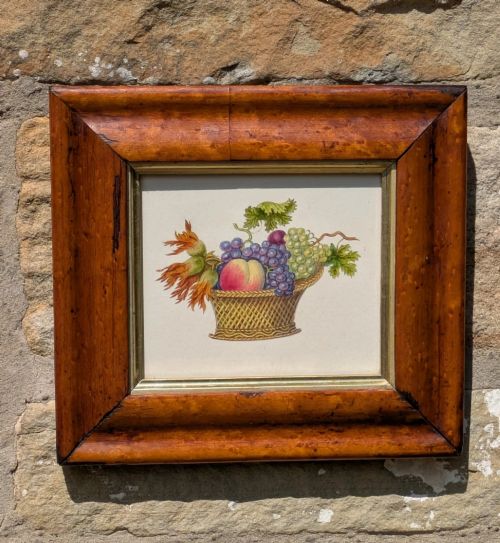
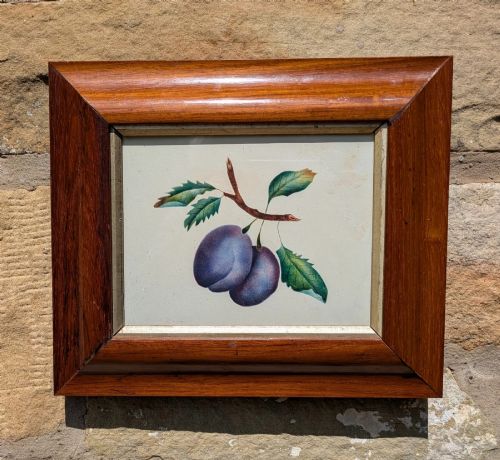
Buyers will encounter various interpretations of fruit subjects, ranging from crisp Regency studies of plums and baskets to detailed Victorian still lifes and modern British compositions. These paintings frequently capture berries, apples, grapes, and peaches with close attention to natural form and surface texture.
Many examples arrive in period frames, including rosewood and gilded wood surrounds that complement the delicate watercolours, gouache, and ink mediums on paper or pith paper.
Materials and methods
These works rely primarily on watercolour and gouache applied to paper, capturing translucent washes and opaque highlights that define the plumpness and skin of various fruits. Certain pieces utilise ink alongside watercolours to establish fine botanical outlines.
Support materials vary from standard paper sheets to delicate pith paper, while the protective framing incorporates glass set within timber mouldings such as gilded wood and rosewood.
Current listings feature pieces spanning the eighteenth, nineteenth, and twentieth centuries, incorporating watercolour, gouache, ink, pith paper, and gilded wood frames.
Judging quality
Quality rests in the precision of the brushwork and the lifelike rendering of the fruit, where skilled handling of pigment creates convincing depth, light, and shadow. Masterful pieces capture subtle gradations of colour on the skin of plums, grapes, and apples without heavy or muddy passages.
The integration of the artwork with its period frame also influences character, particularly where original rosewood or gilded wood surrounds remain intact and complement the palette of the painting.
Arthur Dudley·John Sherrin·James Tower·Helena Maguire·William B. Hough
The Framed Fruit Watercolour Glossary
- Watercolour
- A paint consisting of a pigment suspended in a water-soluble binder. It provides translucent washes of colour that allow the white of the paper to reflect light back through the pigment.
- Gouache
- An opaque water-based paint that includes a white pigment filler, producing heavier, solid areas of colour. It is frequently combined with watercolour to build highlights on fruit and foliage.
- Pith paper
- A delicate material cut from the pith of the Tetrapanax papyrifer plant. It absorbs water-based pigments with a distinct velvety texture often seen in Chinese export works.
- Gilded wood
- Timber that has been coated with a thin layer of gold leaf or metallic powder. This framing technique adds reflective warmth to traditional wall art.
- Regency
- An English stylistic period spanning the early nineteenth century. It is characterised by refined classical elegance and balanced compositions in decorative and fine arts.
Framed Fruit Watercolour: Frequently Asked Questions
How should I hang a framed fruit watercolour?
Keep these works away from direct sunlight to prevent the watercolour pigments and paper from fading over time. Maintaining a stable indoor environment protects both the delicate paper support and the antique timber frame.
Position the painting at eye level in a room with moderate humidity, ensuring the glass remains clean and secure within its original rebate.
What periods do these paintings come from?
The selection includes eighteenth-century gouache works, Regency period fruit studies, and nineteenth-century Victorian pieces. Later examples stretch into nineteen-forties wartime watercolours and nineteen-hundreds compositions.
Each period brings distinct framing choices and painting techniques, from botanical precision to looser mid-century interpretations.
Are these works painted on standard paper?
While most pieces use traditional paper supports, some early examples utilise pith paper, which yields a unique absorbent surface for gouache and watercolour pigments. The choice of ground often reflects the origin and date of the artwork.
Protective glass covers both paper types to guard against dust and atmospheric moisture.
How can I identify a Regency fruit watercolour?
Regency pieces often focus on balanced arrangements of fruit in baskets, rendered with clear botanical accuracy and gentle tonal washes. They frequently appear within period frames such as rosewood.
Comparing the handling of light on the fruit and the paper texture helps distinguish these early nineteenth-century studies from later Victorian or modern works.