
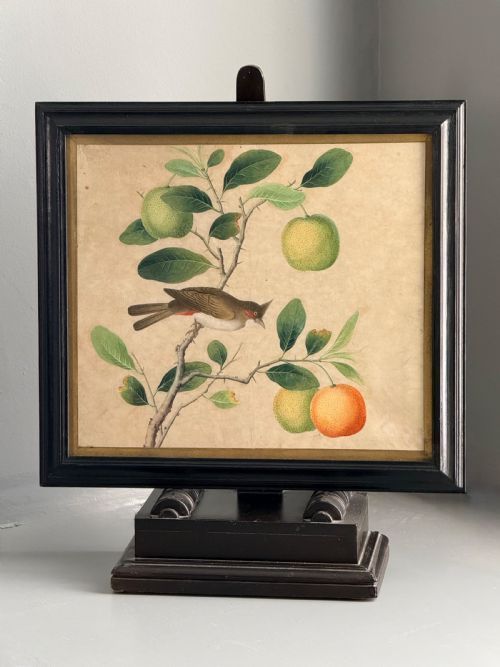
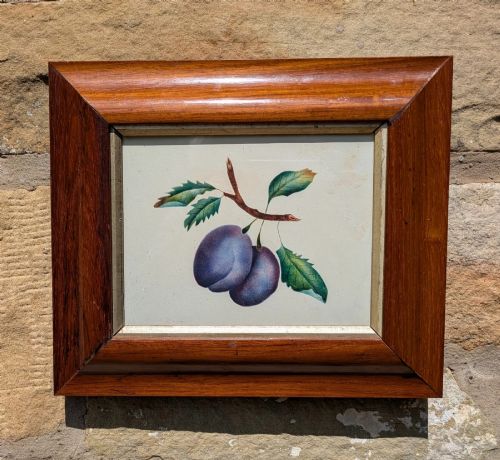


Framed Fruit Study
A framed fruit study brings domestic warmth to a wall through oil or watercolour, offering enduring appeal for collectors of traditional interiors.
Framed Fruit Study
A framed fruit study depicts apples, grapes, plums and baskets of produce rendered in oil paint, watercolour or gouache. These works range from Regency and Victorian compositions to mid-century European examples.
The most common versions on this page are nineteenth-century oil paintings on canvas and nineteenth-century watercolours housed in wood or gilt frames. Botanical subjects on pith paper and twentieth-century panels also appear.
These artworks capture traditional still life subjects intended for dining rooms, drawing rooms and kitchens. They reflect enduring domestic themes across the eighteenth, nineteenth and twentieth centuries.
How they were made
Artists painted these works using oil paint on canvas or wood panels, alongside watercolours and gouache on paper and pith paper. Canvases provide texture and depth while paper supports delicate watercolour applications.
Framing forms an integral part of these pieces, utilising wood, giltwood and rosewood to enclose and protect the artwork. Many retain their original frames, which complement the tonal qualities of the fruit.
What varies in quality
The distinction between standard and superior pieces rests on the handling of light, shadow and texture within the fruit. Skilled artists create convincing depth in grapes and apples through layered brushwork and subtle colour variation.
The choice of framing contributes significantly to the overall presence of the piece, with period giltwood and rosewood surrounds elevating the visual impact of the artwork.
Thomas Hooper·John Robertson Reid·John Sherrin·T.Vincent
The Framed Fruit Study Glossary
- Gouache
- An opaque water-based medium that dries to a matte finish. It allows for dense colour application on paper and pith.
- Pith paper
- A delicate botanical support material derived from plant pith. It absorbs pigments deeply, yielding soft watercolour and gouache effects.
- Giltwood
- Wood carved and coated with gold leaf or metallic paint. It provides a bright, reflective border for traditional oil paintings.
- Watercolour
- A transparent paint medium applied to paper supports. It produces luminous washes suited to botanical and fruit studies.
- Still life
- An artwork depicting inanimate subject matter, typically everyday objects or natural items such as fruit and baskets.
Framed Fruit Study: Frequently Asked Questions
What periods do these paintings come from?
The listings span several centuries, starting from the eighteenth century through the Regency and Victorian eras into the mid-twentieth century.
Victorian and nineteenth-century pieces predominate, accompanied by select mid-century European works and earlier eighteenth-century examples.
Which materials are used in these works?
Artists employed oil paint on canvas or wood panels, alongside watercolours and gouache on paper and pith paper.
Frames incorporate materials such as wood, giltwood, gilt and rosewood to house the artwork securely.
How should I hang a fruit study?
These works suit traditional spaces like dining rooms, kitchens and hallways where still life subjects complement domestic interiors.
Consider pairing watercolours or oil paintings with similar period frames to maintain visual harmony on the wall.
Are these paintings original artworks?
The listings consist of original paintings and watercolours created by hand rather than mass-produced prints.
Signed works by artists such as Thomas Hooper and John Robertson Reid demonstrate authentic hand-painted provenance.