




Framed Figurative Watercolour
Framed figurative watercolour works capture human stories and portraits across distinct periods, offering collectors intimate glimpses into past lives.
Framed Figurative Watercolour
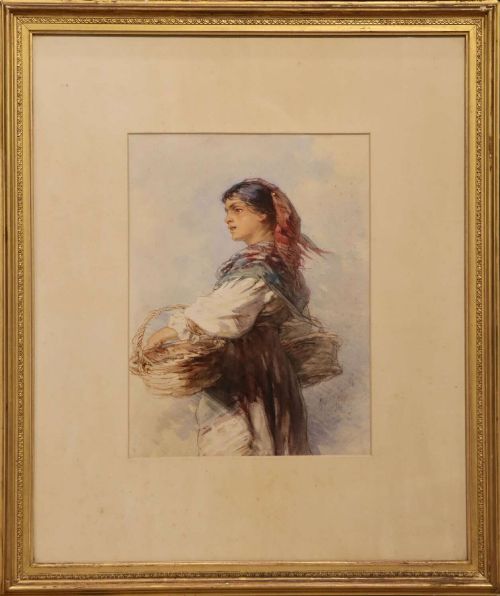
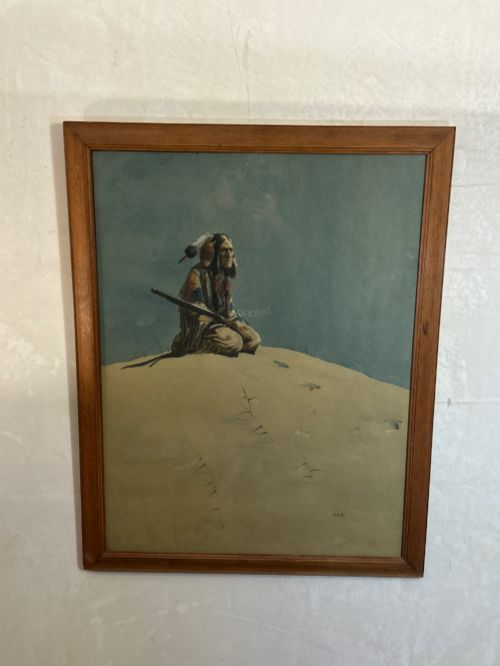
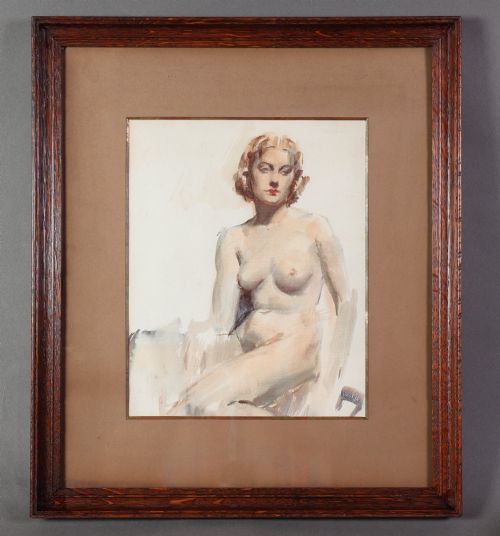
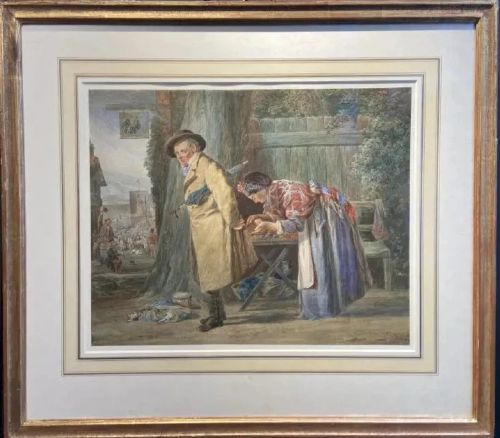
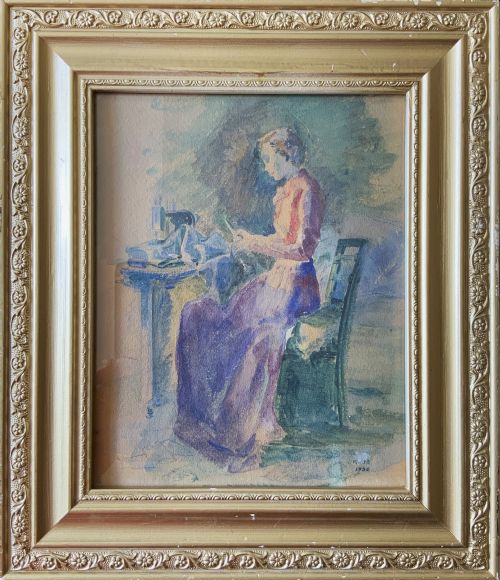
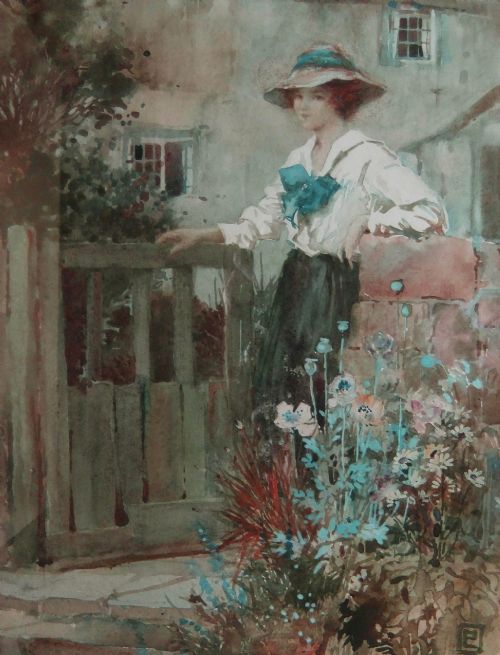
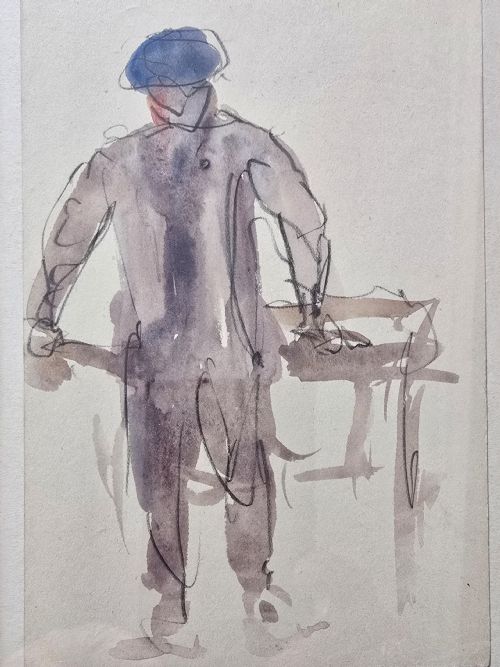
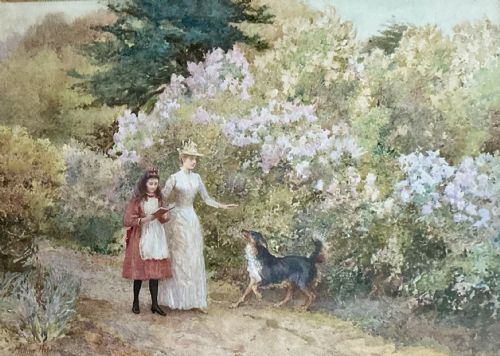
A framed figurative watercolour presents human subjects, ranging from peasant figures and portraits to theatrical dancers and pastoral gatherings, rendered in aqueous pigments on paper. These works span the Victorian era, Edwardian period, and mid-twentieth century, capturing subjects in domestic interiors, rural settings, and narrative tableaus.
The pieces on this page are most frequently encountered in Victorian genre realism, British impressionism, and mid-century impressionist styles. Collectors discover depictions of everyday labourers, children, and aristocratic sitters framed behind glass, often accompanied by wood and gilt mouldings.
Materials and Techniques
Artists utilise watercolour pigments applied to paper surfaces, occasionally combining ink, coloured pencil, or gold leaf to build tone and detail. The transparency of the wash technique allows the white of the paper to illuminate the composition.
Finished works are typically housed in wooden frames beneath protective glass, frequently complemented by gilt elements that enhance the visual depth of the paintings.
Materials documented in these works include paper, glass, wood, watercolour pigment, gold leaf, ink, and gilt.
The Measure of Quality
The synergy between the artwork and its period framing further distinguishes superior examples. Original gilt wood frames that complement the palette and era of the painting elevate the overall integrity of the piece.
Guido Bach·John Hassall·Percy Lancaster·Michael Healy·Philip Richard Morris·Henry E Hobson·Rowland Henry Hill·Robert Eadie·Raoul Millais·Martinetti·Sir William Russell Flint·Robert Richard Scanlan·Augustus Jules Bouvier·Thomas James Lloyd·Usabal y Hernandez·Emil John Hess·George Kilburne·David Woodlock·Linnie Watt·Takashi Nakayama·Frederick Thomas Baynes·William Powell Frith·Ebenezer Wake Cook·Irene Lagut·Kees van Dongen
The Framed Figurative Watercolour Glossary
- Genre realism
- A style depicting subjects from everyday life, typically focusing on ordinary people engaged in common occupations or domestic scenes. These works document social history through detailed observation.
- Wash
- A thin, transparent layer of diluted watercolour pigment applied across the paper to create smooth backgrounds or atmospheric effects. Painters build depth by layering successive washes.
- Gilt
- A thin layer of gold leaf or gold-coloured paint applied to wooden picture frames. This finish provides a reflective border that isolates the painting from its surroundings.
- Impressionism
- An artistic approach emphasising light, loose brushstrokes, and spontaneous movement over rigid academic finish. Mid-century examples adapt these principles to figurative subjects.
Framed Figurative Watercolour: Frequently Asked Questions
What defines a figurative watercolour?
A figurative watercolour centres its composition on human subjects, ranging from single portraits to narrative scenes involving multiple figures. These works rely on water-soluble pigments on paper to capture expression, gesture, and costume.
Unlike landscape or abstract art, the primary narrative of a figurative piece is the human story it portrays. The selections here include everything from rural labourers to theatrical performers.
How should I display watercolour art?
Watercolours require careful placement away from direct sunlight to prevent the pigments and paper from fading over time. Glazing protects the delicate paper surface from dust and atmospheric moisture.
Maintaining stable indoor humidity levels also helps preserve the structural integrity of both the paper and the wooden frame.
How do I identify Victorian watercolours?
Victorian watercolours often feature narrative genre scenes with high detail, moral or domestic themes, and traditional framing. Artists from this era frequently worked with dense pigment layering to achieve rich tonal contrast.
Signatures, framing styles, and subject matter such as peasant figures or Victorian children provide reliable clues to dating.
What is the difference between an etching and a watercolour?
A watercolour is a unique, hand-painted artwork created directly with aqueous pigments on paper. An etching is a printed multiple pulled from a metal plate inscribed with acid.
Watercolours show individual brushwork and pigment pooling under magnification, whereas prints reveal ink laid into incised lines.