



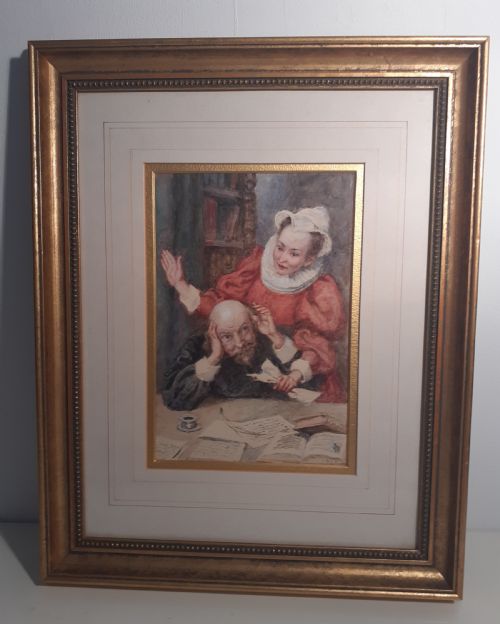

Narrative Watercolour Painting
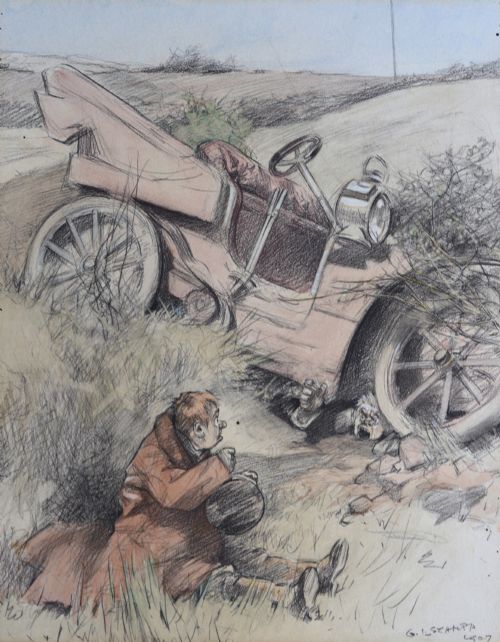
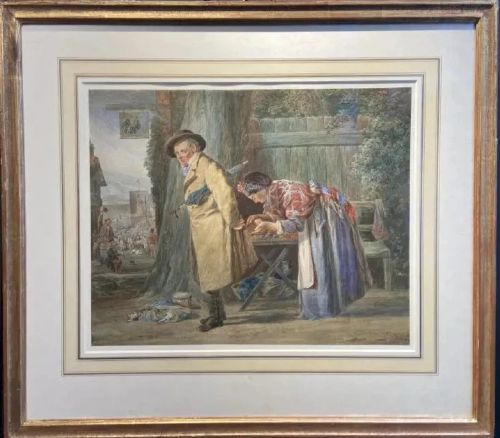
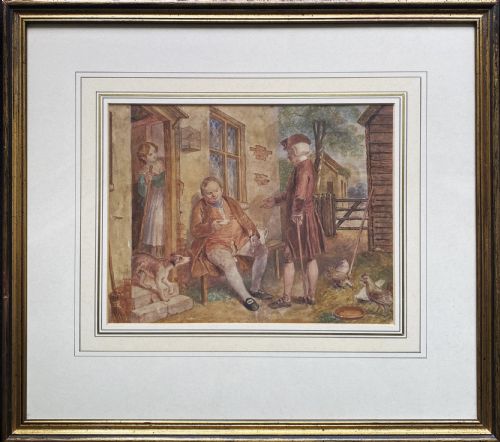
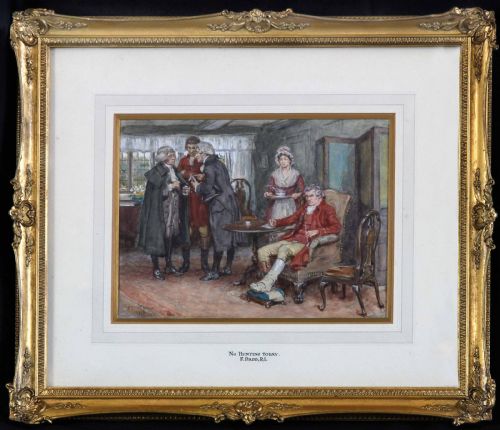
Narrative watercolour painting brings a dramatic story to life on paper through pigment and ink, capturing historic scenes, literary episodes and daily life.
Narrative Watercolour Painting
Narrative watercolour painting depicts figures engaged in storytelling moments, drawing on literature, history and domestic life. When you search for narrative watercolour painting, you encounter original works that freeze a specific dramatic instant in time.
The pieces listed here span the nineteenth and twentieth centuries, taking forms such as framed artwork and fine art paintings. Styles range from Victorian genre realism and French Orientalist tradition to mid-century impressionism.
Makers recorded in the evidence include George Lorain Stampa, Joseph H Barnes, James Hayllar, Charles Bellay, Emil John Hess, Frank Dadd, John Masey Wright and George Cattermole.
Materials and technique
These works rely primarily on watercolour applied to paper, often reinforced with ink and pencil for precise linework and structure. Some compositions incorporate gold leaf to highlight specific details within the scene.
Artists mounted these fragile sheets behind glass within wooden frames to protect the delicate medium from moisture and light damage. The combination of pencil underdrawing, fluid washes and ink definition creates depth and narrative clarity.
The selection includes works from the Edwardian and Victorian eras alongside mid-century impressionism.
Distinctions in quality
Quality rests in the handling of the narrative tension and the expressiveness of the figure work. Master painters render gesture and facial expression with economy and precision, whereas lesser works feel stiff and illustrative.
The preservation of the paper and the vibrancy of the pigment distinguish superior examples. Works that retain their original tonal balance without excessive fading demonstrate careful historical ownership.
George Lorain Stampa·Joseph H Barnes·James Hayllar·Charles Bellay·Emil John Hess·Frank Dadd·John Masey Wright·George Cattermole
The Narrative Watercolour Painting Glossary
- Watercolour
- A painting method in which the paints are made of pigments suspended in a water-based solution. It produces translucent washes that allow the white of the paper to illuminate the pigment.
- Genre realism
- An artistic style depicting subjects from everyday life in a realistic manner. It focuses on ordinary people engaged in familiar domestic or social activities rather than grand historical events.
- Orientalist
- A style inspired by Middle Eastern and North African cultures, prominent in nineteenth-century European art. It emphasises exotic architecture, costume and intense light effects.
- Illustration
- Artwork created to accompany a written text, such as a novel or a historical account. It interprets specific plot points and character interactions visually.
Narrative Watercolour Painting: Frequently Asked Questions
What is a narrative watercolour?
A narrative watercolour is an original artwork on paper that tells a distinct story involving figures. These pieces capture specific moments from literature, history or daily life.
Artists use fluid pigment and ink to build character and setting within a single framed composition. The works serve as visual records of past literary and social interests.
How should I frame these paintings?
Watercolours require careful framing behind glass to protect the paper from atmospheric moisture and dust. Acid-free mounts prevent chemical damage to the surrounding paper over time.
Keep framed works away from direct sunlight to prevent the water-based pigments from fading. Proper sealing ensures the longevity of both the artwork and its historical wooden frame.
How do I date a watercolour?
Dating relies on signatures, inscriptions, stylistic markers and framing materials. Many works include contemporary pencil notes or artist signatures on the front or reverse.
Victorian and Edwardian pieces often reflect the specific dress and interior design of their decade. Costume details and literary themes provide reliable clues for establishing the period.
Where were these paintings displayed?
These works hung primarily in domestic drawing rooms and studies during the nineteenth and twentieth centuries. Collectors prized them as conversation pieces that demonstrated literary taste and artistic appreciation.
Framed narrative watercolours also appeared in public exhibitions and annual society shows. Today they transition easily into modern residential interiors as focal points.