
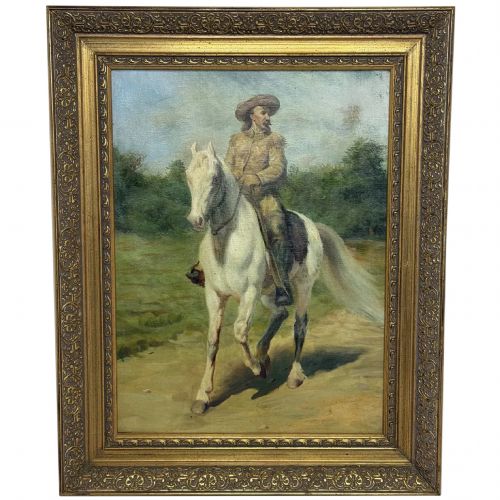


Framed Equestrian Wall Decor
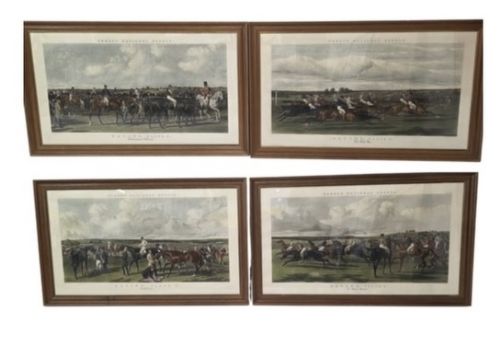
These framed equestrian wall decor pieces capture horses, racing and hunting across centuries in oils, watercolours and prints.
Framed Equestrian Wall Decor
When you search for framed equestrian wall decor, you meet works that centre on horses, racing, hunting and stable life. These pieces span from the Georgian period through the Victorian era and into the mid-twentieth century.
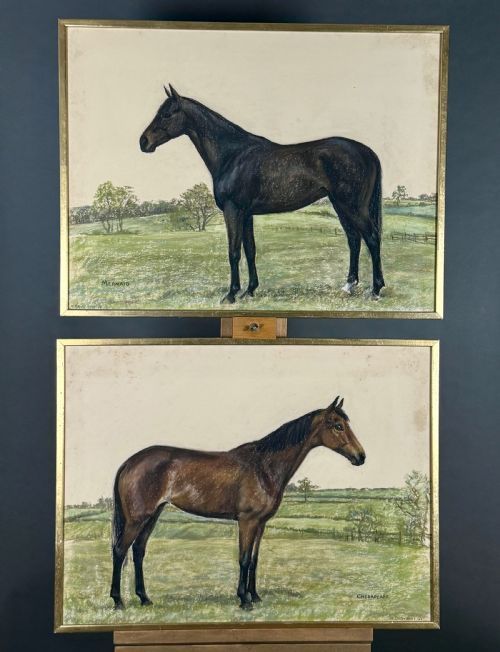
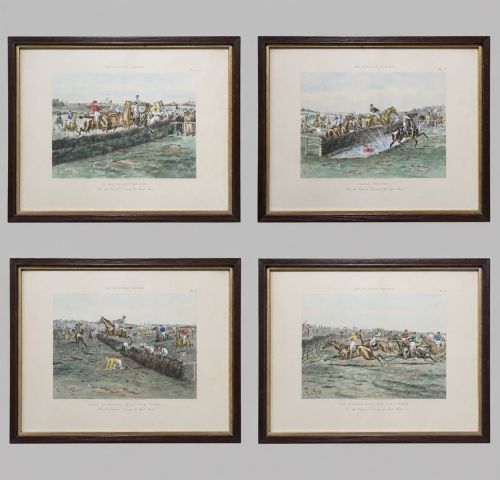
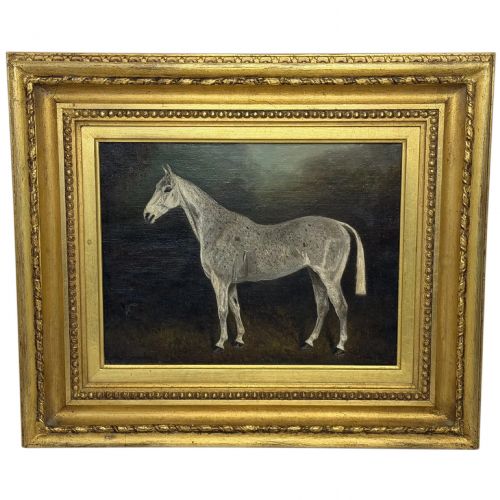
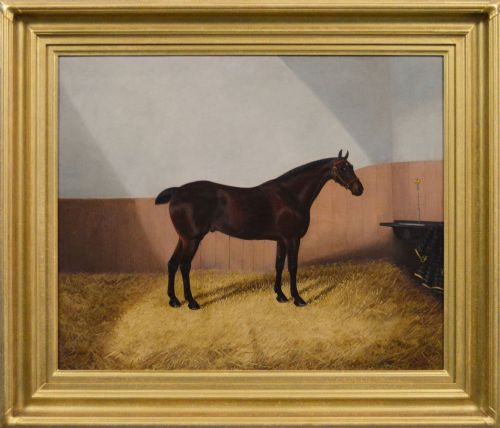
The selection on this page consists largely of oil paintings, framed prints, watercolours and chalk drawings. You find both individual horse portraits and dynamic scenes of racing and hunting.
Makers and artists range from named sporting painters to printmakers producing aquatints and engravings. Subjects stretch from English hunts and racecourses to French provincial scenes.
Materials and technique
Artists painted in oil on canvas, pine panel and paper, alongside pastel, chalk and watercolour. Canvases and panels receive brushwork ranging from tight academic portraits to looser impressionist marks.
Prints are produced as aquatints, engravings and lithographic reproductions, often set behind glass. Frames utilise wood and gilt, enclosing the image securely.
A grey mare named Grisette shares page space with Buffalo Bill and a very specific drunken tavern.
Quality variations
Anatomy and movement separate accomplished equine art from rigid representation. The top of the range demonstrates accurate muscle structure, precise perspective and convincing weight in horse and rider.
Medium and framing contribute significantly to the overall presence of the piece. Original oil paintings on canvas or panel hold greater depth than later mechanical prints, while period wooden frames add structural integrity.
George Finch Mason·Edwin Henry Landseer·Cecil Charles Windsor Aldin·Raimond Louis Lecourt·John Frederick Herring Jnr·Basil Nightingale·William Williams·Abraham Cooper·Charles Faulkner·Benjamin Cam Norton·Gilbert Scott Wright·John Atkinson·Charles Johnson Payne Snaffles·George Goodwin Kilburne·H Alken
The Framed Equestrian Wall Decor Glossary
- Aquatint
- An intaglio printmaking technique that produces areas of tone resembling watercolour washes. It was frequently utilised for reproducing sporting art and racing scenes.
- Eglomise
- A process where cold gilding and painting are applied to the reverse side of glass. This creates a reflective, mirrored finish around the printed or painted image.
- Grisette
- A term used in equine naming, often denoting a grey mare. In titles, it identifies the specific horse portrayed.
- Sporting art
- A genre of painting and prints depicting bloodsports, horse racing, hunting and hounds. It flourished in Britain through the eighteenth, nineteenth and twentieth centuries.
Framed Equestrian Wall Decor: Frequently Asked Questions
What periods do these pieces cover?
The works span from the eighteenth century through the Victorian era and Edwardian period up to the mid-twentieth century. Georgian, Victorian and 1920s examples appear frequently.
Dates derive from the recorded creation time of the paintings, prints and drawings included in the listings.
Are these original paintings or prints?
The selection includes both original oil paintings, watercolours and pastels alongside period prints, aquatints and engravings. Each listing specifies the exact medium used.
Original works feature hand-applied pigment on canvas, panel or paper, while prints use mechanical or traditional reproduction techniques.
What subjects are depicted in the artwork?
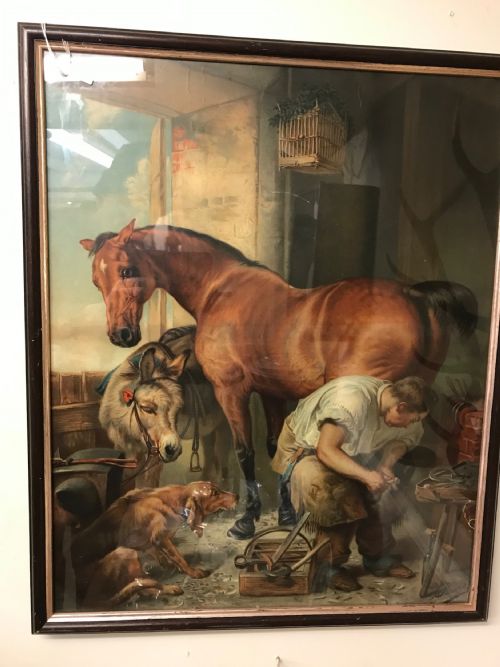
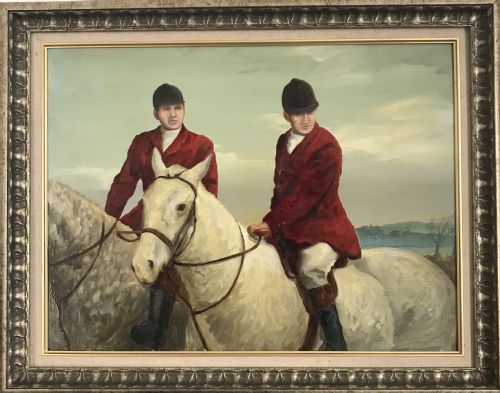
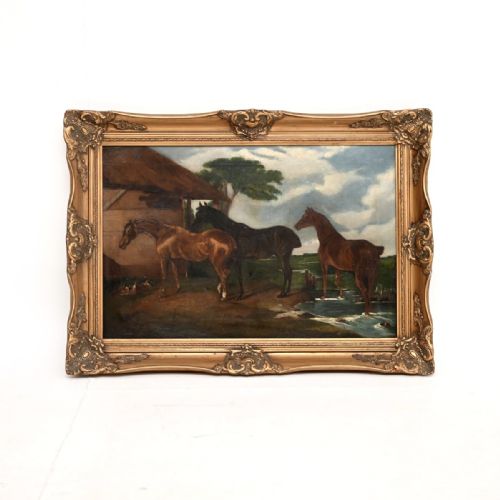
Subjects include individual horse portraits, racehorses, hunt meetings, coaching scenes and farmyard animals. Horses feature prominently alongside jockeys, dogs and riders.
Scenes range from formal stable portraits to dynamic racing events at tracks like Longchamp and Colombo.
How are the pieces framed?
Works arrive in various surrounds including wooden frames, walnut frames and gilt wood mouldings. Some pieces incorporate glass protection.
Framing styles reflect the period of the artwork or the era when the piece was subsequently mounted.