


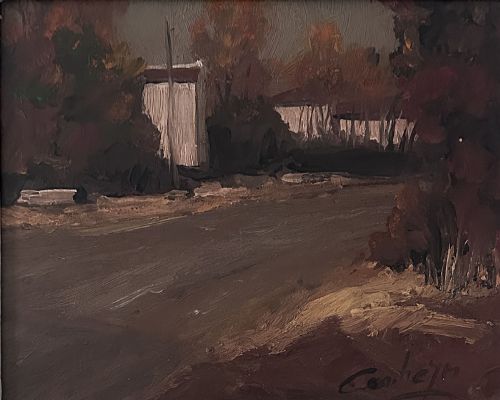
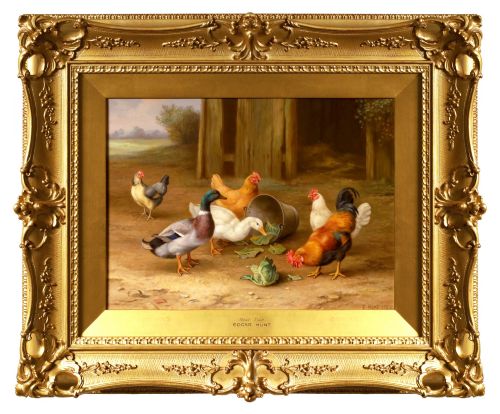
Framed Canvas Rural Painting
A framed canvas rural painting brings the quiet of fields, cottages and working horses directly into a room.
Framed Canvas Rural Painting
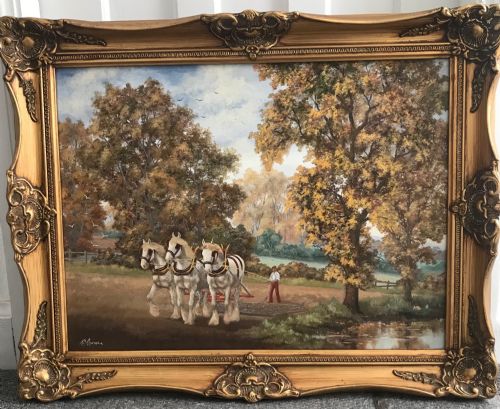
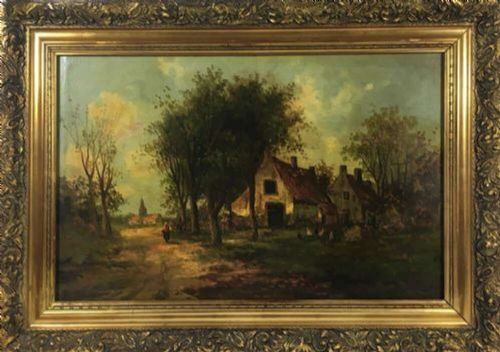
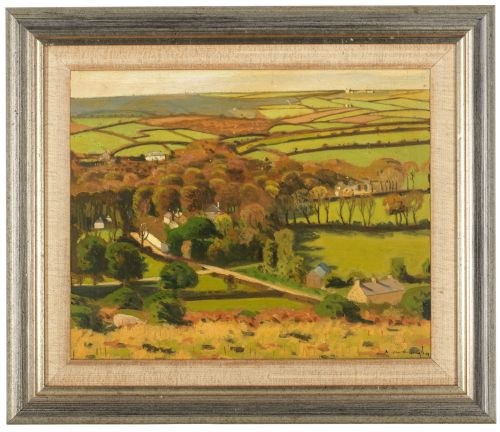
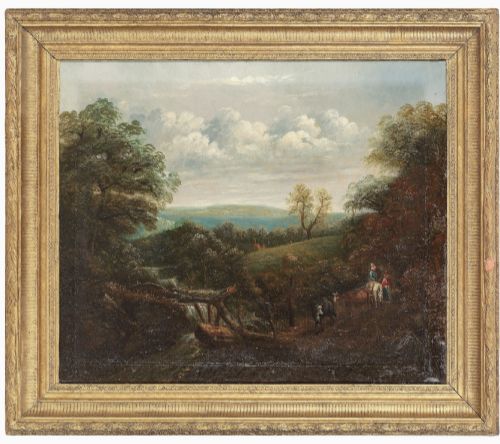
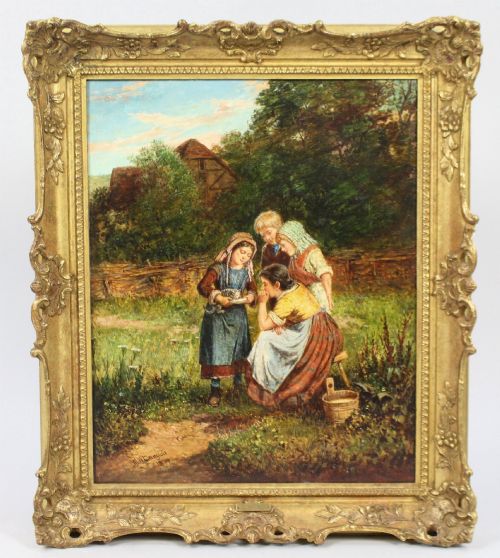
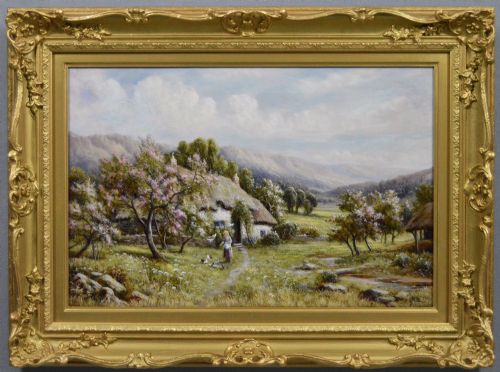
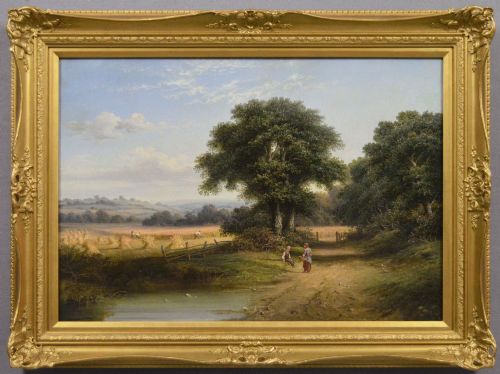
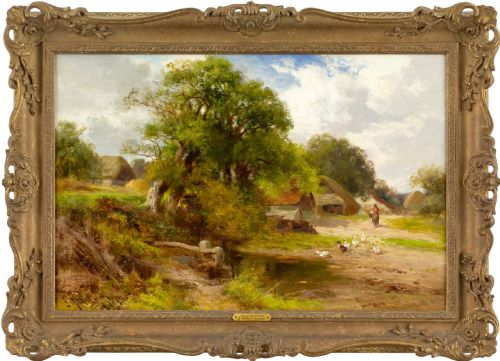
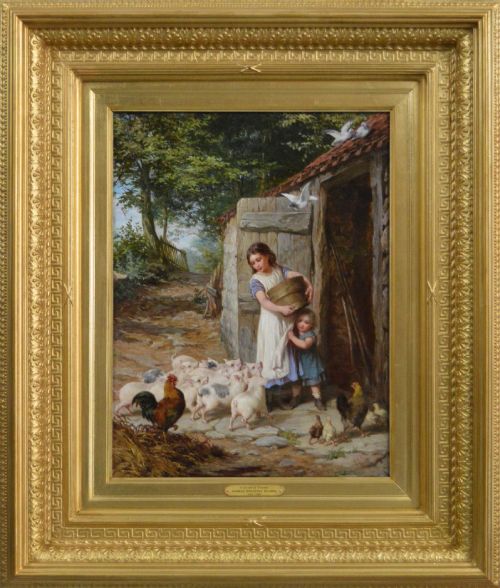
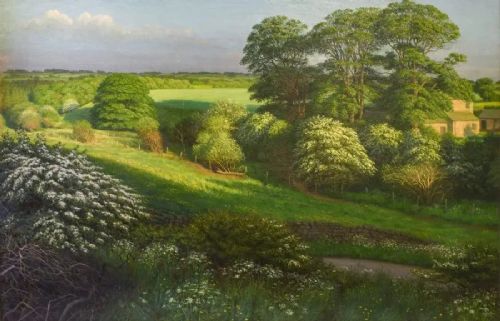
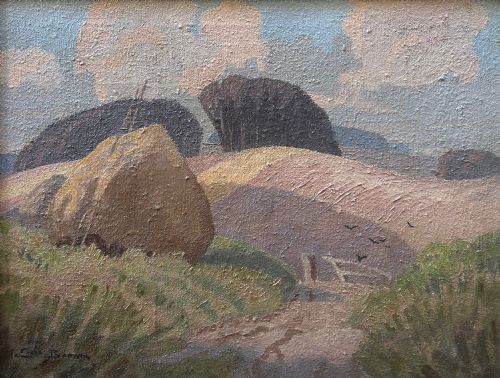
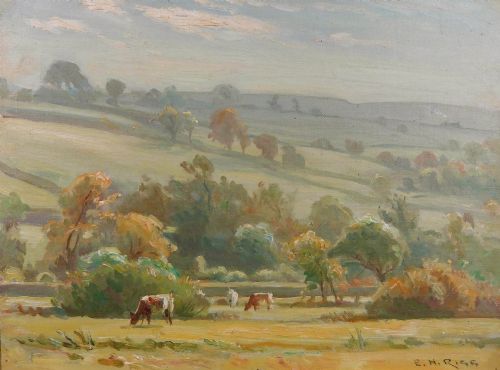
A framed canvas rural painting depicts pastoral life, agricultural work, and country landscapes executed in oil. These works capture scenes from the nineteenth and twentieth centuries, featuring cottages, livestock, harvest fields, and river views.
The most common examples on this page date from the Victorian period through to the mid-twentieth century. They include works by known British and European artists working in traditional country, impressionist, and realist styles.
Subjects range from expansive countryside vistas and river landscapes to intimate farmyard scenes with figures and animals. Each piece is set within a wooden or gilt frame that complements the canvas.
How they were made
These works consist of oil paint applied to woven canvas stretched over a wooden frame. Artists utilised oil pigments for their rich depth of colour and slow drying time, allowing for subtle blending of light across pastoral skies and fields.
The completed canvases are housed within wooden frames, frequently finished in gilt or giltwood to enhance the visual impact of the artwork. Many retain their original frames, which show period construction methods such as mitred corners and moulded gesso decoration.
Pigs, sheep, and shire horses regularly interrupt quiet pastoral landscapes.
What varies in quality
Quality rests in the handling of brushwork and the observation of light and anatomy, particularly in figures and animals. Superior examples demonstrate a confident control of tone that creates genuine depth in a landscape.
The integration of the frame with the canvas also marks the grade of a piece. Period frames that suit the scale and palette of the painting elevate the overall integrity of the work.
George Graham·Robert Morson Hughes·Mark William Langlois·David Bates·Robert John Hammond·Walter Heath Williams·John Horace Hooper·George Augustus Holmes·Raymond Booth·Eric Brown·Ernest Higgins Rigg·Edgar Hunt·Umberto Volpato·William Greaves·Sydney Yates Johnson·Owen Bowen·Charles Clair·Harry Freckleton·Raimond Louis Lecourt·William Henry Mander·Thomas Sidney Cooper·James Kyd·Henry John Yeend King·William Sydney Cooper·Samuel Joseph Clark
The Framed Canvas Rural Painting Glossary
- Canvas
- A heavy woven fabric, usually linen or cotton, stretched over a wooden frame to serve as a foundation for oil painting. It provides a textured surface that holds thick applications of paint.
- Giltwood
- Wood carved and coated with a thin layer of gold leaf or metallic gilt powder. It is commonly found on traditional picture frames from the nineteenth century.
- Barbizon School
- A mid-nineteenth-century French art movement focused on real-life landscape painting. Painters of this circle worked outdoors to capture natural light and rural surroundings directly.
- Norwich School
- A regional movement of British artists inspired by the Norfolk landscape. Founded in the early nineteenth century, the group produced atmospheric views of local rivers, cottages and rural life.
- Genre painting
- The pictorial representation of scenes from everyday life. These works typically feature ordinary people engaged in common activities such as farming, fishing or tending livestock.
Framed Canvas Rural Painting: Frequently Asked Questions
How do I date a rural oil painting?
Dating relies on stylistic clues, artist signatures, and the construction of the canvas and stretcher frame. Costume and agricultural equipment depicted in the scene also offer reliable clues to the period.
Framing materials and backing boards can provide additional evidence of age. Examining the canvas weave and nails helps confirm whether a piece remains in its original nineteenth or twentieth-century state.
What subjects are typical in these paintings?
Common subjects include agricultural labour, farmyard animals, harvest fields, and riverside cottages. Artists frequently recorded daily rural routines such as ploughing, feeding livestock, and gathering crops.
Topographical landscapes from regions like Yorkshire, Cornwall, and Sussex also appear frequently. These views capture specific local terrain alongside traditional rural architecture.
Where should I hang a framed oil painting?
Choose an interior wall away from direct sunlight and excessive moisture to protect the oil paint and canvas. Stable room temperatures prevent the wood stretcher and canvas from expanding and contracting.
Allow enough space around the frame so the artwork can be viewed comfortably without crowding. Adequate lighting, such as a picture light, highlights the brushwork and depth of the oil colours.
How do I care for an antique canvas?
Dust the surface gently with a soft, dry brush or cloth without applying pressure to the canvas. Avoid using water, chemical cleaners, or damp cloths on the painted surface.
Keep the backing secure to prevent dust and moisture from accumulating behind the canvas. Professional conservators should handle any repairs to tears, punctures, or discoloured varnish.