
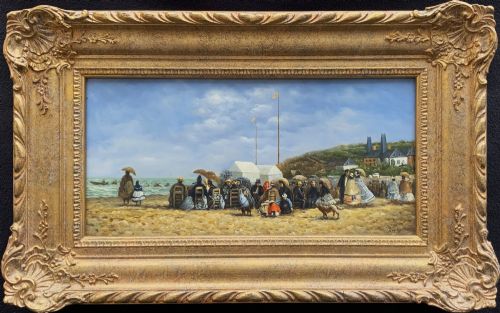


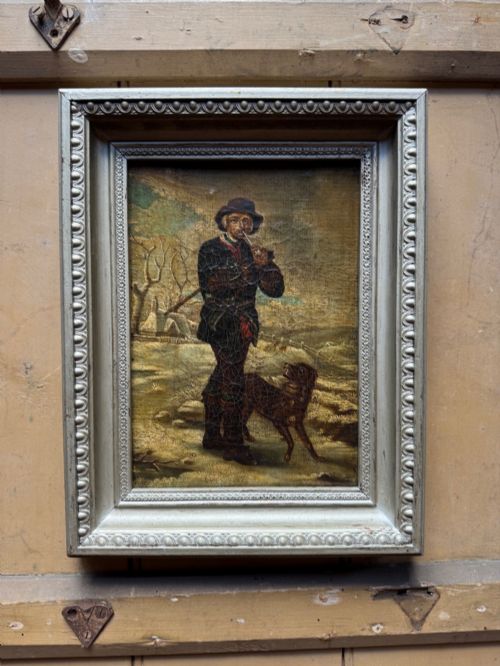
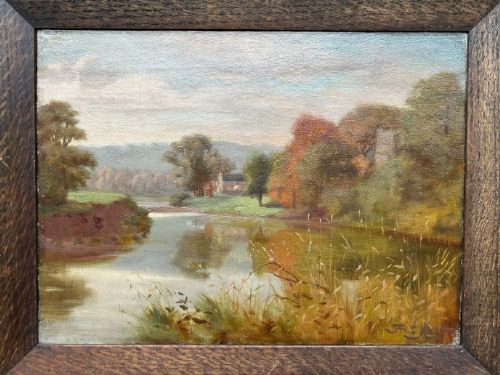
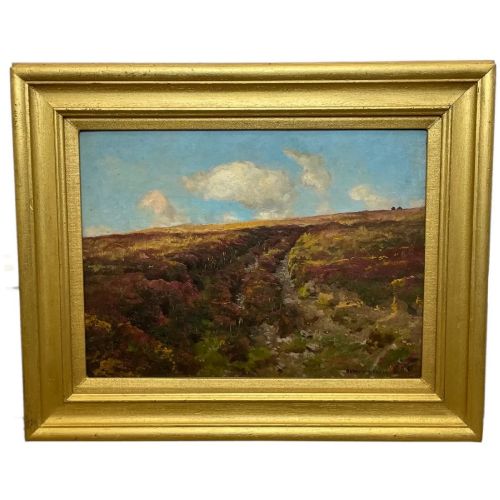
Framed Canvas Landscape Painting
A framed canvas landscape painting brings the quiet expanse of the countryside, the weight of the sea, or the shadow of a woodland directly into a room.
Framed Canvas Landscape Painting
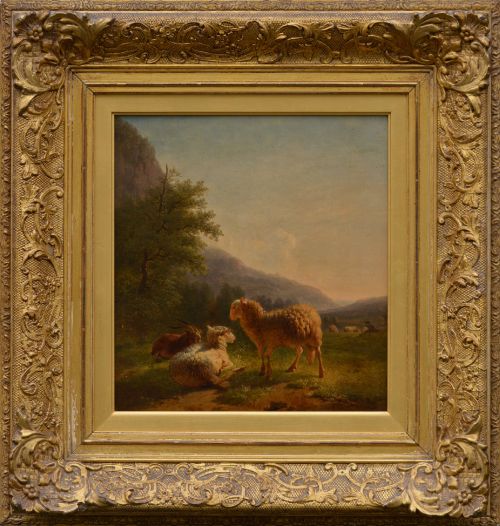
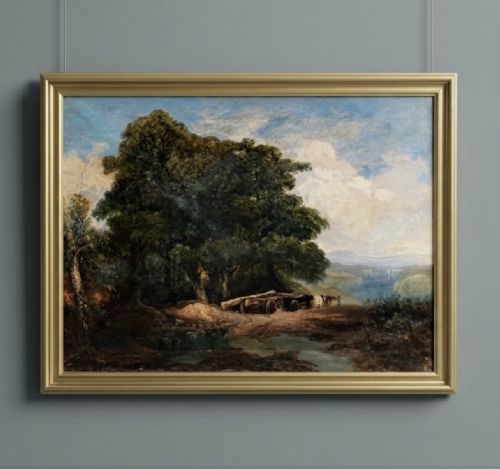
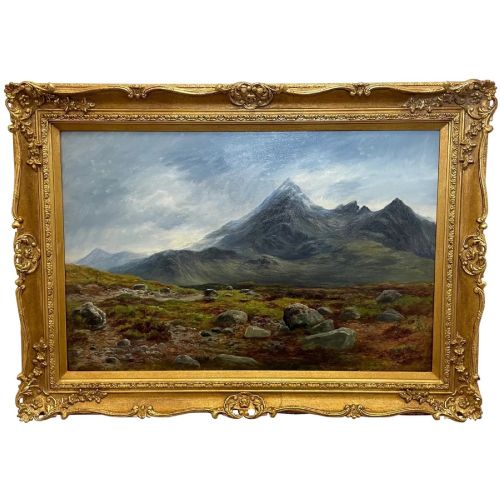
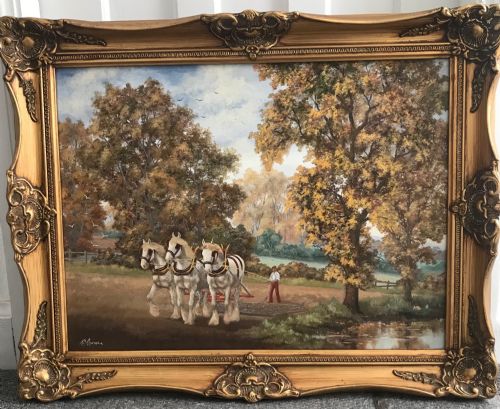
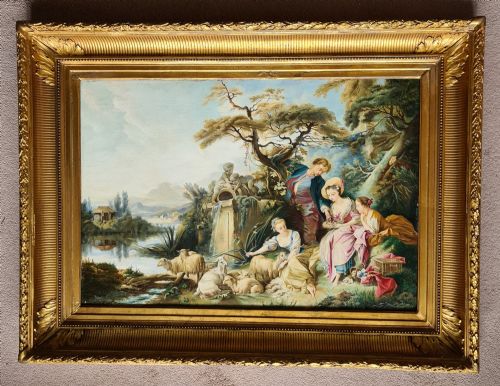
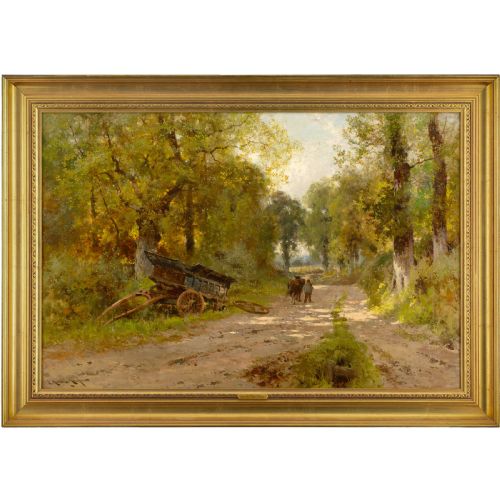
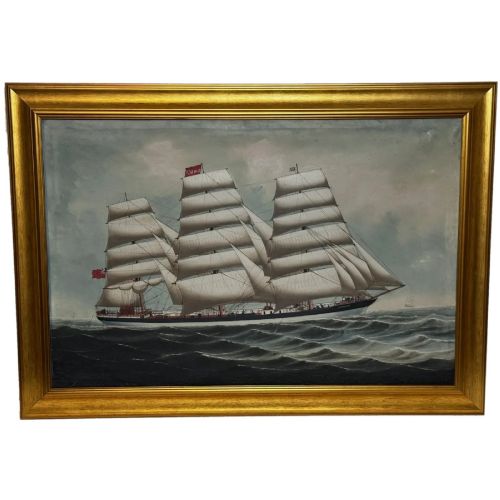
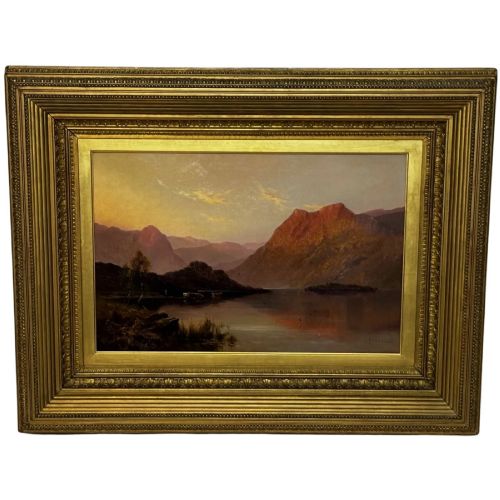
When you search for a framed canvas landscape painting, you are looking at oil paintings on stretched canvas enclosed within timber, gesso, and giltwood frames. These works capture pastoral scenes, marine views, farmyards, and riverbanks created across centuries.
The pieces you are most likely to meet on this page date from the nineteenth and early twentieth centuries, though examples stretch from earlier centuries through to nineteen sixty and later. They range from intimate domestic studies to large romantic statements signed by named British and European artists.
Rural paths, cattle watering in rivers, woodland clearings, and coastal sunsets dominate the subjects. Many retain their original or period frames, which complete the presentation of the artwork on the wall.
Materials and construction
These works rely on oil paint applied to woven canvas stretched over wooden frames, creating a stable and responsive surface for rich colour and subtle blending. Artists built depth through layered pigments, capturing the play of light across water, foliage, and skies.
Frames are constructed from wood, frequently finished with gesso and gilt or gilding to provide a reflective border that isolates and elevates the scene within. The combination of canvas, oil paint, and moulded wood frames ensures structural longevity when properly maintained.
Framed Canvas Landscape Painting Retail Price Guide 2026
Typical asking prices for framed canvas landscape painting among the pieces listed under this phrase on Sellingantiques today, from the lower quarter to the upper quarter. They describe what is for sale here now, not the wider market.
Several sheep, cows, horses, and even a prize shorthorn bull quietly occupy these landscapes, watching viewers from across the centuries.
Distinctions in quality
The distinction between ordinary and exceptional works rests upon the confidence of the brushwork, the handling of natural light, and the accuracy of atmospheric perspective. Master hands command compositions that draw the eye deep into the distance with convincing texture and tonal balance.
Frame quality equally determines the overall standard, as original giltwood and gesso mouldings designed specifically for the canvas hold far greater presence than later replacements. The harmony between the painting and its framing indicates the care taken by the original patron or gallery.
Eugène Verboeckhoven·Richard Sebastian Bond·William Beattie-Brown·William H Myers·George Graham·Clifford Hanney·Frederick Marriott·Arthur Wardle·John Horace Hooper·Reginald Arthur Borstel·Alfred Fontville de Breanski Jr·George Houston·Robert Morson Hughes·Thomas Barker of Bath·Thomas W Lascelles·James Kay·Augusto Alberici·Gabriel Mathieu·David Bates·Arthur Gué·Benjamin Barker of Bath·Thomas Smythe
The Framed Canvas Landscape Painting Glossary
- Giltwood
- Wood carved and covered with a thin layer of gold leaf or metallic gilt, frequently seen on nineteenth-century picture frames. This finish adds warmth and luminosity around the perimeter of the canvas.
- Gesso
- A plaster-like mixture applied to wooden frames as a smooth base before gilding or painting. It allows intricate decorative relief patterns to be moulded along the edges.
- Barbizon School
- A nineteenth-century French movement of painters who worked directly from nature in the forest of Fontainebleau. Their focus on unidealised rural landscapes influenced later plein-air painting across Europe.
- Norwich School
- A regional group of British artists active in the early nineteenth century who painted local Norfolk scenery and rural life. Figures associated with this circle produced atmospheric oils of rivers, woodlands, and farmyards.
- Post-Impressionism
- An art movement following Impressionism where painters explored emotional and structural qualities through bold brushwork and expressive colour. Works in this style break away from strict optical realism.
Framed Canvas Landscape Painting: Frequently Asked Questions
How do I date an antique oil painting?
Dating relies on examining the canvas weave, the stretcher frame construction, the type of nails or tacks used, and the composition style. Pigment analysis and artist signatures also provide reliable chronological markers.
Period framing often matches the era of the canvas, offering additional evidence of creation date when the original backing papers or inscriptions remain intact.
Are these paintings ready to hang?
Most pieces arrive framed and fitted with picture wire or cord, allowing immediate placement on a wall. Owners should check that wall fixings match the weight of the timber and giltwood frame.
Environmental placement matters just as much as hardware, so avoid hanging oil paintings in direct sunlight or above active fireplaces to protect the canvas.
What is the difference between oil on canvas and a canvas board?
Oil on canvas involves stretched fabric over a wooden stretcher frame, providing slight elasticity and a traditional support structure. Canvas boards use rigid cardboard or wooden panels coated to mimic canvas texture.
Stretched canvas works generally command greater traditional regard and allow for traditional re-tensioning over time if the fabric slackens.