




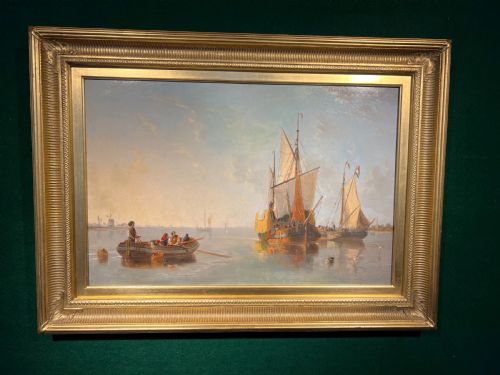
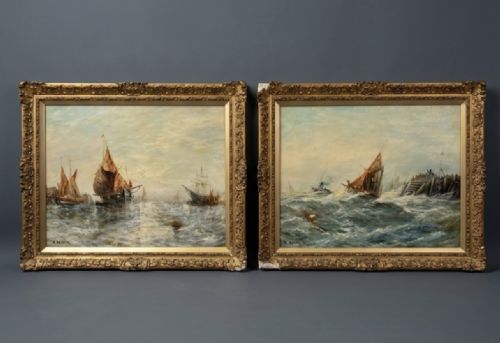
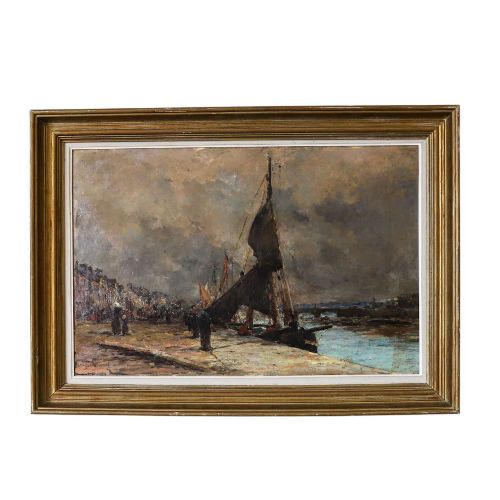
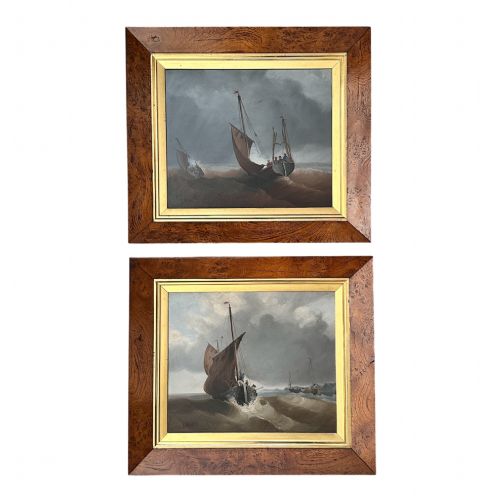
Framed Boat Landscape
A framed boat landscape brings the motion of rivers, harbours and open water onto a wall through oil and watercolour.
Framed Boat Landscape
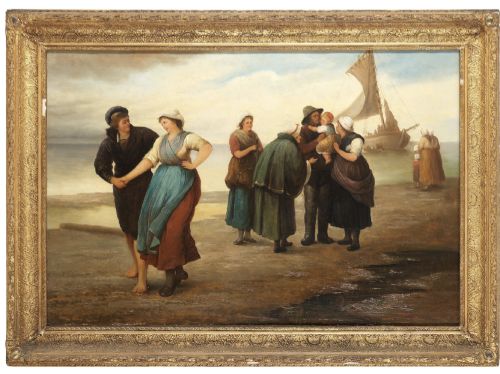
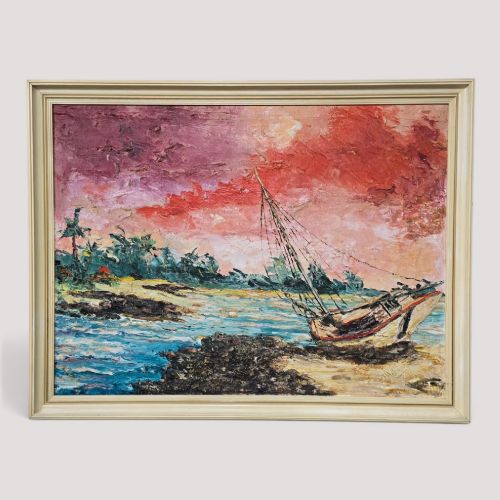
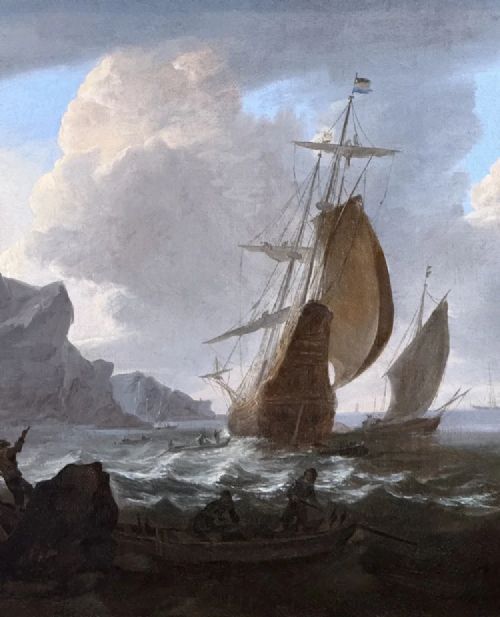
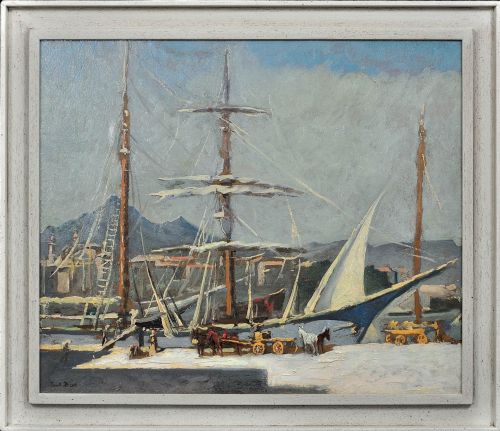
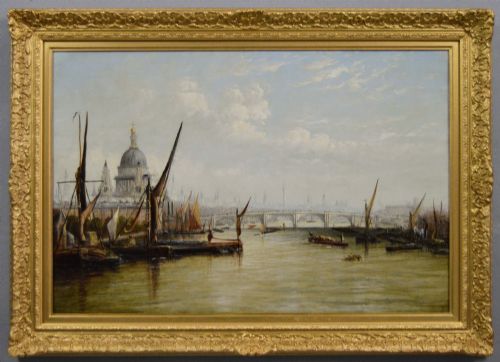
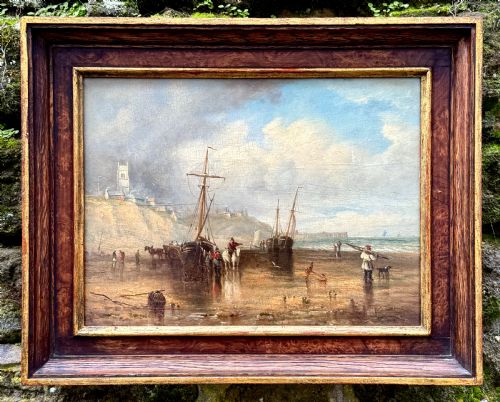
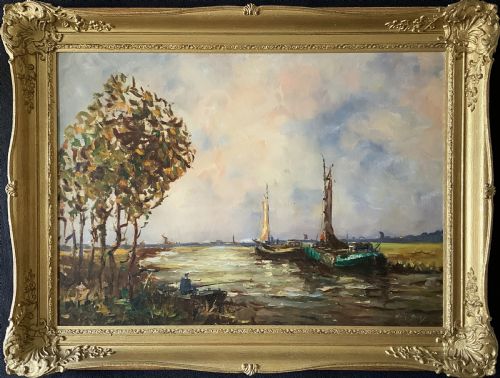
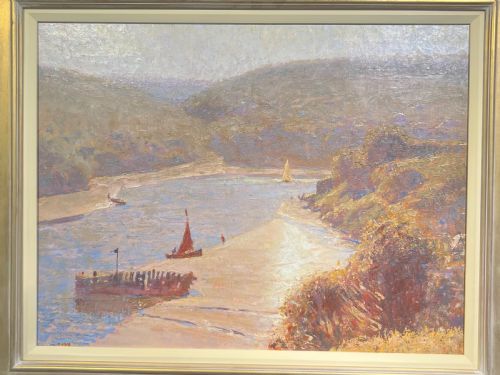
A framed boat landscape captures maritime and river views through oil on canvas, board, and watercolour paintings. These works range from intimate nineteenth-century watercolours of coastal fishing boats to larger Victorian maritime scenes and mid-century harbour compositions.
Buyers encounter depictions of British and European waterways, featuring vessels from Thames barges to Dutch craft in a gale. The selection spans distinct periods including the Victorian era, Edwardian period, and mid-century modern movements.
Materials and Techniques
Artists painted these water and coastal scenes primarily using oil paint on canvas or board, alongside watercolour applied to paper. Canvases and paper supports were frequently housed within decorative gilt wood and gesso frames.
Execution methods vary from detailed nineteenth-century academic realism to looser Impressionist brushwork. Pigments were applied with varied impasto and wash techniques to capture changing light upon water and sky.
Some nineteenth-century artists captured the Thames so faithfully you can almost hear the steamer horns blowing through the varnish.
Assessing Quality
Quality rests in the artist's handling of light, atmospheric perspective, and water movement. Superior pieces demonstrate confident brushwork and accurate draughtsmanship in the rendering of rigging, hulls, and coastal architecture.
The integration of the artwork with its original or period-appropriate gilt wood and gesso frame contributes significantly to the integrity of the piece.
James Orrock·B. Nash·Francis Moltino·Thomas Creswick·Willem Bos·John Wilson Carmichael·John Moore of Ipswich·William Matthison·William Henry Williamson·George Stanfield Walters·Walter Goodin·William Edward Webb·Edward Matthew Elliott·Jean-Baptiste Olive·Raymond Picque·William Lee Hankey·Gabriel Dauchot·Gustave De Bréanski·Pieter Cornelis Dommersen·Thomas Bush Hardy·Adrian Van Porten·Edward Henry Eugene Fletcher·Fred Waugh
The Framed Boat Landscape Glossary
- Oil on Canvas
- Pigment mixed with drying oil applied to a stretched woven fabric support. This combination allowed artists to build rich textures and deep tones.
- Gilt Wood
- Timber that has been coated with a thin layer of gold leaf or metal powder. It provides a reflective border that isolates the painting from its surroundings.
- Gesso
- A paint mixture consisting of a chalk, gypsum, or pigment binder used to prepare wood or canvas surfaces. It forms a smooth base for gilding and ornamentation on frames.
- Impasto
- Paint applied thickly to a canvas, standing out in relief from the plane. This technique gives physical depth and tactile quality to water and sky.
- Provenance
- The chronological history of the ownership of a work of art. It establishes authenticity and traces the path of the piece through time.
Framed Boat Landscape: Frequently Asked Questions
What periods do these paintings come from?
The works span from the early nineteenth century through the Victorian and Edwardian eras into the mid-twentieth century.
Individual pieces reflect the shifting artistic movements of their respective decades, from maritime realism to impressionism.
How should I hang a framed boat landscape?
Select a wall with stable humidity away from direct sunlight to protect both the canvas or paper and the gilt frame.
Ensure the hanging wire and wall fixings match the weight of the heavier wooden and gesso frames.
Are watercolours framed differently from oils?
Watercolours on paper typically require glass protection within the frame to shield the pigment from dust and moisture.
Oil paintings on canvas or board are left open to the air within their frames, relying on the varnish layer for protection.
How do I identify the subject location?
Many paintings include legible signatures, artist inscriptions on the reverse, or contemporary titles noting specific harbours and rivers.
Landmarks such as bridges, coastal cliffs, and distinct vessel types often point to particular British or European waterways.