
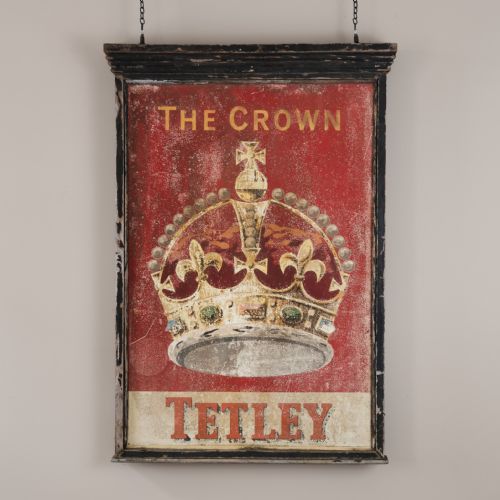
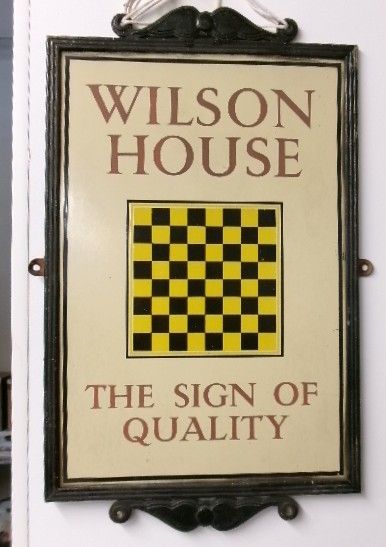


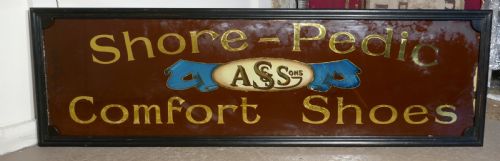
Framed Advertising Sign
A framed advertising sign brings commercial history straight onto the wall, offering surviving traces of early trade through enamel, glass, and paper.
Framed Advertising Sign
A framed advertising sign spans wall mirrors, pub signs, wall art, enamel pieces, and framed prints from the nineteenth century into the twentieth century. These objects served commercial purposes in shops, pubs, and cinemas before entering domestic or collection spaces.
The versions most likely to appear include enamel signs, painted glass shop trade signs, and card or paper adverts preserved in original wooden or metal frames.
Originating largely from British and French commercial contexts, these items bridge utilitarian shop display and decorative wall art through styles such as Victorian, Art Deco, and Arts and Crafts.
How they were made
Makers utilised resilient materials designed to endure commercial environments, combining iron, copper, and glass with robust wooden frames. Enamel signs fused glass to metal through high-temperature firing, ensuring durability for outdoor or shopfront display.
Painted glass and mirror plates employed reverse painting and silvering techniques, while paper and cardboard advertisements relied on traditional printing methods within protective timber surrounds.
Materials across these listings include wood, glass, paint, metal, iron, enamel, paper, and copper.
What varies in quality
The distinction between tiers rests upon the preservation of the original surface and the integrity of the frame. Original glass plates, intact enamel coatings, and authentic period framing elevate an example above later adaptations.
Clarity of the commercial lettering and the survival of makers' names or specific brand graphics dictate the visual strength of the piece on the wall.
Tetley·Wilson House·Will's Capstan·Palethorps·Horniman's Pure Tea·Harpers Automatic·Fry's Chocolate·Bisto
The Framed Advertising Sign Glossary
- Enamel sign
- A metal plate fused with powdered glass through firing to display durable commercial graphics. This technique created weather-resistant signs for external shop walls.
- Reverse painting
- The practice of applying paint to the back side of a glass plate so the image appears correctly when viewed from the front. It protects the pigment from atmospheric wear.
- Mirror plate
- A sheet of silvered glass utilised in advertising mirrors to combine a functional reflective surface with brand lettering. These pieces hung in shoe shops, pubs, and merchant premises.
- Trade sign
- A board or plate commissioned by a merchant or manufacturer to advertise goods directly to the public. They range from metal and glass to carved or painted wood.
Framed Advertising Sign: Frequently Asked Questions
Where should I hang a framed advertising sign?
These pieces suit social spaces like kitchens, dining rooms, or hallways where their commercial graphics can be easily appreciated at eye level.
Ensure they hang away from damp zones to protect paper components, exposed metal edges, and original wooden frames.
How do I clean an old advertising glass mirror?
Dust the surface gently with a dry, soft microfiber cloth to remove loose particles without disturbing fragile edges or paintwork.
Avoid commercial liquid cleaners that might seep behind the glass plate or damage the aged silvering and lettering.
Are these signs in original frames?
Many examples retain their original timber, metal, or painted frames which show period wear consistent with their commercial history.
Listings specify whether the frame is original to the piece or a later addition.
How do I date a vintage advertising sign?
Dating relies on the materials used, the typography style, and specific brand histories associated with the text on the sign.
Periods represented in these pieces span from the nineteenth century through the 1930s Art Deco era.