
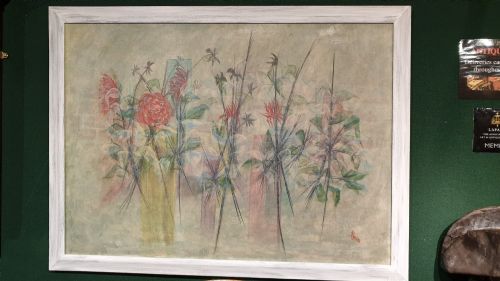
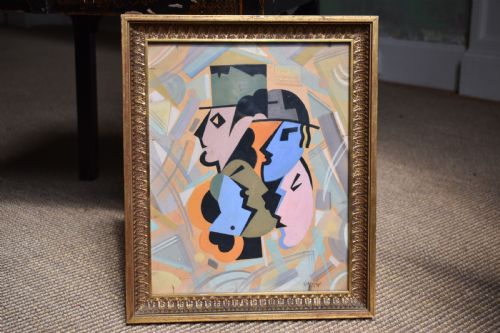
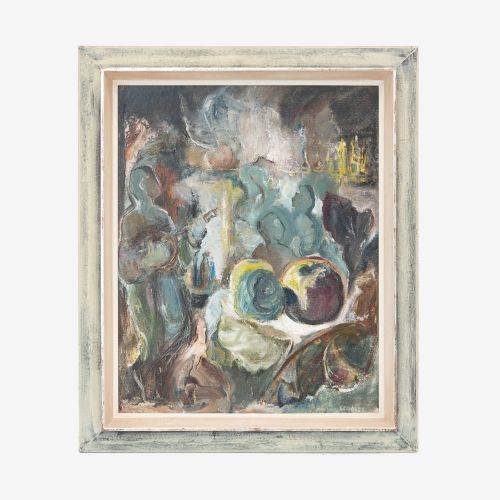


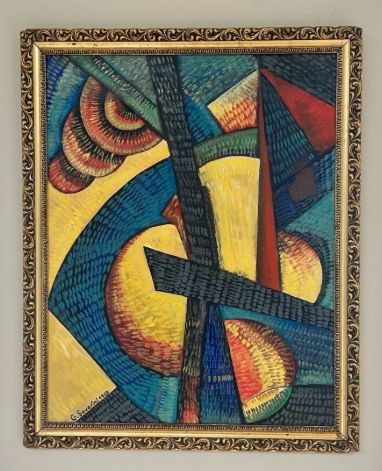


Framed Abstract Painting
A framed abstract painting brings mid-century energy to a room, offering expressive colour and dynamic composition mounted behind wood or glass.
Framed Abstract Painting
When a buyer searches for a framed abstract painting, they encounter mid-century works spanning the 1920s to the 1960s, heavily weighted toward the post-war decades. These pieces span cityscapes, landscapes, still lifes, and pure abstraction created across Britain, France, and Spain. The selection on this page relies on original works rather than reproductions, capturing the varied experimental currents of modernism.
The most common formats met here are oils on canvas or board, alongside works on paper executed in watercolour, gouache, or mixed media. Makers represented range from regional artists to members of recognised schools such as St Ives, frequently preserved in their original timber mouldings and glass settings. Each piece presents an individual perspective on form, colour, and texture from the twentieth century.
Materials and technique
Artists painted primarily with oil or acrylic on stretched canvas, rigid board, or thick paper, sometimes building up heavy impasto textures with the brush or palette knife. Relief works incorporate added dimension onto the surface, whilst gouache and watercolour provide fluid application on paper supports.
Wooden frames enclose these works, providing structural support and protection behind glass where paper supports demand it. The integration of paint, board, canvas, and timber housing defines the physical construction of each piece.
The inventory records pieces dated across the 1920s, 1940s, 1950s, and 1960s, employing wood, canvas, oil paint, paper, and glass.
What varies in quality
Quality rests upon the strength of composition and the sureness of the artist's hand in handling paint or pigment across the surface. Works by documented figures or those with strong regional associations, such as the St Ives School, demonstrate greater historical depth.
The integrity of the original framing, the stability of the support material, and the preservation of the painted surface without excessive restoration separate standard decorative items from significant collector pieces.
Lilian Colbourn·Tony Giles·Denis Mitchell·Raymond Picque·Gino Severini·William Littlejohn·Edward Carter Preston·Derek Latimer Sayer·William McCance·Adrian Heath·Lester Epstein·Antonio Ferri·Mary Fedden·Leon Kossoff·Richards Rubin·William Ernst Burwell·Edward Burra
The Framed Abstract Painting Glossary
- Impasto
- Paint laid thickly on a canvas or board, standing out from the surface so that the marks of the brush or palette knife remain visible. This technique adds literal dimension and tactile presence to mid-century compositions.
- Gouache
- An opaque water-based paint that dries to a matte finish, frequently utilised on paper for its intense, flat colour properties. It allowed modernist artists to achieve vibrant tones with swift application.
- St Ives School
- A group of artists living and working in Cornwall, centred around the town of St Ives, renowned for pioneering British abstract art after the Second World War. Their output bridged landscape observation and pure non-figurative expression.
- Cubism
- An early twentieth-century avant-garde art movement that revolutionised European painting by breaking subjects down into geometric shapes and multiple simultaneous viewpoints. Works in this style fragment domestic interiors and landscapes into planes.
- Provenance
- The chronology of the ownership, custody, or location of a historical artwork. Clear provenance verifies authenticity and establishes the historical journey of a painting.
Framed Abstract Painting: Frequently Asked Questions
How do I date a mid-century abstract painting?
Dating relies on recorded signatures, dated inscriptions on the reverse of the board or canvas, and stylistic markers typical of the 1940s, 1950s, or 1960s. Documentation and artist biographies help narrow the period of creation.
Materials such as specific types of board, canvas weaves, and original framing styles also provide reliable clues to the decade in which the work was produced.
Are these paintings supplied with their original frames?
Many listings retain their vintage wooden frames, which are often contemporaneous with the artwork itself. These housings reflect mid-century framing conventions and complement the aesthetic of the painting.
Some pieces have been reframed over time to ensure structural stability or to suit modern domestic interiors while preserving the integrity of the artwork.
What is the difference between oil on canvas and oil on board?
Oil on canvas involves pigment applied to a flexible woven fabric stretched over a wooden frame, offering a slight give under the brush. Oil on board uses a rigid wooden or composite backing, providing a firm, unyielding surface for the paint.
Both materials were widely utilised by mid-century artists, with board frequently chosen for smaller or more spontaneous compositions.
How should I care for a framed abstract painting?
Protect the artwork by hanging it away from direct sunlight and maintaining stable room temperatures to prevent the cracking of paint or warping of wooden supports. Dust wooden frames gently with a dry cloth.
Pieces framed behind glass require only occasional cleaning of the glazing with a suitable non-abrasive cleaner, taking care not to let moisture seep beneath the frame edge.