


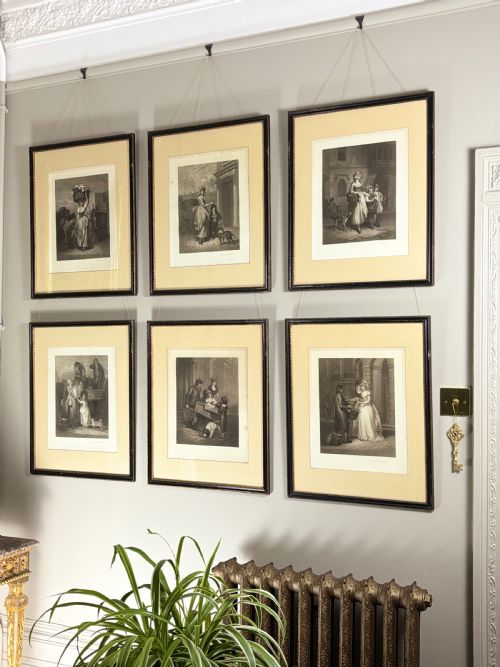


Framed Gallery Artwork
Framed gallery artwork encompasses centuries of framed prints, paintings, and drawings preserved behind glass in wood and gilt wood frames.
Framed Gallery Artwork
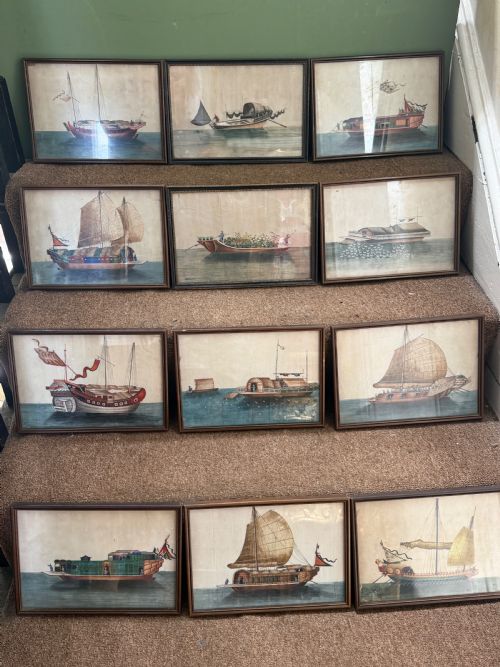
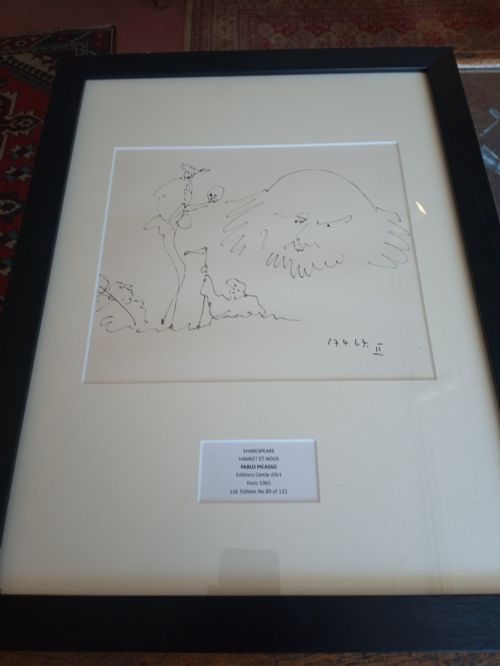
Framed gallery artwork spans centuries of graphic and painterly output, with 19th-century prints and watercolours forming the most common encounters on this page. Pieces range from single portraits and landscapes to large sets of botanical engravings, sporting art, and Chinese Export gouaches.
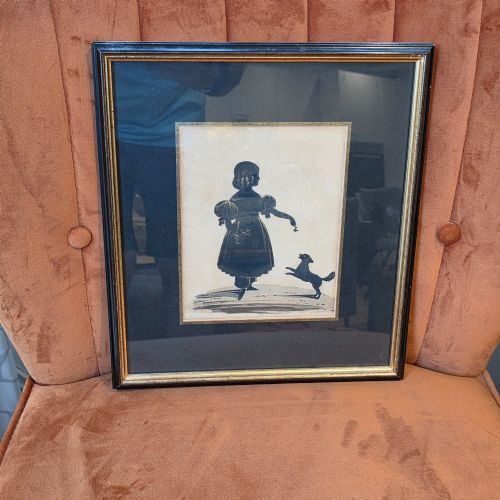
The objects take many forms, including framed prints, oil paintings, silhouette conversation pieces, and lithographs from periods stretching from the 18th century through the mid-20th century. Buyers will find works originating from English schools, European printmakers, and publishers associated with historical galleries.
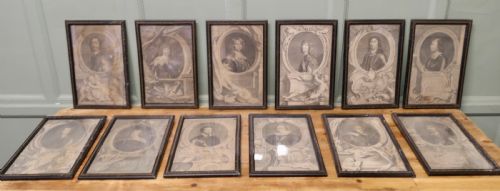
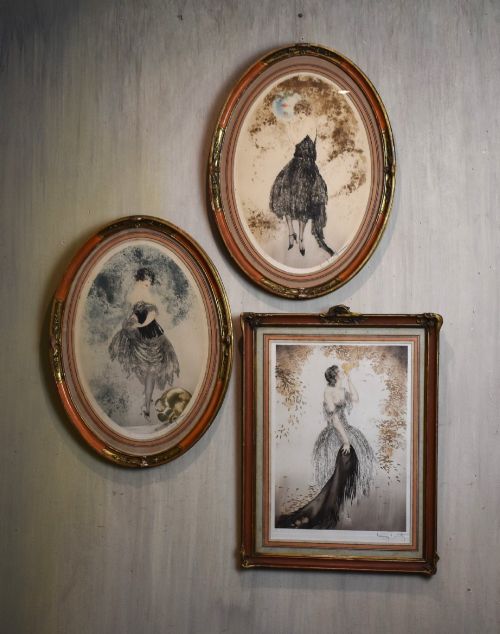
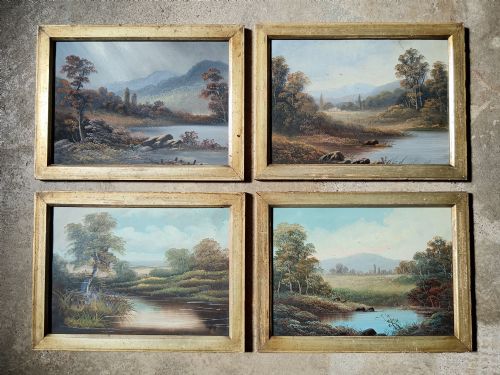
Sets frequently appear, such as series of botanical studies, bird engravings, and mezzotints, offering cohesive wall displays that reflect their original period presentation. Individual abstract prints and modern posters also surface, representing later decades of gallery curation.
Materials and technique
Works on paper rely on watercolour, gouache, ink, pencil, and various printmaking techniques such as engraving, mezzotint, and lithography. Artists and publishers applied these media to rag paper, often hand-tinting monochrome plates or combining cut paper with painted details.
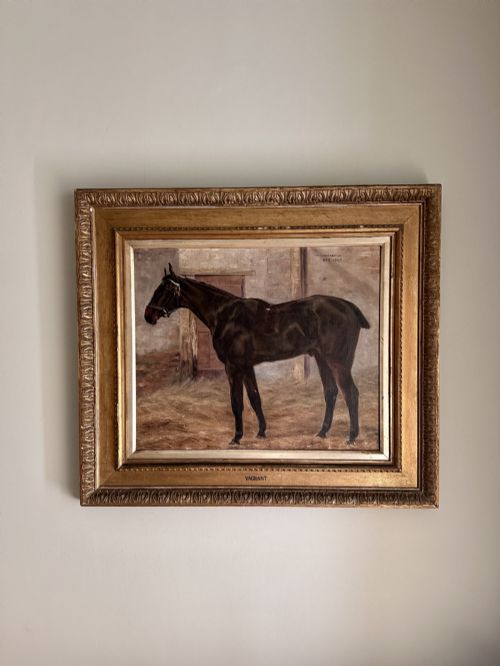
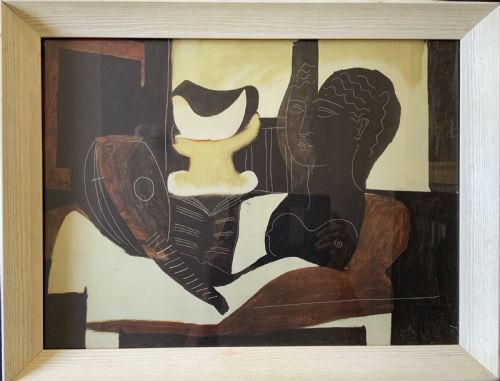
Paintings employ oil or heavy opaque gouache on canvas or panel, capturing fine detail in equine portraits, river landscapes, and abstract compositions. These pictorial layers sit within protective housings of glass and wooden frames, frequently enhanced with gold leaf and gilt mouldings.
Listings feature works spanning the 18th, 19th, and 20th centuries, executed in paper, glass, wood, and gold leaf.
Assessing quality
Quality rests upon the crispness of the original impression in prints and the strength of the hand-applied pigment in watercolours and gouaches. Well-preserved works maintain vibrant hand-tinting and sharp plate marks without excessive fading or paper discolouration from age.
The harmony between the artwork and its period frame distinguishes superior examples, particularly where original gilt wood or moulded timber settings survive intact. Completeness in multi-part sets and documented provenance to historical galleries or estates further elevate a piece's standing.
William James Hubard·Fred Fitzpatrick·Pablo Picasso·Louis Icart·Thomas G Appleton·Edward Stodart·Sir Peter Blake·Derek Latimer Sayer·Pancrace Bessa·John Curtis·Edward Lear·George Cattermole
The Framed Gallery Artwork Glossary
- Mezzotint
- A printmaking process of the tonal method, enabling smooth gradations of light and shade. Master engravers worked the copper plate with a rocker to achieve rich, velvety darks.
- Gouache
- An opaque watercolour medium containing a white pigment filler, producing a heavier, matt surface than traditional transparent watercolour. It was frequently utilised for botanical and landscape studies.
- Engraving
- A technique where an artist cuts lines directly into a metal plate with a sharp tool called a burin. The resulting prints exhibit precise, clean lines and defined borders.
- Silhouette
- A solid shape of a subject, usually a profile portrait, filled in with a dark colour or cut from paper. These were popular in the 19th century, sometimes combined with watercolour details.
- Gilt wood
- Timber treated with a thin layer of gold leaf or gold paint across a prepared gesso surface. It provides the ornate, reflective framing seen on period gallery works.
Framed Gallery Artwork: Frequently Asked Questions
How should I hang framed gallery artwork?
Hang these pieces away from direct sunlight to protect delicate watercolours, prints, and paper supports from fading over time. Ensure the wall fixings match the weight of the timber and glass housings.
Group sets at eye level to replicate historical gallery arrangements, maintaining consistent spacing between frames for visual balance.
Are these works original period pieces?
The selection includes original period engravings, hand-tinted prints, and paintings dating from the 18th century through to mid-century modern productions. Each listing specifies the era of creation and the techniques employed by the artist or publisher.
Many sets retain their historical character through period framing and contemporary documentation or signatures.
How do I care for antique works on paper?
Keep the pieces in stable environments with moderate humidity levels to prevent warping of the paper and degradation of the wooden frame joints. Avoid touching the exposed paper surface if the framing is opened.
Consult a professional restorer if the glass requires cleaning or if the backing board shows signs of acid migration from age.
What is a conversation piece silhouette?
A silhouette conversation piece depicts multiple figures engaged in a narrative scene rather than a standard single profile portrait. These detailed compositions often incorporate cut paper elements alongside ink and watercolour.
Such works were fashionable interior adornments in 19th-century drawing rooms and galleries.