
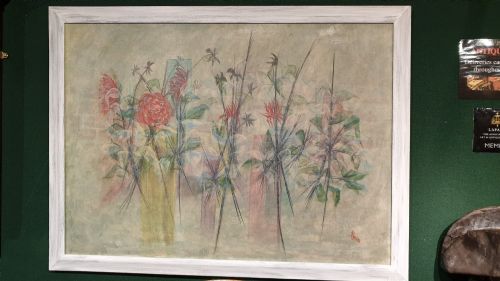


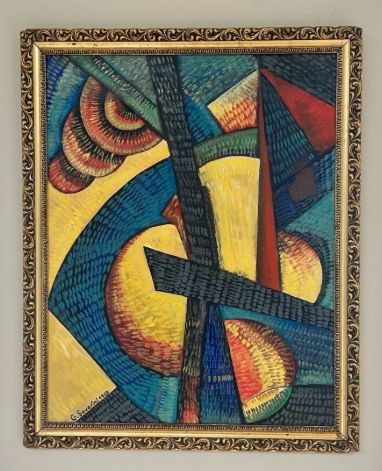


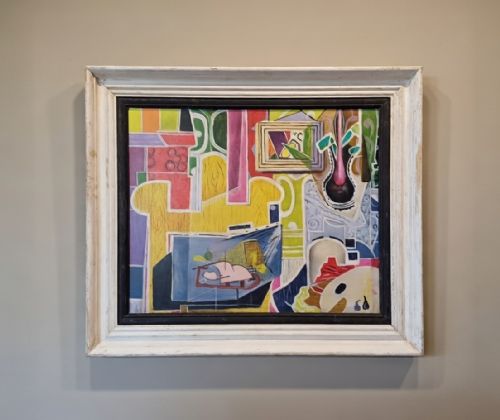

Framed Abstract Canvas Painting
These framed abstract canvas painting selections bring mid-century modernist energy into a room through oil paint and wood frames.
Framed Abstract Canvas Painting
A framed abstract canvas painting embodies the visual experiments of the mid-century period, spanning the nineteen forties, fifties, and sixties. These works present non-representational subjects through expressive brushwork, bold colours, and varied textures.
Most pieces encountered here originate from the nineteen fifties and sixties, aligning with mid-century modernism and abstract expressionism. Forms range from large cityscapes and landscapes to abstracted still lifes and figurative scenes.
Makers and artists working within these decades utilised canvas, board, and wood frames to present their compositions. Buyers select these artworks to anchor a wall with mid-century character and historical depth.
How they were made
Artists built these compositions primarily using oil paint applied to canvas or board, occasionally building heavy impasto and relief surfaces. The physical thickness of the pigment creates a tactile quality that defines the visual weight of the work.
Support materials typically include stretched canvas or sturdy board housed within contemporary or period wood frames. These frames complete the piece, protecting the perimeter while framing the painted surface.
Several canvases spent decades quietly watching mid-century living rooms before finding their way onto the market.
What varies in quality
Quality rests in the confidence of the brushwork and the internal coherence of the composition. Stronger examples display a purposeful handling of oil paint and colour that holds the eye across the entire surface.
The integration between the artwork and its wood frame also distinguishes pieces. A well-chosen or original frame enhances the presence of the painting without overwhelming the composition.
Mark Ingram·Tony Giles·Denis Mitchell·Raymond Picque·William Littlejohn·William McCance·Antonio Ferri·William Ernst Burwell
The Framed Abstract Canvas Painting Glossary
- Impasto
- Paint applied thickly to a canvas or board, standing out in relief from the surface. This technique adds literal depth and texture to the visual plane.
- Abstract Expressionism
- A post-war art movement focused on spontaneous, emotional expression through non-representational imagery. Practitioners utilised dynamic brushstrokes and gestural marks.
- Mid-Century Modern
- A stylistic descriptor covering design and art from roughly the nineteen forties through the sixties. It embraces clean forms and forward-looking experimentation.
- St Ives School
- A group of artists based in Cornwall associated with modernist and abstract developments. This community produced influential paintings that bridged British art and international abstraction.
Framed Abstract Canvas Painting: Frequently Asked Questions
What periods do these paintings come from?
The available selection centres on the mid-twentieth century, specifically the nineteen forties, fifties, and sixties. These decades encompass various modernist and abstract movements.
Works from this era reflect the post-war shift towards non-representational art across Britain and Europe.
How should I hang a framed abstract canvas painting?
Hang the painting at eye level on a wall with stable ambient conditions away from direct sunlight. Ensure the wall fixings match the weight of the wood frame and canvas.
Give the work sufficient breathing room so the abstract composition can engage the surrounding space.
What materials make up these artworks?
The primary components are oil paint applied to canvas or board. Many examples feature substantial wood frames selected to complement the painted surface.
Some pieces incorporate impasto or relief techniques that project outwards from the canvas.
Are these works signed by artists?
Many listings feature signatures, dates, or attribution to specific mid-century artists and schools. Documentation often connects the pieces to recognised creators from the period.
Each work carries its own provenance visible through signatures and historical records.