



Fox Hunting Oil Painting
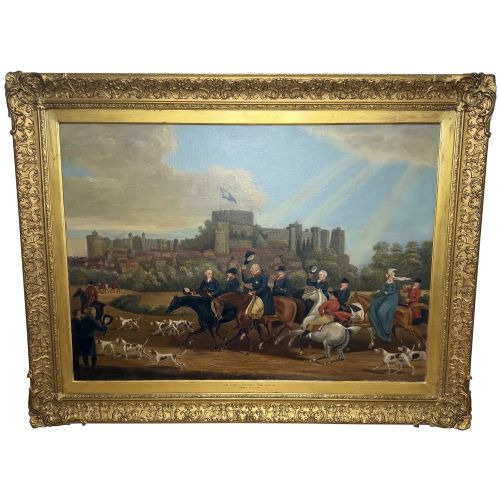
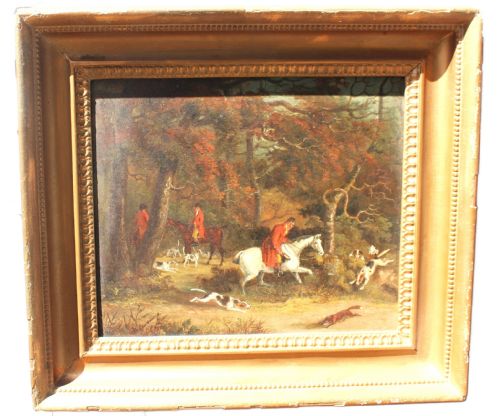
A fox hunting oil painting captures the motion of horses, hounds and riders across traditional country landscapes through historical brushwork.
Fox Hunting Oil Painting
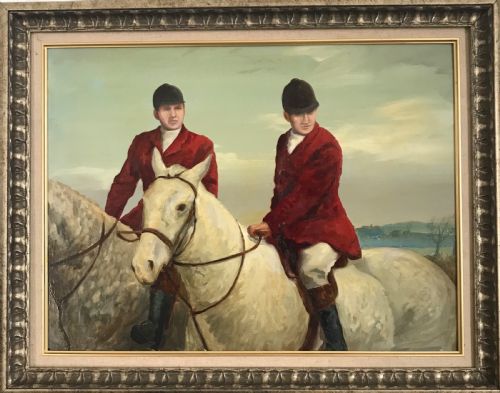
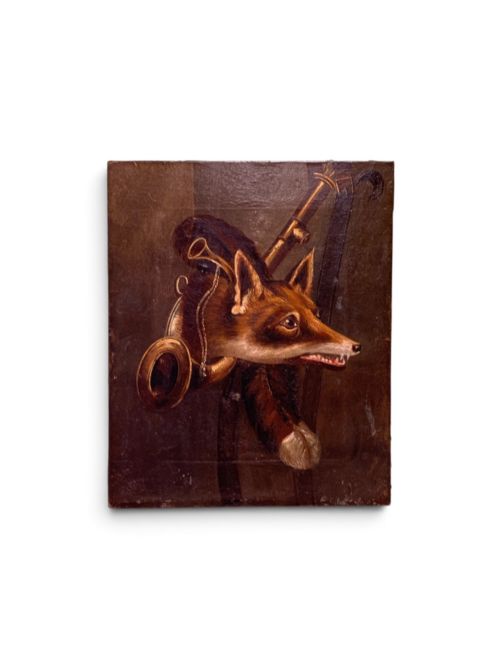
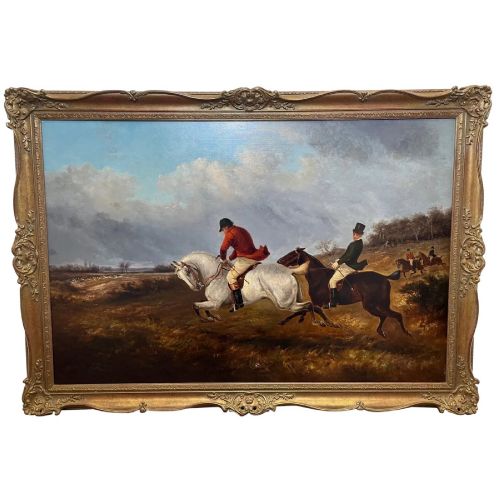
A fox hunting oil painting depicts rural equestrian pursuits, portraying mounted huntsmen, packs of hounds and countryside landscapes. The pieces on this page span from the Georgian period through the Victorian era into the twentieth century, recording historic sporting traditions.
Most examples concentrate on specific moments of the chase, such as the meet, full cry, or the hounds working in snow. Canvas and wood panel supports carry these detailed rural narratives, often framed in gilt wood or heavy timber mouldings.
British sporting art forms the core of these works, complemented by traditional Victorian interpretations and occasional continental scenes. These paintings serve as historical records of nineteenth-century rural life, horse breeding and canine portraiture.
Quality and execution
Skill in anatomical rendering separates superior works from simpler decorative pieces, particularly in the depiction of galloping horses and hounds in motion. The handling of light across winter landscapes and the depth of the background scenery also indicate the level of the artist's training.
One unexpected canvas tucks a self-portrait of the artist neatly on the reverse of the frame.
Thomas Smythe·Philip Henry Rideout·George Armfield·Charles Faulkner·Fannie Moody·John Frederick Herring Jnr·John Sanderson-Wells·Heywood Hardy·Guillaume Urban Régamey·George Goodwin Kilburne·Edward B Herberte·Alfred Steinacker·Henry Frederick Lucas-Lucas·Francis Kenneth Elwell·August Vischer
The Fox Hunting Oil Painting Glossary
- Full cry
- A stage in the hunt when the pack of hounds is actively and loudly pursuing the scent. This moment frequently appears as the central action in nineteenth-century sporting canvases.
- Giltwood
- Timber treated with gold leaf or gold paint to create a decorative metallic finish. Many antique sporting paintings retain their original moulded frames of this material.
- Equestrian art
- Depictions of horses and riders within landscape or sporting contexts. This genre forms the majority of the works recorded in this collection.
- Sporting art
- A category of painting dedicated to rural pastimes, including hunting, racing and shooting. These works document the social history and rural traditions of the nineteenth century.
Fox Hunting Oil Painting: Frequently Asked Questions
What periods do these paintings come from?
The available works primarily date from the nineteenth century and the Victorian era, with additional examples spanning into the early and mid-twentieth century.
Earlier Georgian pieces sit alongside later interpretations, reflecting shifting styles in British sporting art over two centuries.
How should I hang an oil painting?
Display these works on solid interior walls away from direct sunlight and excessive moisture to protect the oil paint and canvas.
Ensure the wall fixings support the weight of the timber frame, particularly for larger Victorian canvases.
Are these paintings signed by the artists?
Many pieces feature visible signatures or artist attributions, while others remain unsigned examples from the British or continental schools.
Signatures help place works within specific artistic circles and periods of the nineteenth century.
What subjects appear besides the hunt?
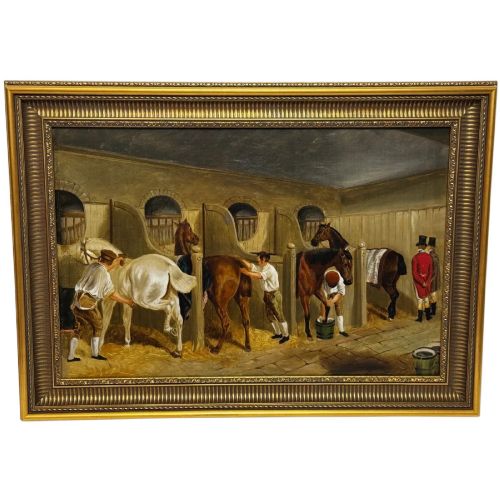
Artists frequently included detailed portraits of hounds, stable scenes, and specific rural landscapes alongside the mounted riders.
Some compositions focus on portraits of huntsmen, horses in farmyards, or winter snow scenes.