

Four Wooden Dining Chairs
Four wooden dining chairs bring enduring practicality and tactile warmth to a room, offering matching seating shaped by centuries of regional craftsmanship.
Four Wooden Dining Chairs
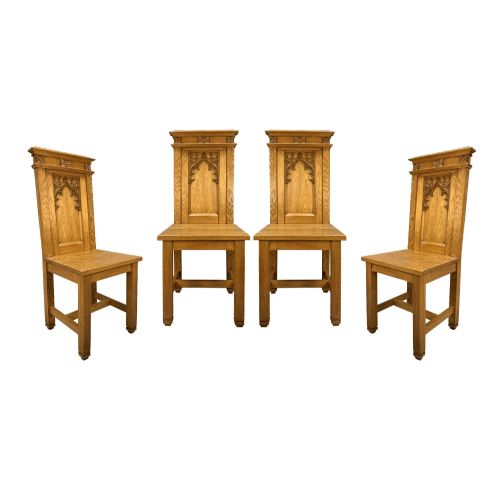
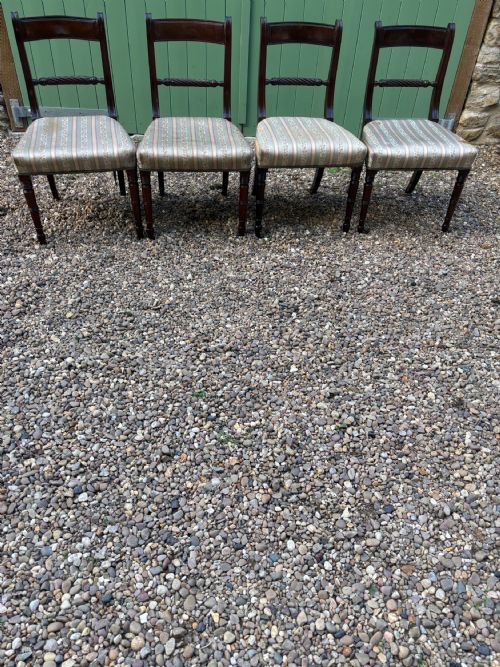
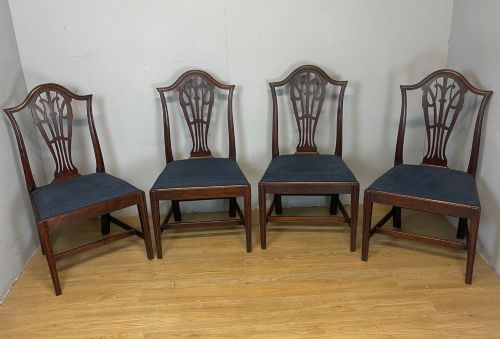
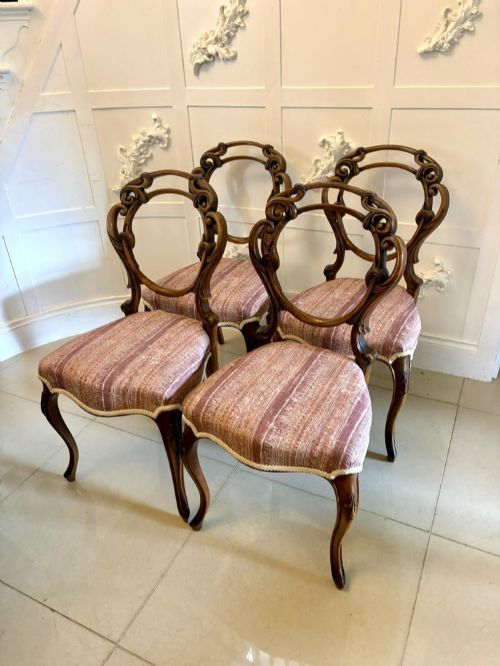
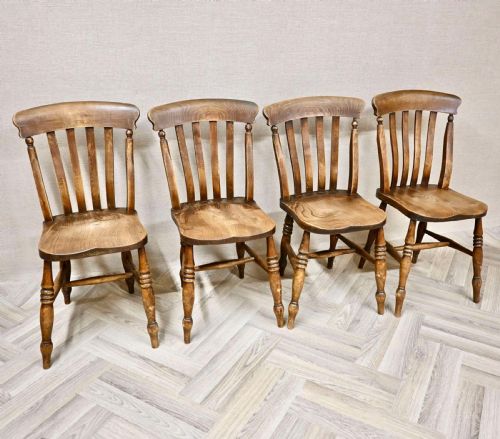
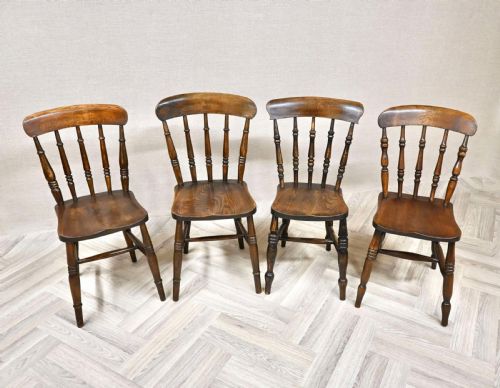
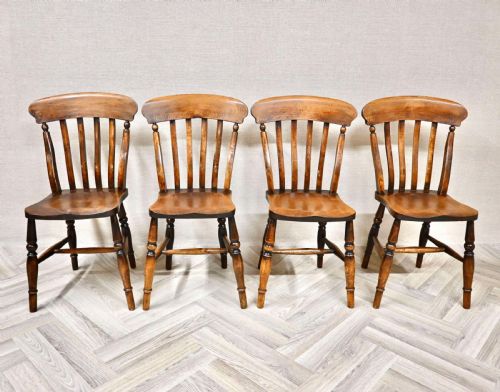
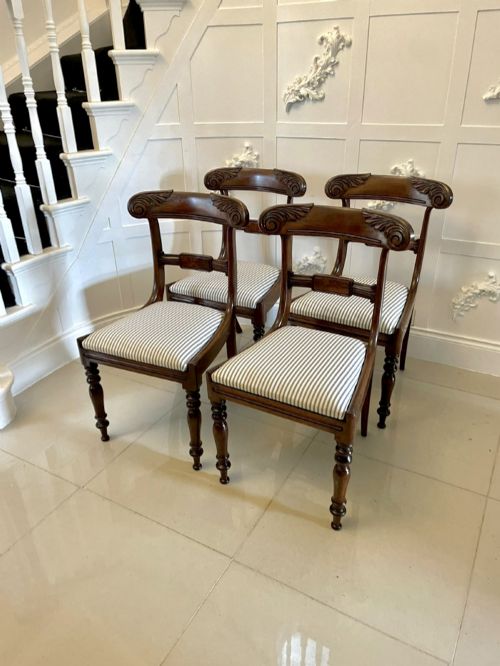
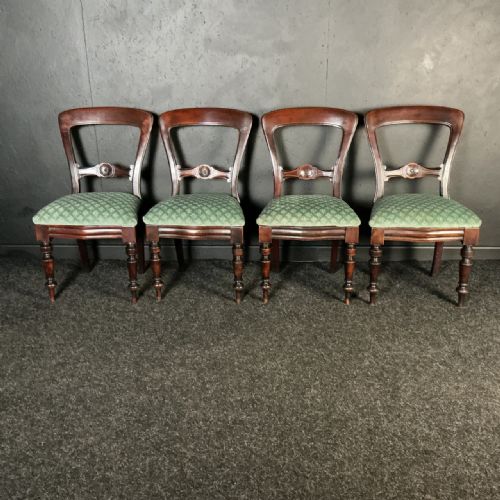
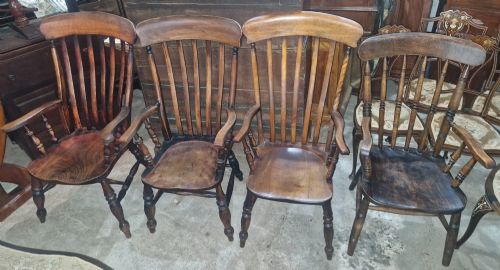
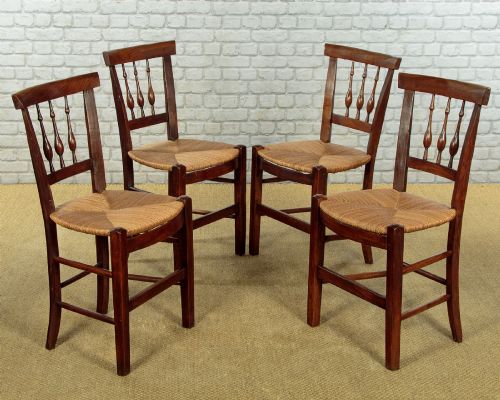
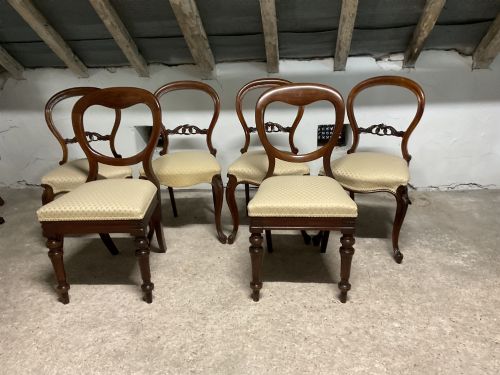
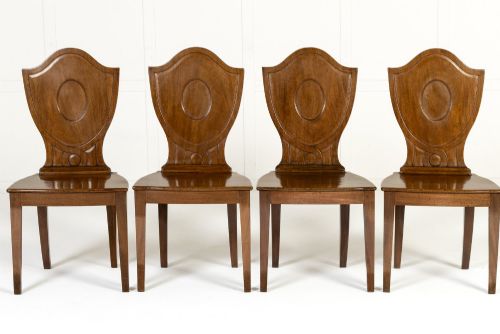
Four wooden dining chairs encompass robust country kitchen windsors, formal mahogany dining seats, and vernacular ladderback or balloon back designs spanning several centuries. Buyers searching for four wooden dining chairs frequently encounter sets shaped by the functional demands of 19th-century domestic life alongside more refined Georgian and Regency examples.
The selection ranges from sturdy ash and elm farmhouse models with penny seats or double stretchers to polished rosewood, walnut, and mahogany parlour suites. Regional variations appear across English, Welsh, and Irish pieces, including Edinburgh pattern birch side chairs and harlequin groupings gathered over time.
Most entries belong to the Victorian era and the broader 19th century, featuring distinct regional vernaculars like lathbacks, hoop backs, and stick backs. Formal dining rooms are represented by Chippendale influence, brass inlay, and heraldic crests, while domestic spaces rely on bentwood bistro or farmhouse kitchen seating.
Materials and Construction
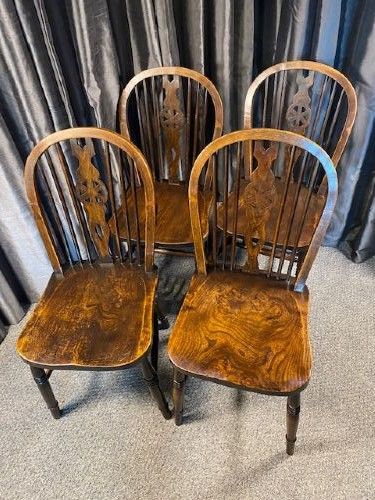
Makers utilised a diverse palette of native and imported timbers, pairing dense hardwoods like mahogany, walnut, rosewood, and oak with resilient secondary woods including beech, elm, ash, fruitwood, and birch. Windsor chairs typically combine bent wooden hoops with turned spindles and solid saddle seats carved from a single plank.
Joinery methods rely on traditional pegged mortise and tenon joints, steam bending for curved components such as balloon backs and armbows, and durable turnings on legs and stretchers. Surface treatments range from polished mahogany veneers and brass inlay to waxed fruitwood and painted or scrubbed country surfaces.
Listings feature woods spanning mahogany, walnut, oak, elm, ash, beech, fruitwood, birch, and rosewood across multiple centuries.
Distinctions in Quality
Quality rests upon the integrity of the timber selection, the precision of the joinery, and the retention of original surfaces without excessive sanding or timber replacement. Finer formal chairs display crisp hand-carving on crest rails and splats, while superior country windsors show balanced proportions and carefully turned spindles.
Matching consistency separates unified original sets from harlequin collections assembled later, affecting the visual harmony around a table. The depth of the timber grain, the tightness of the structural joints, and the survival of original rush or upholstered seats further distinguish standard utility pieces from workshop examples of higher ambition.
Codina
The Four Wooden Dining Chairs Glossary
- Windsor chair
- A chair built with a solid wooden seat into which the legs and back spindles are directly joined. These vernacular seats often feature steam-bent bows and arm rails.
- Balloon back
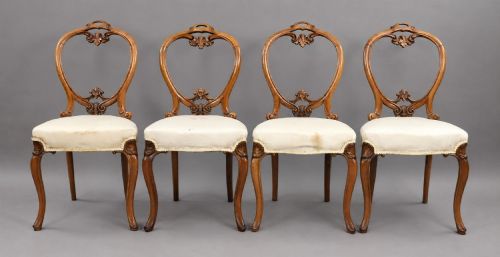
- A chair back shaped in a continuous oval curve resembling a balloon, popular during the Victorian period. This profile provided ergonomic support while displaying figured mahogany or walnut grain.
- Harlequin set
- A group of chairs that match closely in style and period but were not originally manufactured together. Such sets are assembled by collectors to achieve a uniform dining arrangement.
- Lathback
- A Windsor chair variation featuring horizontal flat wooden slats set into the back frame instead of vertical spindles. This design provides robust support for kitchen and farmhouse use.
- Penny seat
- A saddle-shaped wooden seat dished out using an adze or scorp, resembling the depression of a large coin. The shaping enhances comfort on solid wood seating.
Four Wooden Dining Chairs: Frequently Asked Questions
How do I match antique chairs with a modern table?
Mixing period wood tones with a contemporary table creates an effective contrast, provided the seat heights align comfortably with the tabletop apron.
Consider the visual weight of the chairs against the table legs, balancing heavy carved mahogany or robust windsor frames with simpler table designs.
Are Windsor chairs sturdy enough for daily use?
Windsor chairs derive exceptional strength from their triangulated construction, where legs and spindles are wedged directly into solid seats.
Routine domestic use suits these sturdy frames well, provided the joints remain tight and regular wax maintenance protects the timber.
What is a harlequin set of chairs?
A harlequin set consists of individual chairs sharing similar periods, timbers, and vernacular styles that dealers or previous owners gathered into a group of four.
While not carved from the same workshop batch, these collections offer a cohesive appearance around a dining table with subtle variations in turning and grain.
How can I tell a Victorian chair from a Georgian one?
Georgian chairs generally exhibit lighter proportions, restrained classical carving, and straight or cabriole legs influenced by makers like Chippendale.
Victorian examples frequently display heavier turned members, steam-bent balloon backs, and darker finishes reflecting industrial production methods and changing domestic fashions.